

Handheld Portable Laser Marking Machine
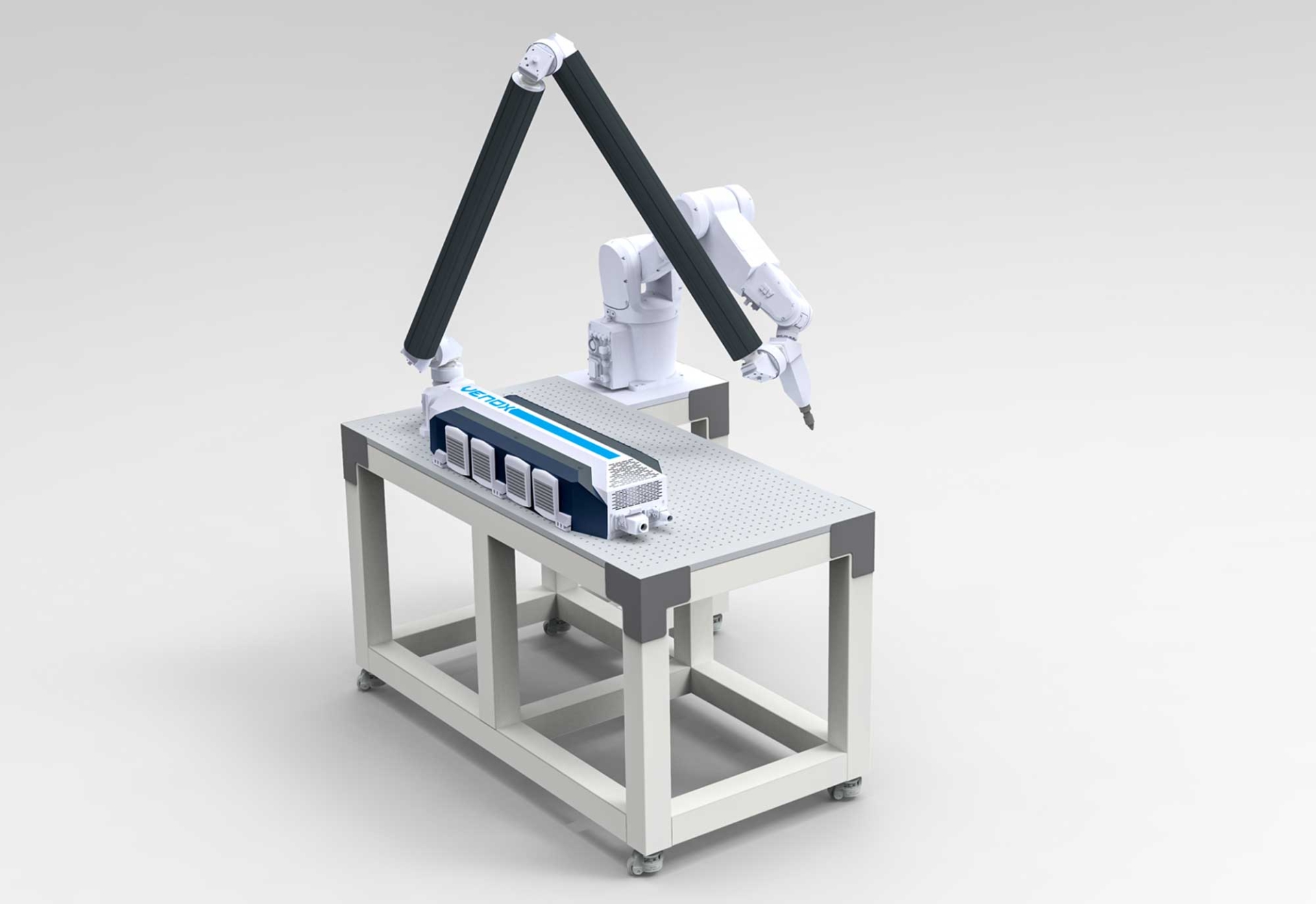
A handheld portable laser marking machine is a compact system designed for applications where the machine is brought to the part rather than the part being brought to the machine. This approach makes it possible to mark serial numbers, logos, dates, and codes on surfaces that are difficult or impossible to move, such as large molds, fully assembled machines, pipelines, structural steel components, or equipment located in the field.
The term "handheld" describes a method of operation rather than a single product type. In some systems, only the marking head is portable while the control unit remains stationary; in others, the laser source, cooling system, and control components are housed in a wheeled unit, with the head directed toward the surface through a flexible cable. Before making a selection, these differences should be evaluated against the actual operating requirements of the facility.
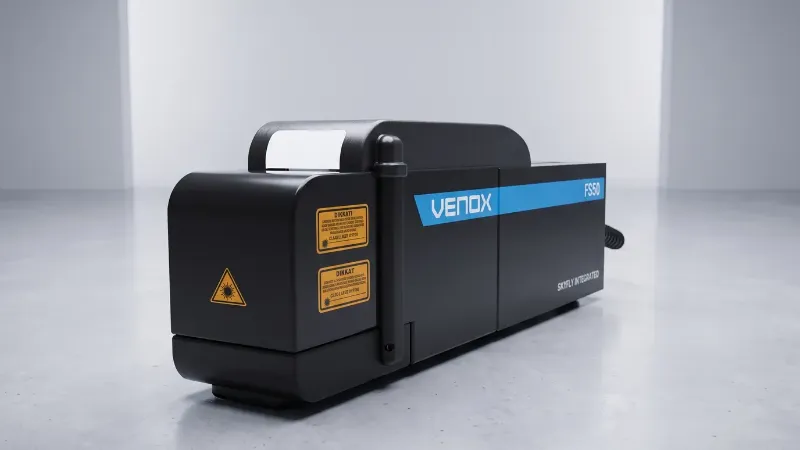
Venox offers the portability-focused Skyfly Move model within its Skyfly series. To determine whether a handheld solution or a stationary system that facilitates part handling is more suitable for your application, you can request a technical consultation by providing your product dimensions and marking requirements.
How Does a Handheld Laser Marking Machine Work and Where Is It Used?
Basic Structure of Portable Systems
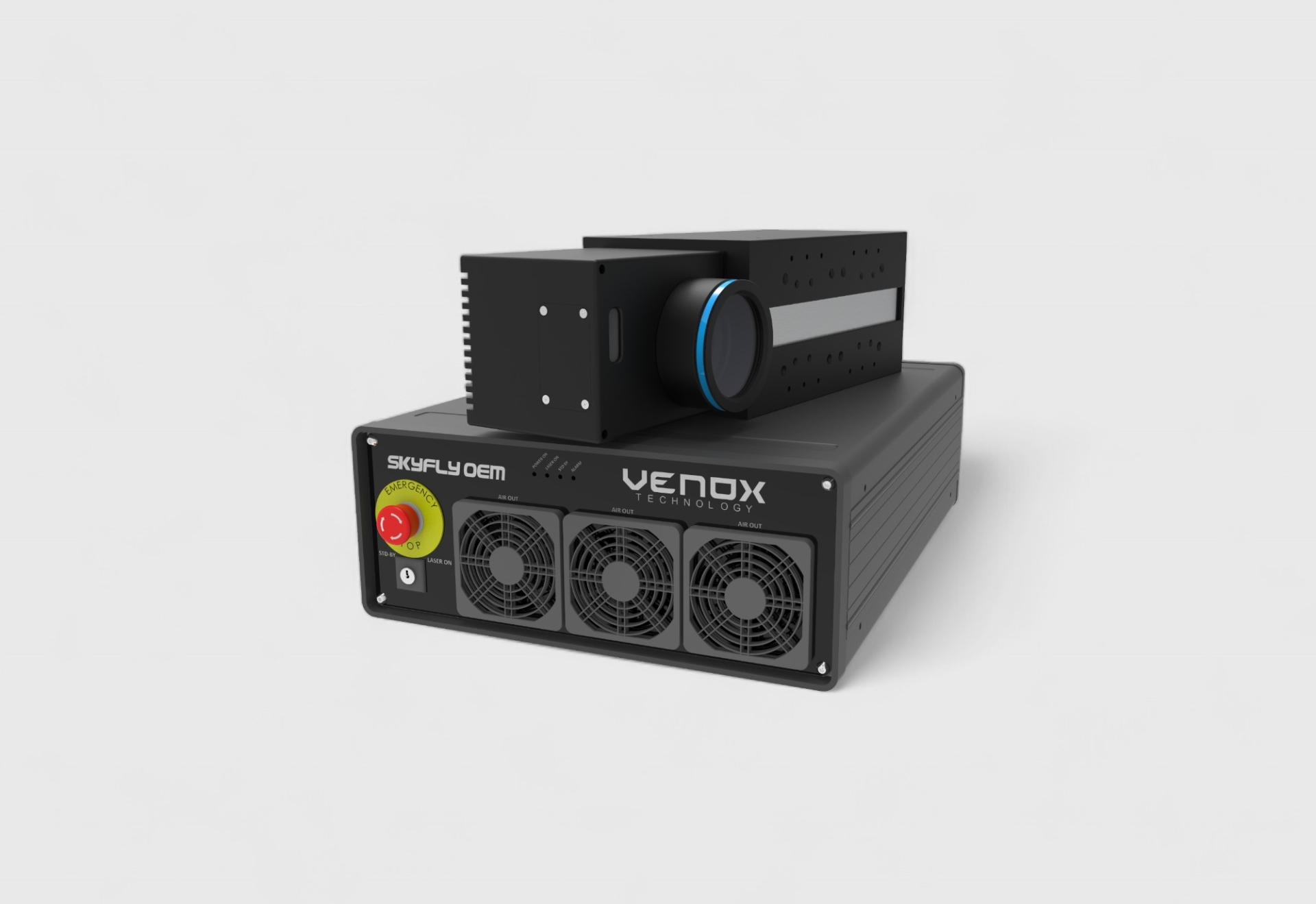
A portable laser marking system consists of three main components: a laser source, a marking head equipped with a galvo scanner, and a control unit. In fiber laser systems, the connection between the source and the head is established through a fiber optic cable, allowing the head to be positioned several meters away from the source. This flexibility is the key feature that enables handheld operation.
Maintaining the correct distance and angle between the head and the surface determines marking quality. For this reason, handheld systems are equipped with a support foot, protective frame, or adjustable distance attachment that maintains the correct focal distance. The operator places the head against the surface, checks the design position using a positioning indicator, and starts the marking process.
Which Applications Are Suitable?
Handheld systems are considered when a part cannot fit inside a marking enclosure or when moving it would disrupt the production workflow. Typical applications include coding molds and mold components, marking traceability numbers on large steel parts, applying identification information to fully assembled machines, and marking maintenance and repair records on equipment in the field.
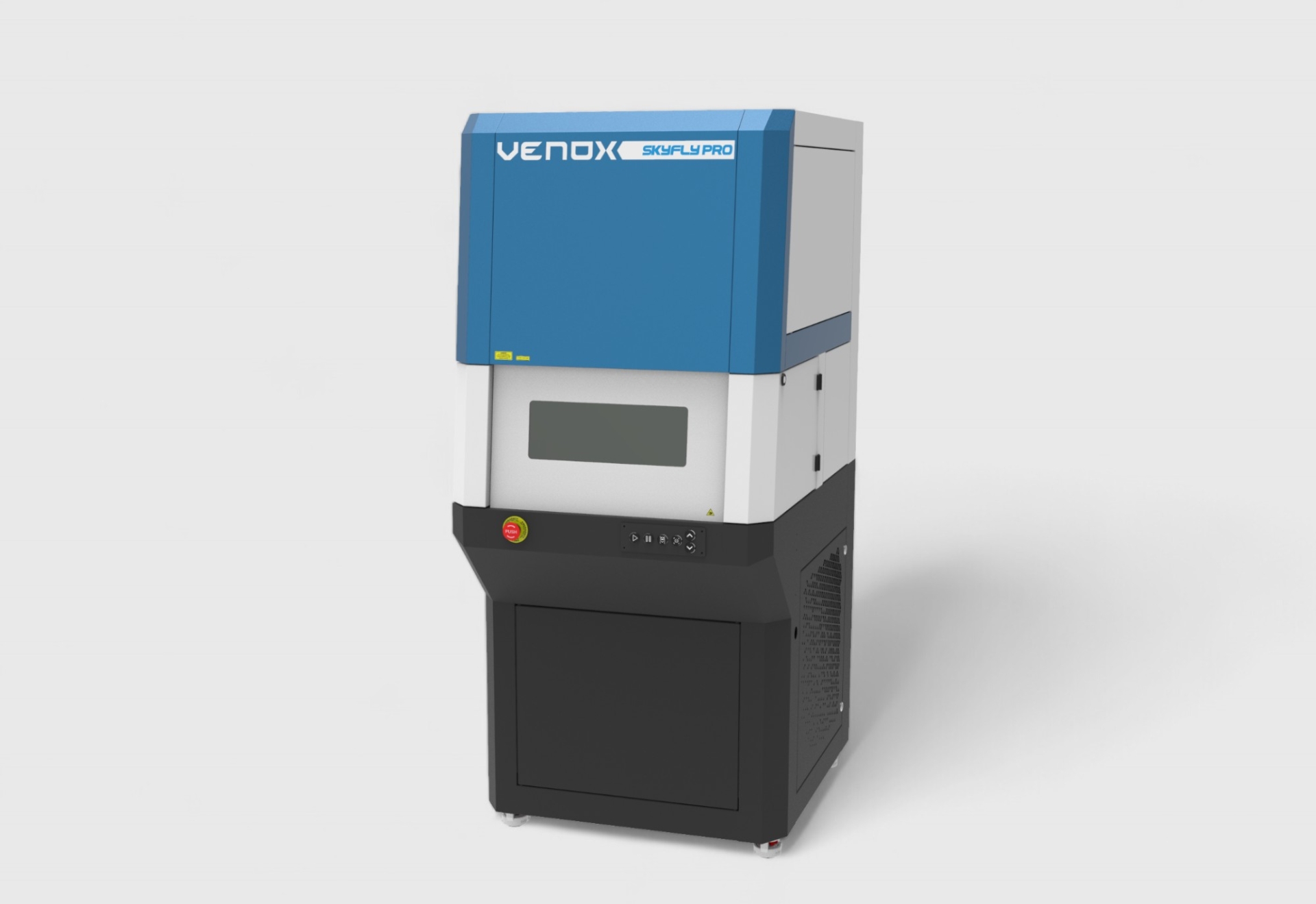
However, handheld operation is generally not efficient for high-volume mass production, small components, or applications requiring marking at the same position repeatedly. In such cases, a stationary desktop or enclosed system provides better results in terms of both cycle time and repeatability.
Materials That Can Be Marked
Fiber laser-based handheld systems can be used on metals such as steel, stainless steel, aluminum, brass, and titanium, as well as anodized, painted, or coated surfaces. Results on plastic materials vary depending on the polymer type and additives. Testing actual samples of each material allows the expected results to be evaluated before making a purchasing decision.
| Evaluation Criteria | Handheld / Portable System | Stationary Enclosed System |
|---|---|---|
| Part size | Virtually unlimited; the machine is brought to the part | Limited by the internal dimensions of the enclosure |
| Repeatability | Depends on operator positioning | High repeatability with fixtures |
| Laser safety | Protective eyewear and controlled work area arrangements are required | Class 1 operation is possible with a fully enclosed system |
| Mass production speed | Suitable for low-to-medium production volumes | Suitable for high production volumes |
| Operating environment | Workshop, field, assembly line | Stationary workstation |
Factors to Consider When Choosing a Handheld Laser Marking Machine
Laser Safety and Working Environment
Any laser system operating without a fully enclosed cabinet presents a risk of laser beam reflection and scattering from the surface. Therefore, operators and nearby personnel must wear protective eyewear appropriate for the laser wavelength, the working area must be clearly marked, and unauthorized access must be prevented. A protective frame on the marking head reduces beam scattering when it is in full contact with the surface; however, it does not eliminate the need for additional safety measures.
Before purchasing, written information should be obtained from the manufacturer regarding the system's laser safety classification, interlock systems, and required personal protective equipment. The facility's occupational health and safety procedures should then be updated accordingly.
Laser Power and Marking Speed
Laser power in portable systems generally ranges from 20 W to 50 W. As power increases, processing time can be reduced and deep engraving capabilities can be expanded; however, power alone does not determine quality. Parameters such as pulse duration, scanning speed, and focus quality must be adjusted according to the material. Marking a serial number in a few seconds and deeply engraving a logo require different parameter settings.
Marking Area and Focus Tolerance
The marking area in handheld systems generally ranges from 100 × 100 mm to 200 × 200 mm. A larger marking area generally requires a longer focal length and increases the size of the marking head. When working on curved surfaces, the lens's depth of focus becomes important; a system with narrow focus tolerance may not provide consistent results on cylindrical parts. The smallest and largest marking designs required for the application should be identified, and the marking area should be selected accordingly.
Positioning and Alignment
Red positioning indicators, camera previews, or mechanical support attachments are used to help the operator place the design accurately on the surface. For repetitive operations requiring marking at the same position, preparing a part-specific template or positioning fixture reduces operator-related deviations.
What to Check During Sample Testing
- Clarity and readability of the design at its actual dimensions.
- Focus consistency achieved when the head is placed against the surface.
- Marking integrity on curved or rough surfaces.
- Verification of codes using the actual code reader.
- Total cycle time, including the time required for the operator to complete one part.
- Practical feasibility of operating with the required protective equipment.
Evaluate Portable Marking Solutions with Venox
To determine whether a handheld system is suitable for your operation, you can share the dimensions, materials, daily production quantities, and marking content of the parts to be processed. When parts can be transported to a stationary system, enclosed models in the Skyfly series may offer greater efficiency; for parts that cannot be moved, Skyfly Move can be considered.
You can explore all available options on Venox's laser marking machines page and contact Venox to request sample testing and a quotation.
