
Are Laser Marking and Engraving the Same Thing?
Although laser marking and engraving are often considered the same concept, in practice they do not always mean exactly the same thing. In industrial production, these two terms are often used interchangeably, but there may be significant differences between them in terms of application purpose, the effect created on the surface, and the expected result. Therefore, the question “are laser marking and engraving the same thing” is especially important for companies that want to choose the right system for their production line. This is because one business may only need to process visible information on a product, while another business may need an application that creates a deeper, more prominent, or more permanent physical effect.
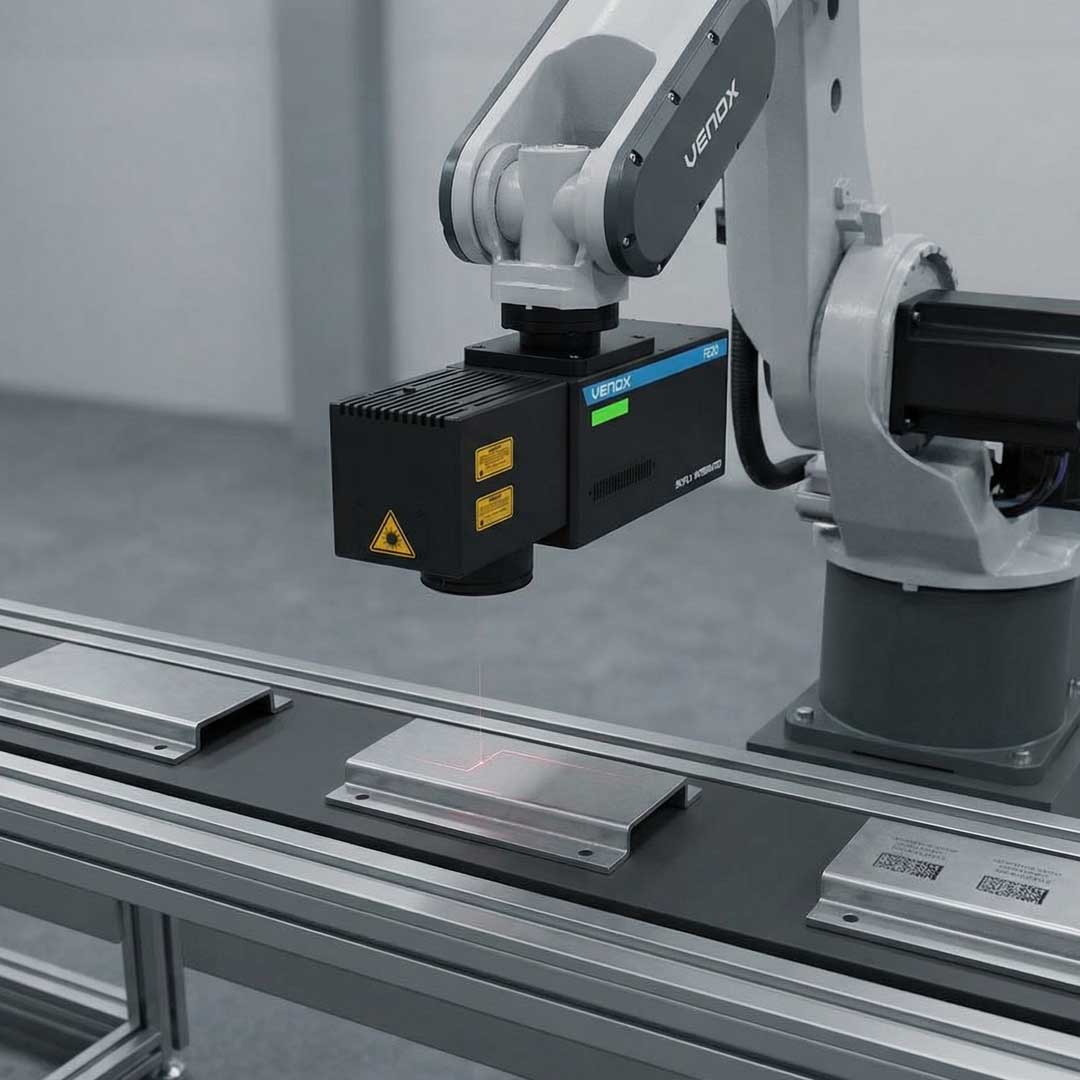
Laser marking machines are used to process data such as logos, serial numbers, barcodes, QR codes, DataMatrix codes, technical information, and part identity onto product surfaces. This application sometimes creates only a visible color change or contrast on the surface, while in other cases it creates a more pronounced surface effect. Engraving, on the other hand, is often considered to mean removing more material from the surface or creating a more noticeable processing effect. Therefore, not every laser marking application is engraving; however, some laser applications can produce results close to engraving.
This distinction becomes especially important in automotive, defense industry, medical, machinery manufacturing, metal processing, and technical product manufacturing. This is because the method to be used must comply with the product’s service life, readability expectations, aesthetic preferences, and quality requirements. In this article, we will examine in detail the differences between laser marking and engraving, in which cases they become similar, and which one may be more suitable for which applications.
What Are the Main Differences Between Laser Marking and Engraving?
To understand the differences between laser marking and engraving, it is first necessary to evaluate what kind of effect both applications create on the surface. This is because the main distinction appears not only in the name, but also in the physical result formed on the surface and in the purpose of use.
1. Laser marking does not always mean deep processing
Laser marking usually aims to create a readable information layer on the product surface. The purpose of this application is to make a serial number, logo, barcode, or technical data clearly visible. In some cases, the surface color or contrast changes, but a very noticeable depth may not be formed on the surface. Therefore, applications performed with laser marking machines do not always mean physical engraving at the level of engraving.
2. Engraving can create a more pronounced surface effect
The term engraving is often used to mean removing a more noticeable amount of material from the surface or creating physical depth. This type of more pronounced effect is preferred especially on certain metal parts, molds, label plates, or products that require special marking. In other words, engraving can refer not only to a visible result, but also often to a processing result that can be felt by hand.
3. The application purpose may differ
For a business, the purpose may only be to make the product identity visible. In such a case, laser marking may be sufficient. However, in some applications, much stronger permanence, higher resistance to mechanical wear, or a deeper surface effect may be required. In this case, an engraving-like approach may be preferred. Therefore, the difference is not only technical, but also related to the purpose of use.
4. Visual results may not be the same
The visual result produced by laser marking and engraving may also differ. Laser marking can offer a cleaner, clearer, and more refined appearance on some surfaces. Engraving, on the other hand, can create a stronger recessed effect or a harder surface feel. This difference becomes important depending on the aesthetic expectations of the product. Especially when a brand logo or technical information will be processed, visual quality preference affects the decision.
5. Areas of use vary depending on the application
Laser marking machines are most often preferred in mass production for product identification, barcodes, QR codes, DataMatrix codes, technical data, and logo marking. The engraving approach, on the other hand, may stand out more in applications where a pronounced surface effect is required and, in some cases, where decorative or deeper marking is expected. However, these two areas may also overlap from time to time.
6. Even if the same system is used, the result may differ
When the same laser marking system is operated with different parameters, it can create different effects on the surface. Therefore, a system can provide results for both marking and engraving-like applications. The most important point is for the business to clearly define what it wants and determine the correct parameter structure accordingly.
To review different application types and solution infrastructures, you can visit the laser marking machines page, or take a look at the laser marking systems page for a broader solution perspective.
When Should Laser Marking Be Considered, and When Should Engraving Be Considered?
Choosing the right method for a business is much more important than the theoretical definition of the concepts. This is because the right choice should be determined according to the product’s usage conditions, production speed, aesthetic expectations, and data processing needs. Therefore, the choice between laser marking and engraving should be application-oriented.
7. If product identification is required, laser marking may be more suitable
If a serial number, QR code, barcode, DataMatrix code, logo, or technical information will be processed on the product, laser marking is often a more practical and suitable solution. Especially in companies engaged in mass production, readability, speed, and standardization are important. For this reason, laser marking systems are more frequently preferred in such applications.
8. If a more noticeable physical effect is desired, the engraving approach may stand out
In some applications, the marking may be expected not only to be visible, but also to be more noticeably felt on the surface. In this case, the engraving approach may become more suitable. This difference is especially important for special parts where durability and a pronounced surface effect are priorities.
9. Laser marking may be more advantageous for mass production speed
For businesses engaged in high-volume production, the marking solution must be compatible with the cycle time. Laser marking machines can provide an advantage at this point because they can be more easily integrated with mass production lines. If the goal is to process product identity quickly and consistently, the marking approach may be more logical.
10. The marking logic is more suitable for data such as barcodes and QR codes
Code clarity is very important in machine-readable data structures. In applications such as barcodes, QR codes, and DataMatrix codes, the goal is not to create a deep recess on the surface, but to achieve a readable and balanced structure. Therefore, laser marking may be a more appropriate approach for this type of data processing need.
11. Aesthetic expectations can influence the choice
If a simpler, cleaner, and more professional appearance is desired on the product, laser marking often stands out. If a more pronounced, stronger, and engraved-feeling application is targeted, engraving may be preferred. Therefore, brand appearance and product design also influence the selection.
12. Material type is decisive in the decision
The most suitable effect may vary on metal, stainless steel, aluminum, plastic, or coated surfaces. Therefore, when making a selection, not only the conceptual difference but also the laser response of the surface should be taken into account. Sample tests support the healthiest decision at this point.
13. Quality and traceability requirements determine the method
If product tracking, quality control, and data visibility are the main priorities, laser marking systems may be more suitable. This is because these systems offer strong advantages in serial number and data coding applications. Engraving should be considered more in scenarios where the expectation of a physical marking effect comes to the forefront.
14. Comparative topics are very valuable for SEO and AI visibility
Topics such as “are laser marking and engraving the same thing” carry high value for both users seeking technical information and companies in the purchasing process. Therefore, they provide strong visibility in terms of search engines and AI-based answer systems. This is because the user is looking for clear explanation and decision support here.
15. The right choice should be made according to the application purpose
As a result, there is no single “better” option between laser marking and engraving. What matters is the purpose of the application, what type of data will be processed, what kind of effect is expected on the surface, and what the production conditions require. When clear answers are given to these questions, choosing the right technology becomes much easier.
Laser marking and engraving are not the same thing; however, in some applications, they can create results that are close to each other. While laser marking stands out more in readable data and product identification needs, engraving may be preferred in applications that require a more pronounced surface effect. If you want to evaluate the most suitable solution for your products, you can review fiber laser marking solutions or receive expert opinion directly through the contact page.
