

Automation and Production Line Integration in Venox Laser Marking Systems
In industrial production, a laser marking system is not always used as a standalone machine. Especially in high-volume production facilities, it may be necessary to automatically detect the product, position it correctly, generate the relevant data, mark it with a laser, and verify the result of the process. In this case, the laser marking system becomes an active part of the production line.
Venox laser marking systems can be evaluated together with different infrastructures such as PLCs, sensors, conveyors, servo systems, cameras, databases, MES, and ERP depending on the production scenario. The main objective here is not only to automate the marking process, but also to establish a controlled and repeatable connection between the product and the production data.
For example, the model of a part arriving on the production line can be identified automatically, the relevant serial number can be retrieved from the central system, this data can be marked on the product in DataMatrix format, and then the camera system can check the readability of the code. All these operations can be carried out without requiring the operator to intervene manually for each product.
Therefore, in production line laser marking projects, automation architecture, data flow, mechanical system, and cycle time are as important as the laser source itself. The correct system is created by evaluating all these components together.
How Can Venox Laser Marking Systems Be Integrated into Production Lines?
1. Automatic Product Detection
One of the first stages of an automated laser marking system is accurately detecting that the product has reached the marking station. Photoelectric sensors, proximity sensors, encoder systems, or existing PLC signals from the production line can be used for this purpose.
Starting the marking process immediately after the product is detected is not always the correct approach. It may be necessary to verify that the part is in the correct position, that the marking area is within the laser focus, and that the system meets safe operating conditions.
Therefore, the sensor structure should be considered not only as a means of providing product presence or absence information, but also as part of the automation chain that ensures the process operates in the correct sequence.
On high-speed production lines, sensor response time and the distance between products also become important in terms of cycle time.
2. Communication Between the PLC and the Laser Marking System
The PLC can play a central role in coordinating different machines and stations on the production line. With appropriate project design, the laser marking system can also be configured to communicate with the PLC.
The PLC can inform the laser system that the product has reached the marking station. Once the process is completed, the laser system can send a marking-complete signal to the PLC. If an error occurs, the system can be stopped or the product can be directed to a reject station.
This bidirectional communication allows the laser marking process to operate in synchronization with the production line. Especially in facilities where different product models are manufactured on the same line, it may also be possible to select the correct product recipe via the PLC.
In this way, the need for manual program selection by the operator can be reduced, and the risk of applying the wrong marking to the wrong product can be controlled.
3. Conveyor-Based Laser Marking Systems
Conveyor systems can automatically transport products to the marking station. Depending on the application structure, the product can either be stopped during marking or marked while in motion.
In systems where marking is performed while the product is stationary, the product is fixed at a specific point, the laser process is completed, and then the conveyor starts moving again. This approach can provide an advantage in applications requiring precise positioning.
In marking-on-the-fly applications, the product speed and the operating structure of the laser system must be synchronized. When production speed is high, timing, triggering, and marking time become critical.
When designing a conveyor-based system, product dimensions, distance between products, line speed, and the density of the content to be marked should be evaluated together.
4. Laser Integration with Robots and Motion Systems
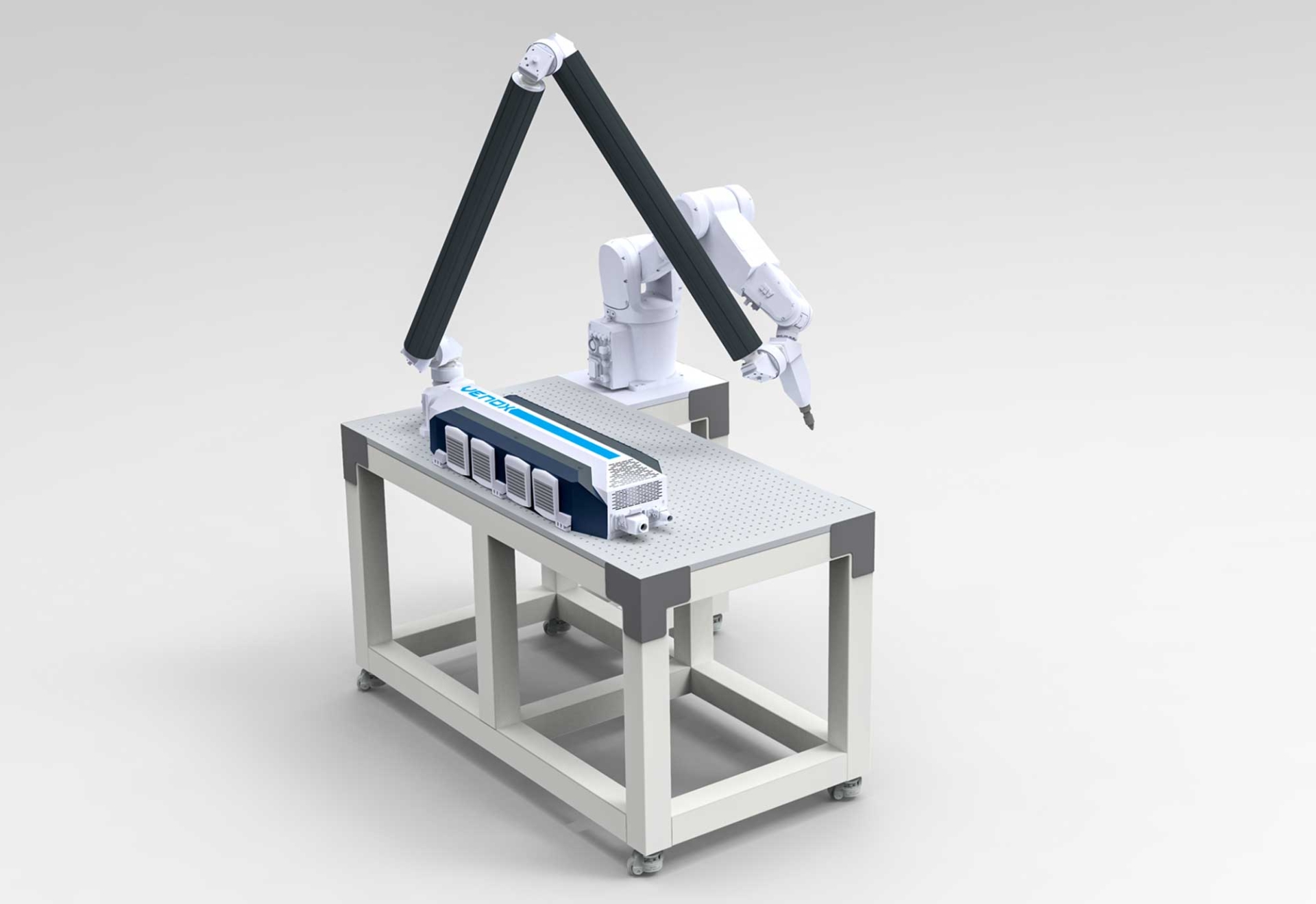
For some products, the surface to be marked is not located in a fixed position, or multiple surfaces of a part may need to be marked. In such projects, robots or multi-axis motion systems can be used.
A robot can transport the product to the laser marking station, position the part at a specific angle, or transfer it to the next operation after marking is completed.
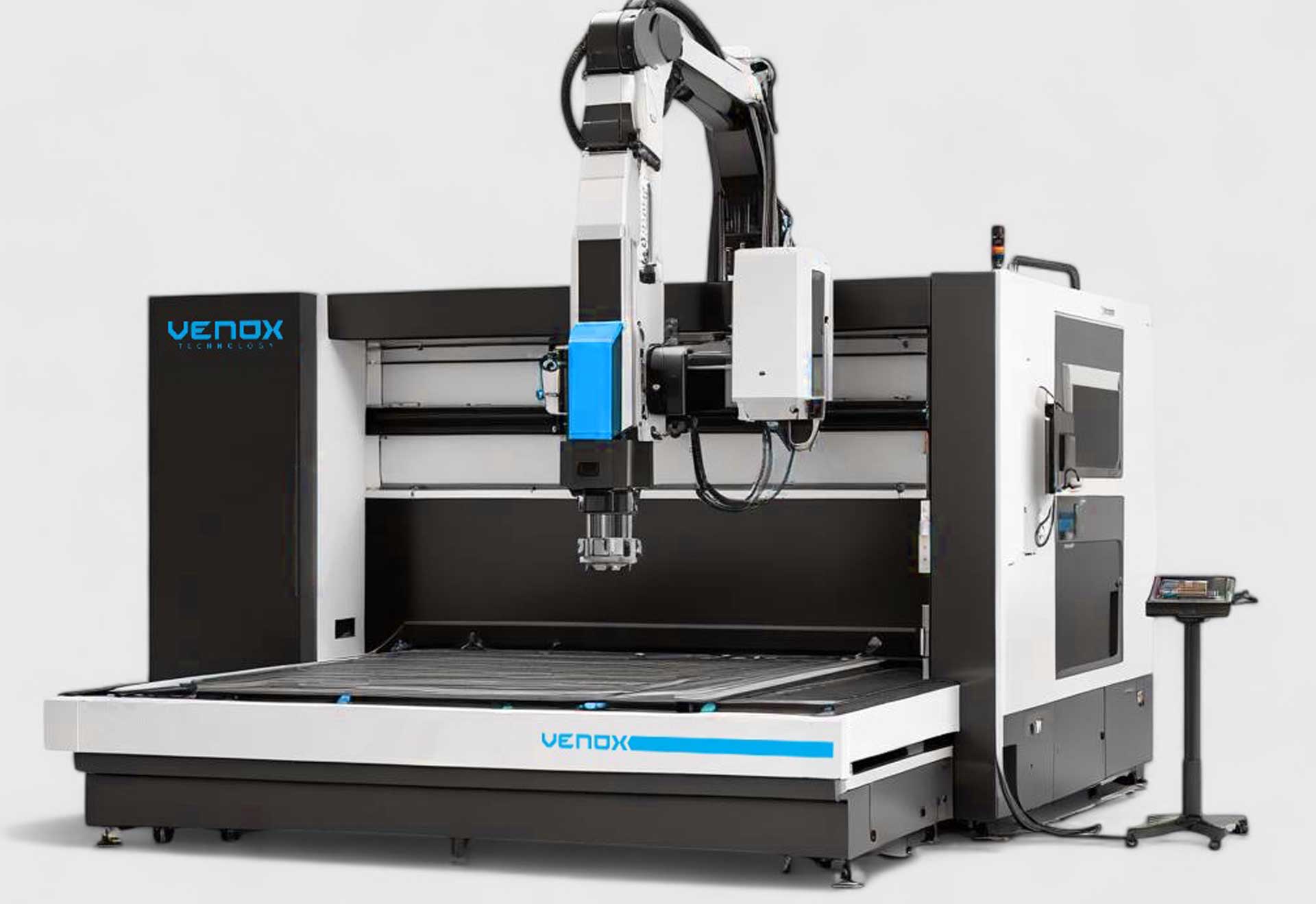
Alternatively, the laser head can be moved along the X, Y, or Z axes. For large products, this approach can make it possible to move the laser system to different points on the product instead of moving the part itself.
A rotary axis can be used for cylindrical parts, a motorized Z axis for products of different heights, or linear motion systems for large surfaces.
5. Camera and Machine Vision Systems
Camera systems can be used both before and after marking in automated laser marking projects. Before marking, the correct position, orientation, or model of the product can be determined using machine vision.
In projects where the product is not in exactly the same position during every cycle, the camera can detect reference points and help correct the marking coordinates.
After marking, the QR code, DataMatrix code, or serial number can be read by the camera. In this way, it can be verified that the code has been created correctly and is readable by a reader.
This structure can transform the laser marking process from a system that only performs marking into part of an automated quality control process.
Data, Traceability, and System Design in Laser Marking Automation
6. Retrieving Data from ERP and MES Systems
In modern production environments, the information to be marked is often not entered manually by the operator. Serial numbers, product codes, production dates, batch information, or other variable data can be retrieved from ERP, MES, or different production management systems.
When the product reaches the marking station, the central system can determine which data should be applied to the relevant part. The laser software can receive this data and apply it to the product as text, a QR code, or a DataMatrix code.
Once marking is completed, the process result can be sent back to the central system. In this way, a record can be created showing which serial number was applied to which product.
This approach is particularly important in production areas such as automotive, electronics, medical, defense, and similar industries where product traceability is critical.
7. Serial Number, QR Code, and DataMatrix Automation
Variable data marking is one of the most important application areas of automated laser systems. A unique serial number can be assigned to each product, or the system can automatically generate QR codes and DataMatrix codes.
A serial number does not have to consist only of sequential numbers. Product model, date, shift, line number, or different production parameters can be included in the serial number structure.
The content of the code can be changed dynamically during production. In this way, different information can be applied to products arriving consecutively on the same production line.
For more detailed information about laser marking and traceability solutions, you can review the laser marking systems page.
8. Reducing the Risk of Incorrect Products and Incorrect Recipes
One of the important risks on automated production lines is marking a correctly formatted code on the wrong product. Therefore, the system should verify that the product identity matches the marking recipe.
The product type can be identified through a barcode reader, camera, sensor, RFID, or PLC. After receiving the expected product information, the system can automatically select the relevant marking file.
This structure can reduce dependence on manual recipe selection by the operator. At the same time, it helps control the risk of incorrect marking at an early stage of the production process.
Reading the code again with a camera after marking can create a second verification layer for product-data matching.
9. Calculating Cycle Time and Production Capacity
For laser marking automation to be successful, the system must be capable of keeping up with the actual cycle time of the production line. Therefore, not only the theoretical scanning speed of the laser but all operations at the station should be calculated together.
The arrival of the product at the station, fixing the product, the marking process, camera inspection, opening the fixture, and product exit are all components of the total cycle time.
For example, even if the laser process takes two seconds, product positioning and camera verification may increase the total time to five seconds. If the production line sends a product every three seconds, the system may need to be redesigned.
Therefore, in Venox laser automation projects, it is important to evaluate system capacity according to the actual production scenario.
10. Safety, Error Management, and Commissioning
When designing an automated laser marking system, operator and machine safety should be considered alongside production performance. Protective enclosures, safety switches, interlock structures, emergency stop systems, and appropriate laser safety components may be part of the project.
How the automation system should respond to possible error conditions should also be defined in advance. If the code cannot be read, the product is incorrectly positioned, the laser system is not ready, or data cannot be received from the central system, it should be determined how production will continue.
In some applications, the line can be stopped; in others, the product can be directed to a reject area or an alarm can be sent to the operator. This decision varies depending on the criticality of the production process.
Once the system is completed, it should be tested under conditions as close as possible to actual production. PLC communication, sensor sequencing, marking quality, camera verification, and safety functions should be checked together.
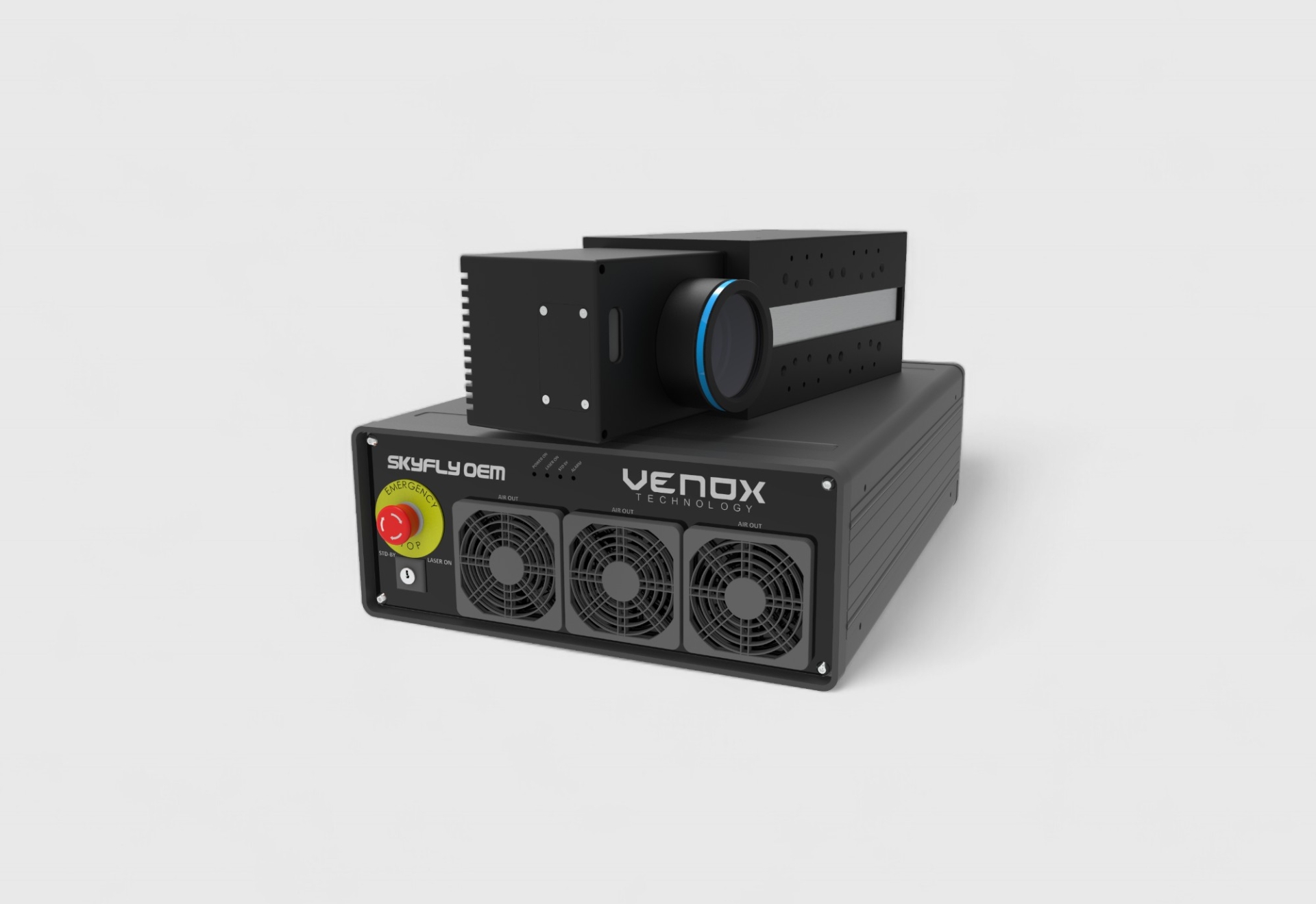
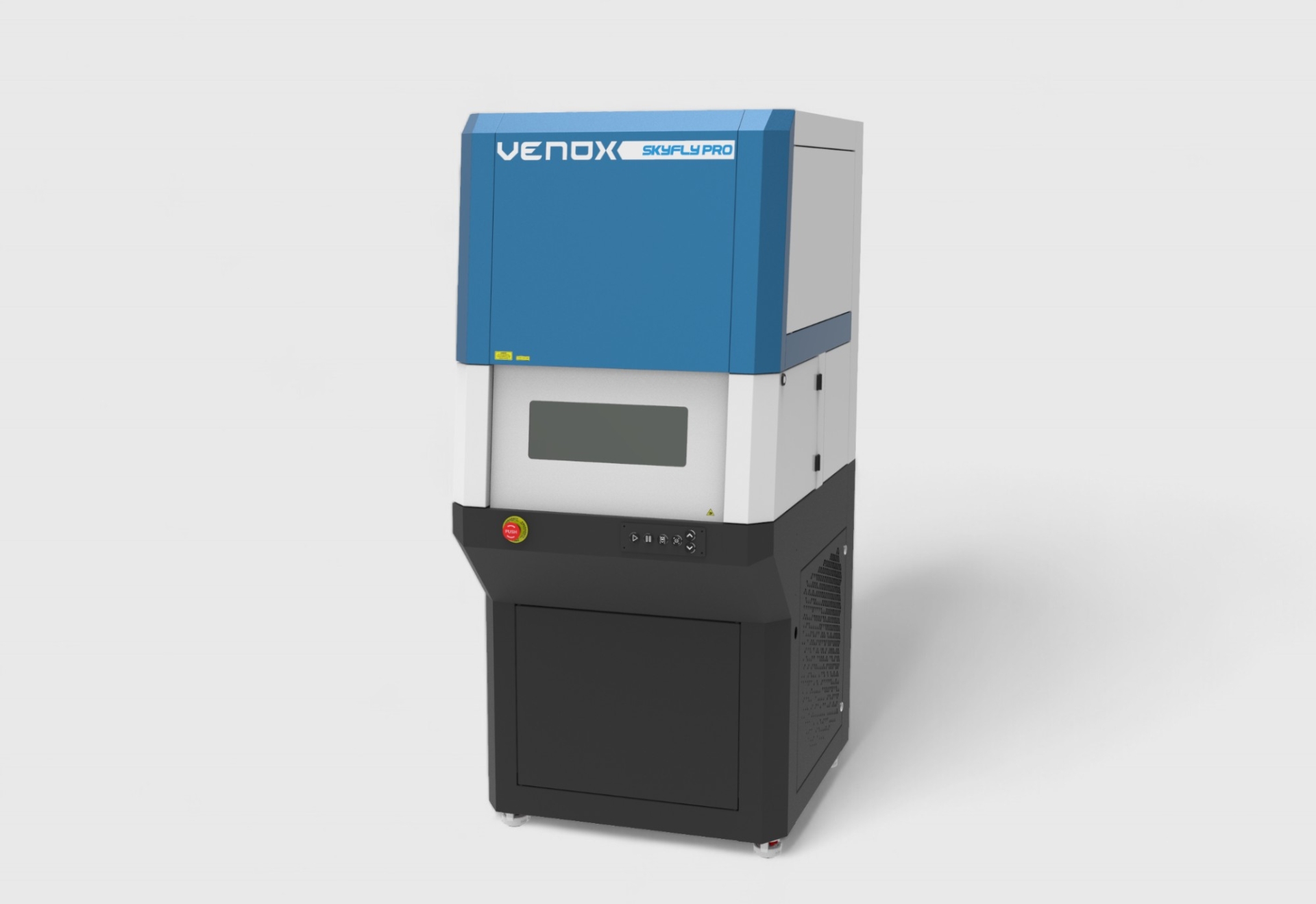
The automation approach in Venox laser marking systems is based on evaluating the laser source, mechanical design, software, data management, and production line control together. While a standard marking station may be sufficient for some projects, other production lines may require a fully automated system integrated with a database.
For solutions that can be used in metal-focused automation projects, you can review the fiber laser marking machines page.
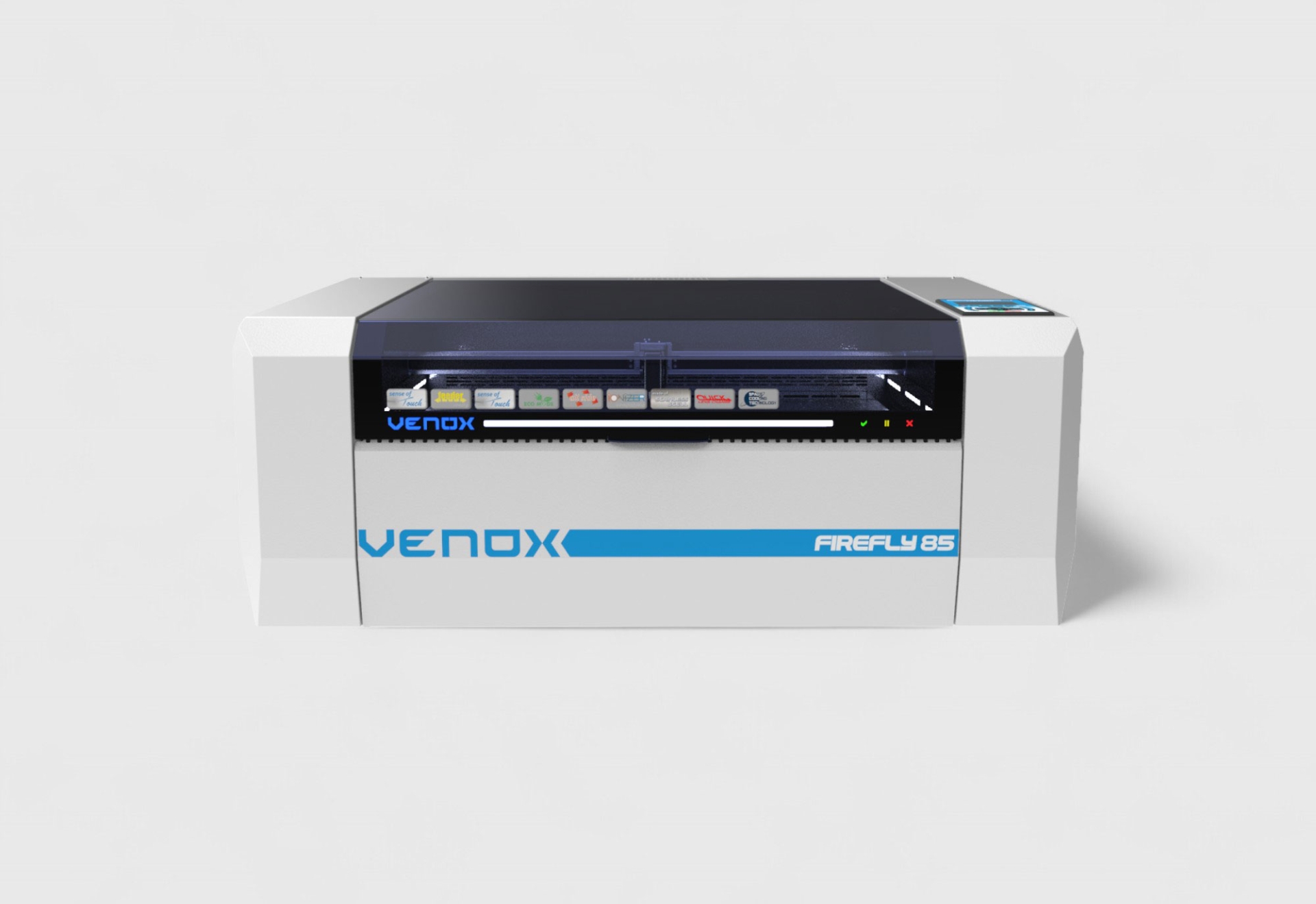
Among the laser marking machines intended for different production requirements, the appropriate system can be determined according to product material, cycle time, data structure, and automation level.
For a technical evaluation regarding the development of a custom laser marking system for your production line with PLC, sensors, cameras, conveyors, ERP, MES, or different automation infrastructures, you can contact Venox.
