

Can Venox Manufacture Custom Laser Marking Machines? How Is a Project-Specific System Designed?
In industrial production, not every laser marking requirement can be solved with a standard machine. Requirements such as the size, weight, geometry, position on the production line, cycle time, or data integration of the part to be marked may require moving beyond standard laser marking systems. In such cases, project-specific laser marking machine design becomes necessary.
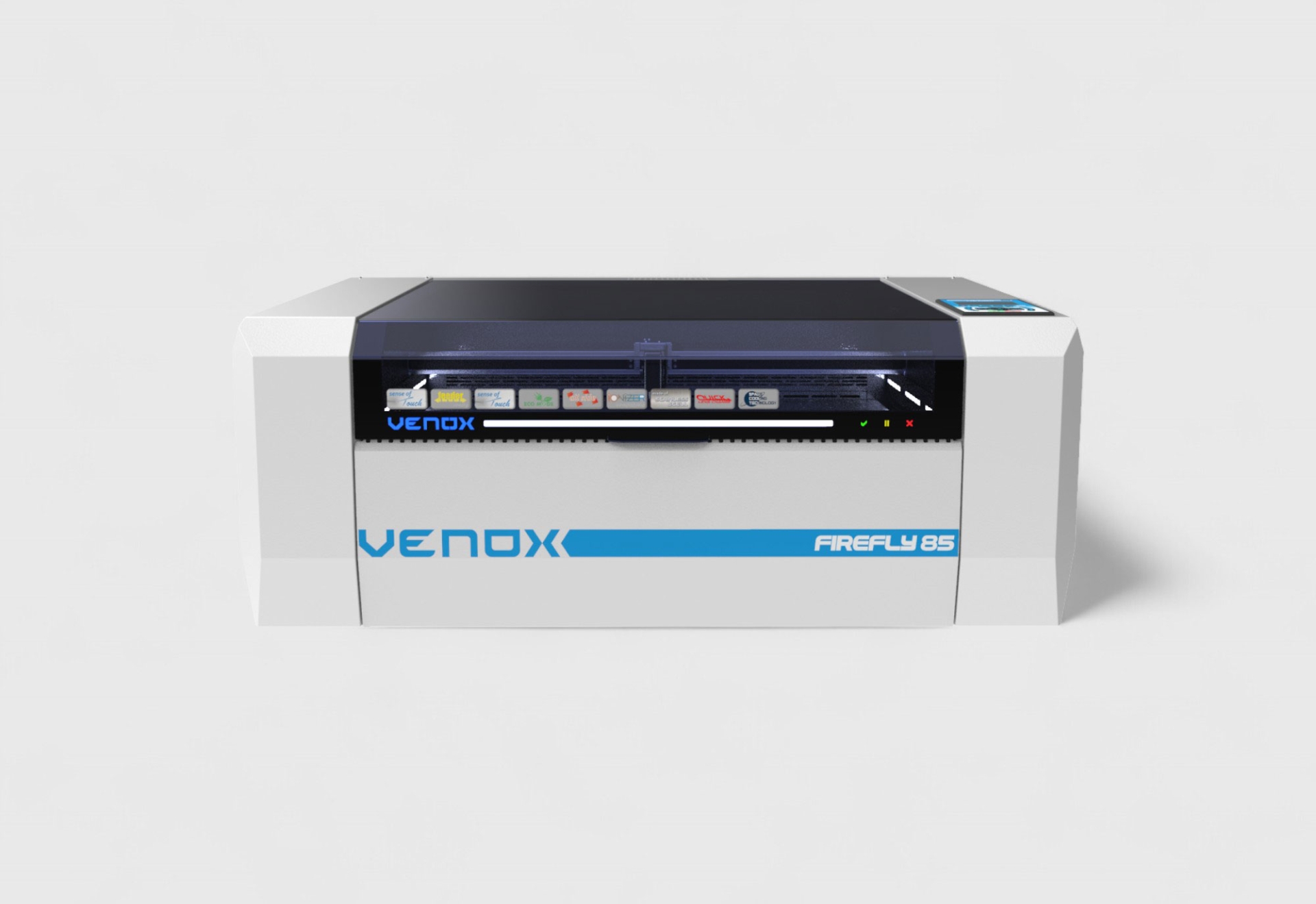
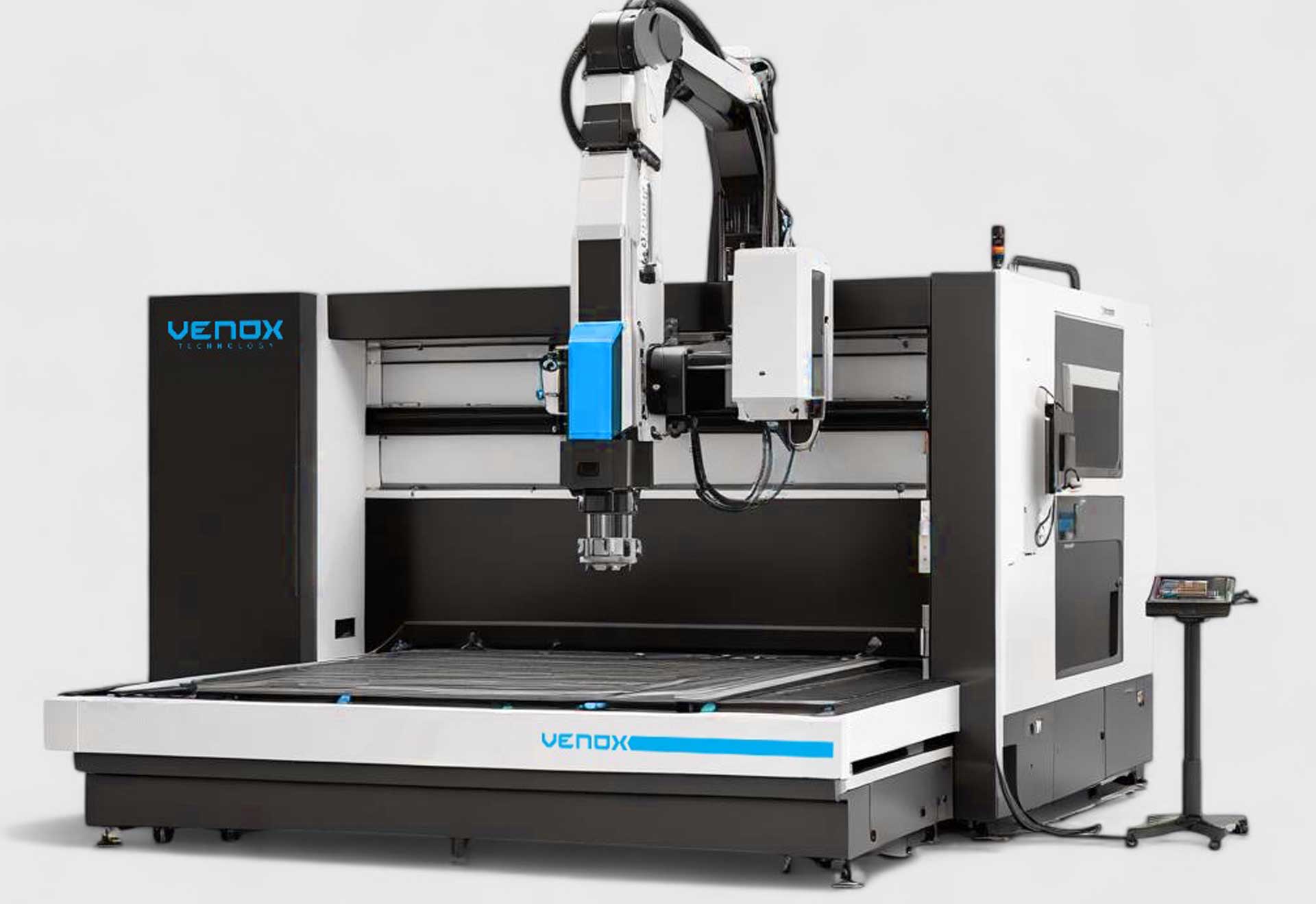
Alongside standard machines, Venox laser marking solutions can also include systems that can be customized according to the production process. In these systems, not only the laser source but also components such as the mechanical enclosure, fixture, motion axes, sensors, PLC, camera, conveyor, software, and data integration can be configured according to the needs of the application.
For example, a system in which an operator manually places a metal part only a few centimeters in size does not have the same machine architecture as a system in which an industrial component weighing several hundred kilograms is automatically marked on a production line.
Therefore, when developing a custom laser marking machine, the entire production process should be analyzed first rather than starting with laser power or machine model. How the product will enter the system, how it will be positioned, what information will be marked, and how the product will continue after the process is completed form the basis of the system design.
How Is a Project-Specific Laser Marking Machine Designed?
1. Technical Analysis of the Product and Production Process
The first stage in designing a custom laser marking system is a detailed examination of the product to be marked. The material type, product dimensions, weight, surface geometry, and the position of the area to be marked are determined.
In addition, production volume and the current cycle time should also be evaluated. The requirements of a company producing only a few products per hour are completely different from those of a mass-production line where a new product reaches the marking station within seconds.
Whether the marking content will be fixed or variable also affects the system design. If a fixed logo or product name will be marked, a simpler structure may be sufficient. If a different serial number, QR code, or DataMatrix code will be applied to each product, software and data integration become an important part of the process.
At this stage, the level of operator involvement in the system should also be determined. If manual loading will be used, ergonomics and occupational safety should be considered; if the system will be used on an automated line, the sensor and PLC architecture should be taken into account.
2. Determining Fiber, CO₂, or UV Laser Technology
Designing a custom machine does not change the principles of selecting the laser technology. First, the laser source suitable for the material to be marked should be determined.
Fiber laser technologies can be widely considered for metal surfaces. Information such as serial numbers, logos, or DataMatrix codes can be marked on stainless steel, carbon steel, aluminum, brass, and various metal alloys.
CO₂ laser technologies can be used for wood, leather, paper, cardboard, and some non-metal products. UV laser systems can be considered for sensitive plastics, electronic components, or applications requiring a more limited thermal effect.
The correct technology selection should be verified not only through theoretical material knowledge but also through sample tests carried out on the actual product.
For more information about different technology options, you can review the laser marking systems page.
3. Product-Specific Fixture Design
For laser marking to be repeatable, the product must be positioned at the correct point in every cycle. Therefore, the fixture is one of the most important components of a custom laser system.
The fixture ensures that the product is held in the correct position and that the marking area aligns with the laser focus. Especially in mass production, even a positional difference of a few millimeters can cause the mark to be applied in the wrong place or reduce code quality.
Mechanical, pneumatic, or automated fixtures can be designed according to the product geometry. A poka-yoke approach that prevents the operator from placing the product in the wrong orientation can also be incorporated into the fixture design.
In applications involving heavy parts, the fixture is important not only for positioning but also for operator ergonomics and safety.
4. Rotary, X-Y, and Z Axis Systems
In standard laser marking systems, the laser processes fixed surfaces within a specific working area. However, some products may exceed the limits of this area or geometry.
If cylindrical parts need to be marked around their circumference, a rotary axis can be used. By rotating the product, the laser can process the surface in a controlled manner.
A motorized Z axis can be used for products with different heights. In this way, the operating height of the laser head can be changed automatically or in a controlled manner according to the product recipe.
If different points of large parts need to be marked, X-Y motion systems can be used. In these systems, either the product or the laser head can be moved to different coordinates, allowing multiple marking areas to be created within a single machine.
5. Custom Enclosure and Operator Safety
When designing a project-specific laser marking machine, the mechanical enclosure should not be considered merely as an aesthetic outer body. The enclosure is an important component in terms of laser safety, operator ergonomics, and control of the production process.
Depending on the size of the product, enclosures with a larger working volume than standard machines can be designed. In manually loaded systems, the opening direction of the door and the operator’s working area should be taken into consideration.
Automatic doors, safety switches, interlock structures, emergency stop systems, and appropriate laser safety windows can be integrated into the system depending on the application.
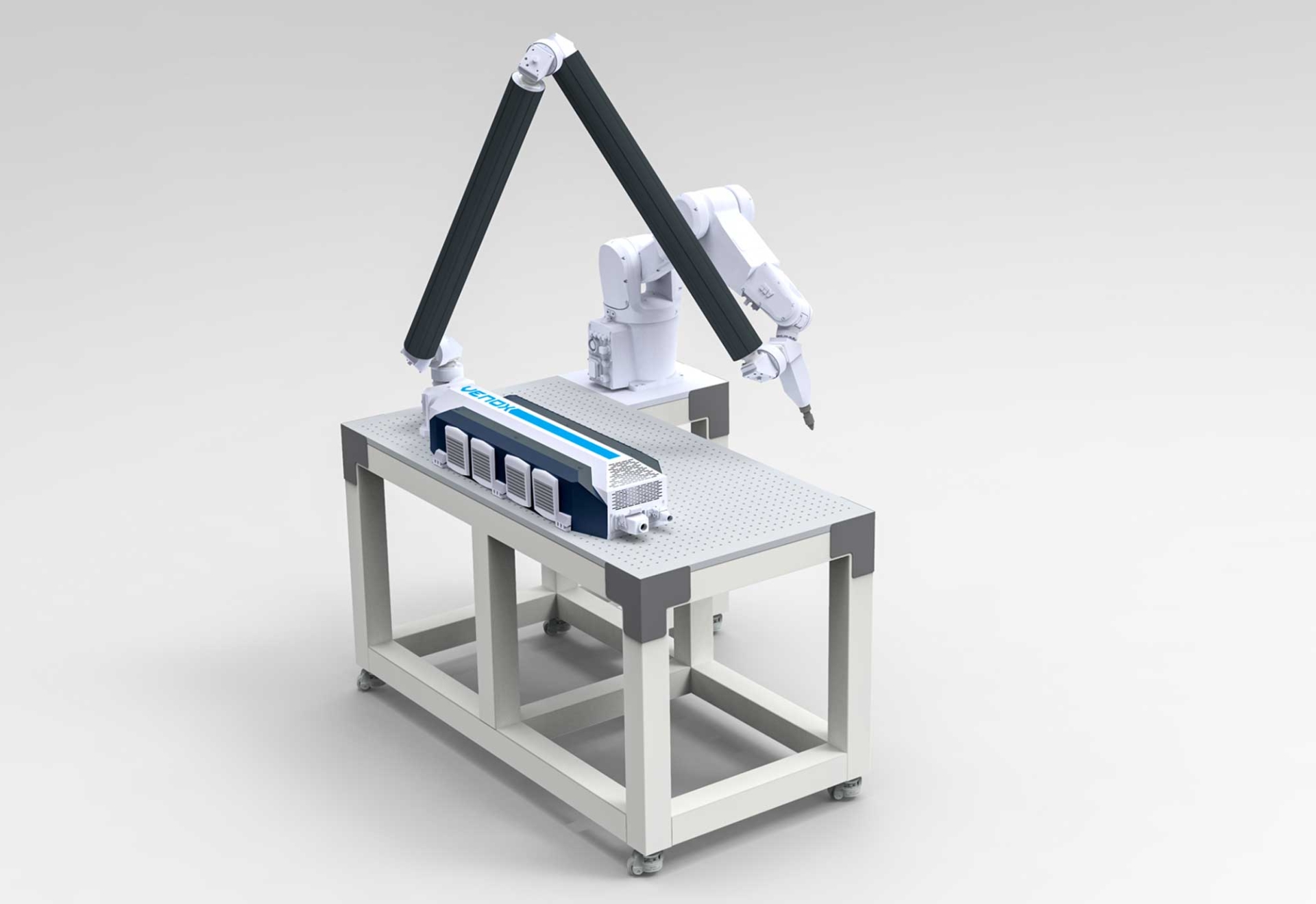
In projects involving large or heavy products, the product may need to be loaded into the machine using a crane, robot, or handling system. In this case, the enclosure geometry should be shaped according to the existing production equipment.
How Are Automation and Integration Implemented in Custom Laser Marking Systems?
6. PLC and Sensor Integration
As the level of automation increases in custom laser marking machines, PLC and sensor systems become increasingly important. Whether the product is in the correct position, whether the door is closed, whether the fixture has secured the product, or whether the laser system is ready can be monitored through different sensors.
The PLC can manage the process sequence based on this information. When the product reaches the station, the fixture can close, the laser marking process can begin, and the product can be released once the process is complete.
For safe and controlled production, it is important that each stage does not begin before the previous condition has been completed.
If different products are processed within the same system, the PLC can select the correct product recipe and ensure that the corresponding fixture and marking parameters are used.
7. Conveyor and Automatic Product Handling Systems
On high-volume production lines, it may not be efficient for an operator to manually carry each product to the laser marking machine. In this case, the custom system can be integrated into the existing conveyor line or a dedicated product handling system can be created for the machine.
After the product is detected by a sensor, it can be stopped at the marking position. The fixture can secure the product, and once the laser process is complete, the product can be released back onto the line.
In some projects, marking can be performed while the product remains in motion without stopping completely. However, in such applications, line speed, product spacing, and laser processing time must be calculated much more precisely.
One of the main objectives when designing conveyor integration is to ensure that the system does not reduce the existing production capacity.
8. Camera and Machine Vision Integration
Camera systems can be used for different purposes in project-specific laser marking machines. The camera can verify whether the product has been placed in the correct orientation or automatically detect the reference point to be marked.
In applications where there are small variations in product position, the machine vision system can correct the marking coordinates accordingly.
After marking is completed, the camera can read codes such as QR codes or DataMatrix codes to verify the accuracy of the process. In this way, it is confirmed not only that the code has been marked, but also that it can be read by a machine.
By transmitting the camera result to the PLC or production system, defective products can be automatically separated or the production line can be stopped according to predefined rules.
9. ERP, MES, and Database Connections
If variable data is required in custom laser marking projects, the machine may need to communicate with the company’s digital infrastructure.
The serial number, model code, date, batch number, or other information of the product to be manufactured can be obtained from ERP, MES, or another database.
The laser system can automatically convert the incoming information into text, QR code, or DataMatrix format. Once marking is completed, the process result can be sent back to the central system.
This structure creates a connection between the code on the physical product and the company’s digital production record.
This approach can be particularly important in automotive, electronics, defense, machinery, and other industries requiring a high level of traceability.
10. Sample Testing, Prototyping, and Commissioning Process
When developing a project-specific laser marking machine, validating the application step by step is generally a more reliable approach than placing the system directly into mass production.
First, a laser marking test can be performed on the actual product. Once the appropriate laser technology, power, lens, and parameters have been determined, the mechanical and automation design can be developed according to these requirements.
When the machine is completed, all process steps such as product loading, fixturing, marking, camera inspection, and product unloading should be tested together.
Cycle time should also be measured at this stage. Even if laser marking is completed in two seconds, it should be remembered that mechanical movements can increase the total process time.
Once the system is installed at the production facility, commissioning can be carried out under field conditions. PLC connections, production line signals, data communication, and safety functions can be rechecked in the actual production environment.
When evaluating Venox custom laser marking systems, the main objective is not simply to manufacture a standard machine in different dimensions. The goal is to ensure that laser, mechanical, automation, software, and machine vision components work together within a single system according to the requirements of the product and the process.
In some projects, a product-specific fixture alone may be sufficient, while other applications may require a multi-axis motion system, automatic door, conveyor, robot, camera, and central data integration. Therefore, the scope of the custom machine design should be determined according to the production process.
To explore laser solutions suitable for metal-focused projects, you can visit the fiber laser marking machines page.
For standard and customizable product options, you can review the laser marking machines page.
If your product is not suitable for a standard laser marking machine, you can contact Venox to evaluate requirements such as custom fixtures, motion systems, automation, cameras, or production line integration.
