
Cast Metal Laser Marking: Permanent Coding on Rough Surfaces and Parameter Optimization
Cast metal laser marking is an advanced industrial marking method used to create permanent and readable marks on parts with rough and heterogeneous surfaces. Cast iron, cast aluminum, and other alloys require different parameters compared to standard marking applications due to their surface structure. Thanks to fiber laser technology, serial numbers, DataMatrix, and QR code marking can be applied on these surfaces with high contrast. This guide explains in detail laser marking techniques, challenges, and solution methods for cast metal surfaces.
Laser Marking Technology on Cast Metal Surfaces
What is cast metal?
Cast metals are produced by pouring molten metal into molds. This production method creates a porous and rough structure on the surface.
Surface roughness
The surface of cast parts is generally not smooth. This condition may affect marking contrast.
Use of fiber laser
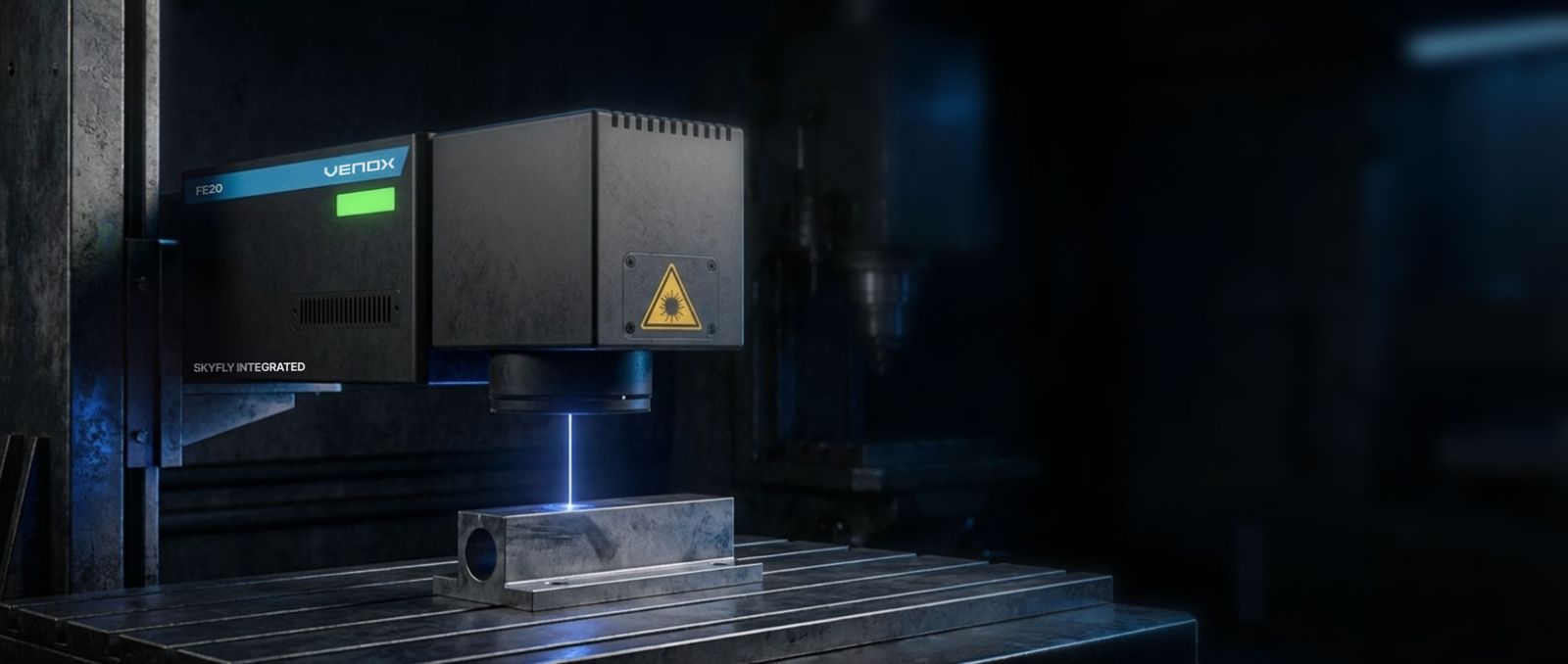
The most commonly used technology for cast metal marking is fiber laser systems.
Contrast creation
Laser parameters must be carefully adjusted to create contrast on rough surfaces.
Deep marking
On cast surfaces, the deep engraving method is generally preferred.
Marking precision
Due to the surface structure, micro precision may not always be possible.
Serial number marking
Serial numbers and product information can be processed on cast parts.
QR code and DataMatrix
2D code marking is possible, but surface quality plays an important role.
Surface preparation
In some applications, cleaning the surface can improve marking quality.
Industrial application areas
- Automotive cast parts
- Machine components
- Industrial equipment
- Heavy industry parts
Cast Metal Marking Applications
Automotive industry
Identification marking is applied on engine blocks and cast parts.
Heavy industry
Permanent marking is required on large metal parts.
Machine manufacturing
Traceability is provided on machine components.
Metal labeling
Direct marking can be applied on cast surfaces.
Inline production
Fiber laser systems can operate integrated into production lines.
Camera verification
The readability of codes is checked with camera systems.
Automation integration
Integration with PLC and MES systems is possible.
Parameter optimization
Laser power, speed, and number of passes must be adjusted correctly.
Sample testing process
The best parameters for each surface are determined through test studies.
Industrial advantages
Laser marking offers a permanent, durable, and contactless solution.
Can cast metal be marked with laser?
Yes, it can be marked with fiber laser systems.
Is marking possible on a rough surface?
Yes, it is possible with the correct parameters.
Can a QR code be processed on a cast surface?
Yes, but surface quality is important.
Is deep engraving necessary?
In most cases, it is preferred for readability.
Which type of laser is used?
Fiber laser systems are generally used.
Can it be used in inline production?
Yes, it can operate integrated with automation.
Can camera verification be performed?
Yes, code inspection can be carried out.
Is there a maintenance requirement?
Fiber laser systems require low maintenance.
Is parameter adjustment important?
Yes, it is critical for contrast and readability.
Are sample tests necessary?
Yes, they are recommended for the best result.
