

DataMatrix Laser Marking: Size, Contrast, and Readability
DataMatrix is a two-dimensional code standard capable of storing a large amount of data in a small area. It is widely used in automotive component traceability, medical device UDI coding, electronic component identification, and part identification applications in the aerospace industry. When marked directly onto a component using a laser (DPM – Direct Part Marking), it creates a readable identification code that lasts throughout the product's service life without requiring labels, paint, or ink.
Success in DataMatrix laser marking is not simply about making the code "visible" on the surface, but ensuring that it can be "read" consistently by readers on the production line and in the field. This requires the combined management of cell size, contrast, quiet zone, module uniformity, and surface conditions. This article explains the key parameters involved in laser DataMatrix marking and the factors affecting readability.
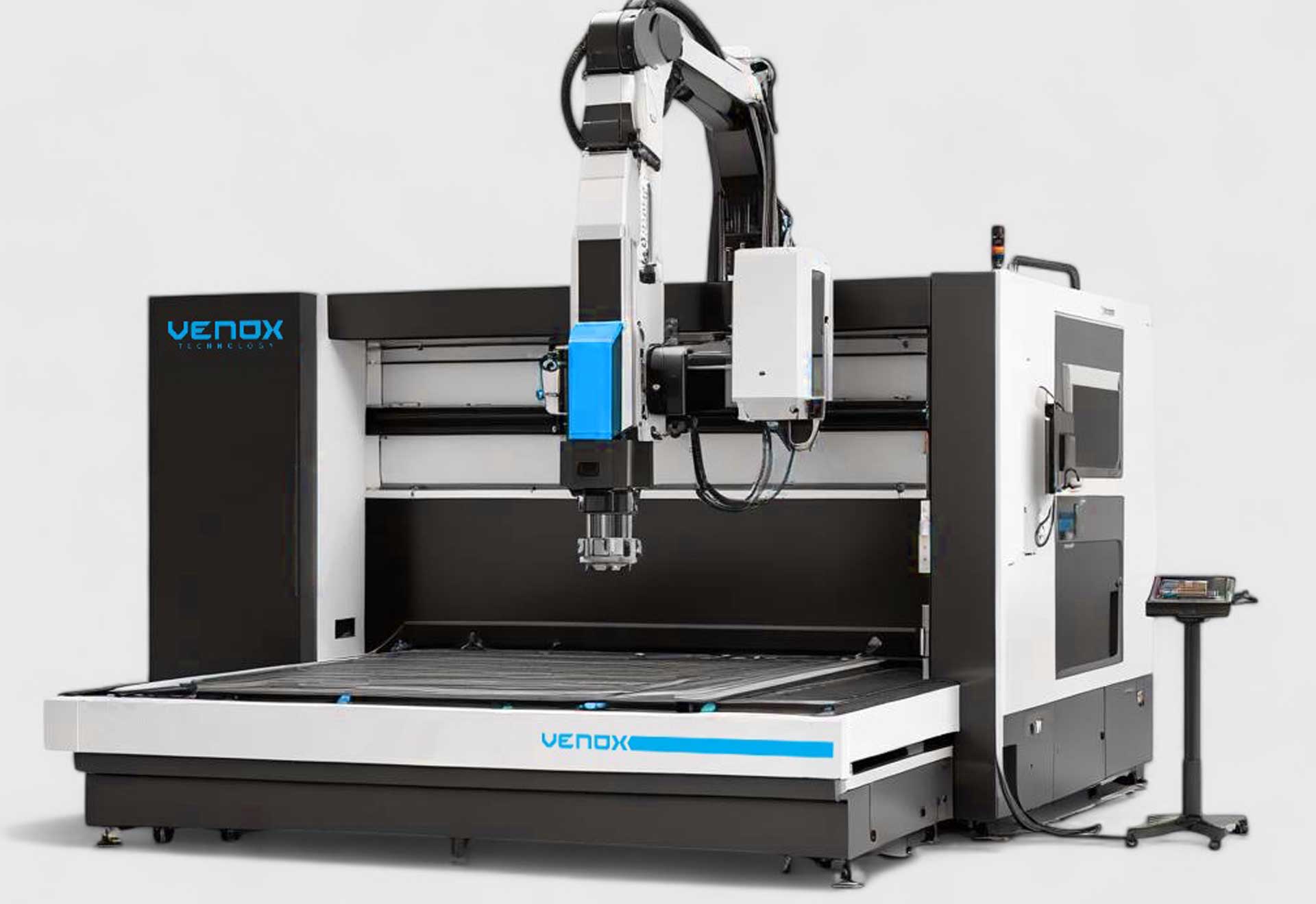
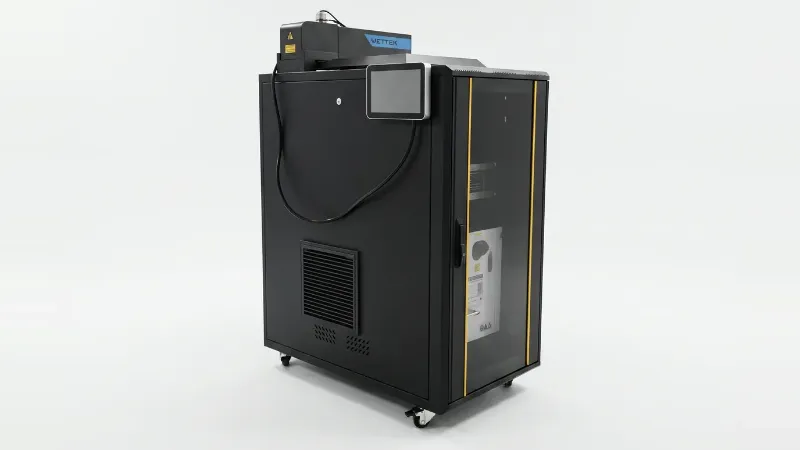
Venox's traceability solutions and laser marking machines enable DataMatrix coding to be integrated with production data. You can request sample testing to verify the target code size and readability on your components.
DataMatrix Code Structure and Laser Marking Parameters
Symbol Size and Number of Cells (Modules)
A DataMatrix code is a matrix consisting of square cells. As the amount of data increases, the number of cells in the matrix increases from 10×10 to 144×144. In laser marking, the physical size of the code is determined by multiplying the number of cells by the size of an individual cell. For example, a 16×16 code with a cell size of 0.25 mm occupies an area of approximately 4 × 4 mm. If the code content is unnecessarily long, the number of cells increases, reducing the cell size within the same area and consequently decreasing readability.
Cell Size and Laser Beam Diameter
Each cell must be either uniformly filled or completely empty. If the laser beam diameter is too large relative to the cell size, adjacent cells may overlap; if it is too small, gaps may remain within the cells. In fiber laser systems, the beam diameter depends on the lens selection: a 110 mm lens provides a smaller spot size suitable for fine cells, while lenses covering larger marking areas are suitable for codes with larger cells. In practice, a cell size at least 2–3 times the laser beam diameter provides consistent results.
Contrast Generation Methods
Lasers generate DataMatrix contrast through different mechanisms: dark cells created by thermal coloration on stainless steel and titanium; light-colored cells produced by surface engraving on aluminum; exposure of the underlying material color through coating removal on anodized and painted surfaces; and color changes or foaming on plastics. The appropriate method depends on the material and must be compatible with the illumination method used by the code reader.
Quiet Zone and Positioning
A clear area (quiet zone) at least one cell wide must be maintained around the code. Positioning the code near an edge, hole, weld seam, or textured surface makes it more difficult for the reader to distinguish the symbol. On curved surfaces, the code dimensions are limited according to the surface radius to prevent distortion along the direction of curvature.
| Parameter | Effect | Practical Recommendation |
|---|---|---|
| Cell size | Reader resolution and beam compatibility | At least 2–3 times the beam diameter |
| Symbol size | Required area and reading distance | Keep data content as short as possible |
| Contrast | Reading rate | Material-appropriate method, verified through testing |
| Quiet zone | Symbol detection | At least 1 cell, preferably more |
| Module uniformity | Quality grade | Control hatch line spacing and focus |
| Surface condition | Reflection and noise | Remove oil, rust, and burrs |
Ensuring and Verifying DataMatrix Readability
Quality Grading Standards
DataMatrix codes marked directly onto components are graded according to ISO/IEC 29158 (AIM DPM), while ISO/IEC 15415 is used for codes printed on labels. Grading evaluates criteria such as contrast, module uniformity, axial nonuniformity, fixed pattern damage, and unused error correction, assigning grades from A to F. In the automotive and medical industries, customers often require a minimum grade (such as C or B). Therefore, marking parameters should be verified using a code verification device.
Error Correction Capability
The DataMatrix ECC 200 standard includes Reed-Solomon error correction, allowing the code to remain readable even if part of it is damaged. However, this capability should not be used as a justification for producing low-quality codes from the outset. The error correction margin should be reserved for scratches, wear, and contamination that may occur during the product's service life.
Reader and Illumination Compatibility
Laser-marked codes, particularly those produced by engraving, may exhibit low contrast under direct, uniform illumination. DPM readers equipped with low-angle (dark-field) or dome illumination can read these codes much more reliably. The reader and illumination system used on the production line should be selected together with the marking method. During sample testing, readability should be checked using the actual reader installed on the production line.
Durability and Subsequent Processing
If a component will be painted, coated, heat-treated, or sandblasted after the code is marked, these processes may change the contrast. The marking depth and method should be determined with subsequent processing steps in mind. In some applications, the code is marked after these processes; in others, deep engraving is used beforehand to preserve the marking through subsequent operations.
DataMatrix Sample Testing Checklist
- Module uniformity and fill quality at the target cell size.
- Reading rate using the actual reader and illumination system.
- ISO/IEC 29158 grading results.
- Symbol distortion on curved surfaces.
- Readability after subsequent processes (painting, coating, heat treatment).
- Processing time per code and compliance with the target cycle time.
Validate Your DataMatrix Application with Venox
DataMatrix laser marking provides highly reliable traceability when the correct parameters are used. However, code size, contrast generation method, and reader compatibility must be evaluated separately for each material and geometry. You can request sample testing by providing your component, the intended code content, and the quality grade required by your customer.
You can explore Venox's laser marking systems and contact Venox to request DataMatrix application testing and a quotation.
