
Differences Between CO2 Laser and Fiber Laser
The differences between CO2 laser and fiber laser are among the most important evaluation topics for businesses interested in industrial marking and processing technologies. Although both technologies offer laser-based solutions, they differ from each other in terms of operating principle, suitable materials, application areas and how they respond to production needs. Therefore, which system a business should prefer should not be evaluated only with the question “which laser is better,” but with the question “which laser is more suitable for which application.”
Today, laser marking machines are preferred not only for processing information on products, but also for quality control, traceability, brand standardization and production efficiency. However, not every laser technology provides the same result on every surface. While CO2 laser systems can offer advantages on some organic and non-metal surfaces, fiber laser marking solutions can stand out as a stronger option especially in metal-focused applications. Understanding this difference correctly reduces the risk of incorrect investment and supports more efficient system use in the long term.
Especially for companies searching for a “laser marking machine,” the main differences between CO2 laser and fiber laser must be clearly understood. Because the technology to be selected directly affects marking quality, readability, production line compatibility, maintenance approach and total operational efficiency. In this article, we will examine the differences between the two systems under main headings and make the decision process clearer.
Main Technical Differences Between CO2 Laser and Fiber Laser
CO2 laser and fiber laser systems can serve the same purpose, namely creating a controlled process on a surface. However, the infrastructure and application capability of these two systems are different from each other. In the decision-making process, these basic differences must first be understood.
1. Their operating principles are different
CO2 laser systems and fiber laser systems operate with different source structures. This affects many results, from the formation of the laser beam to its effect on the surface. In practice, this technical difference is one of the main factors that determines on which materials the system will operate more efficiently and what type of marking quality it will provide.
2. The material groups they are suitable for vary
One of the most important differences between CO2 laser and fiber laser is the materials on which they stand out. In general, CO2 laser solutions are more frequently considered for wood, glass, acrylic, cardboard, leather, some plastics and organic surfaces. Fiber laser marking, on the other hand, is more frequently preferred especially on metal surfaces, stainless steel, aluminum and various technical parts. Therefore, the first decision criterion is the material to be marked.
3. The marking character may differ
Not every laser technology creates the same visual effect on the surface. While CO2 laser can offer different contrast or surface effects on some surfaces, fiber laser marking systems can provide clearer and more controlled results especially on metal surfaces. This is important in terms of logo appearance, serial number readability, barcode quality and the success of processing technical data.
4. Application areas differ
CO2 laser is generally considered for packaging, organic materials, wooden products, some plastic applications and non-metal surfaces. Fiber laser, on the other hand, is much more widely considered in fields such as automotive, defense industry, electronics, medical, machinery manufacturing and metal processing. Therefore, the sector in which the business operates also becomes a determining factor in the selection.
5. Expectations may vary in coding and precision data applications
If the need is to process a serial number, DataMatrix, QR code or technical data on a metal surface, fiber laser marking machines often stand out as a stronger candidate. CO2 laser, on the other hand, can mostly respond to surface marking or specific application needs on different surface types. The main determining factor here is the combination of the data type and the surface type.
6. Investment evaluation should be made according to the application
When deciding between CO2 laser and fiber laser, comparing only by device name can be misleading. Because the right system should be determined according to the actual application need of the business. Which material is processed, how many products are marked per day, what type of data is used and how fast the line operates should be evaluated together.
To examine metal-focused and industrial marking solutions in more detail, you can visit the fiber laser marking page, and to view general product options, you can take a look at the laser marking machines page.
In Which Situations Can Fiber Laser or CO2 Laser Be More Suitable for Businesses?
The most suitable laser solution for a business is determined according to the production scenario beyond technical specifications. Understanding the differences between CO2 laser and fiber laser is important, but it is equally important to see how these differences reflect in the real production environment. Because choosing the right technology affects not only marking quality, but also process efficiency and return on investment.
7. Fiber laser can be stronger in metal surface-focused production
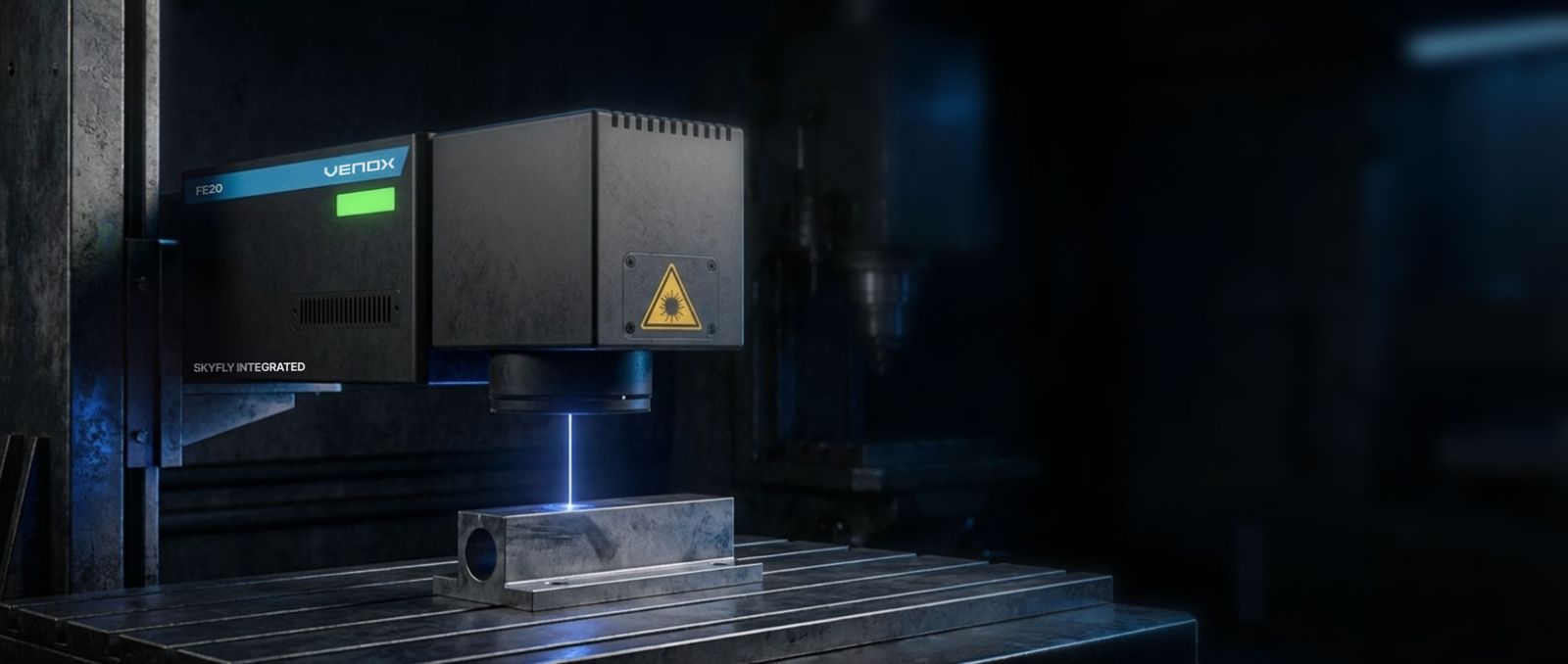
If the business mainly processes metal parts, stainless steel surfaces, aluminum components or technical metal products, fiber laser marking is often a more logical choice. These systems can show strong performance especially in markings such as serial numbers, logos, barcodes and DataMatrix codes. For this reason, fiber laser solutions stand out more frequently in industrial applications.
8. CO2 laser can be considered on organic and non-metal surfaces
If the business’s marking need is concentrated on wood, cardboard, glass, acrylic, leather or certain non-metal surfaces, CO2 laser can be a more suitable solution. Therefore, when selecting the technology, the focus should be on the application area, not only on the laser name.
9. Fiber laser can provide advantages for high-precision technical coding
When technical data such as serial numbers, QR codes or DataMatrix codes need to be processed in small areas, fiber laser marking machines can become a stronger option. This difference can be important especially in sectors where high accuracy is expected in terms of traceability and quality control.
10. Needs analysis is important for production line integration
Both laser solutions can be used with certain automation structures. However, the business’s line, data structure and marking rhythm determine which system will operate more efficiently. Therefore, in the selection process, not only the device type but also the line structure should be analyzed.
11. Visual quality expectations vary according to the application
For some businesses, the most important issue is that the marking is simply readable. For others, logo aesthetics, surface appearance and professional presentation may be much more critical. CO2 laser and fiber laser can provide different results in this regard. Therefore, sample tests play an important role in the decision process.
12. Maintenance and operational approach can also affect preferences
For a laser system, not only the initial investment cost but also the operational structure during use is important. Which system is more suitable for the business should be considered together with maintenance habits, frequency of use, operator structure and production layout. This evaluation is decisive for long-term efficiency.
13. Looking only at the technical brochure is not enough in the purchasing process
Many companies focus on catalog information when making a decision. However, what really matters is seeing the actual marking result on the real product. Therefore, in the comparison between CO2 laser and fiber laser, sample application and field scenario evaluation are of great importance.
14. Comparison content is strong in terms of SEO and AI visibility
Topics such as “differences between CO2 laser and fiber laser” carry high value for both users seeking information and companies in the purchasing stage. Therefore, they create strong visibility potential in search engines and AI-based answer systems. Because the user is not only looking for a definition here, but also for decision support.
15. The right choice directly affects production efficiency
When the wrong laser technology is selected, problems such as low marking quality, insufficient speed, incompatible surface results or unnecessary investment costs may arise. In contrast, the right technology means clearer marking, fewer errors, stronger traceability and a more balanced operation. Therefore, application compatibility should be the basis when making a decision, not the technology name alone.
Conclusion
The differences between CO2 laser and fiber laser should be evaluated in terms of operating principle, suitable material groups, application areas and production expectations. While CO2 laser may be suitable for organic and non-metal surfaces, fiber laser marking becomes a stronger option in many applications that require metal-focused and technical marking. If you want to evaluate the most suitable solution for your business, you can review fiber laser marking solutions or get expert support directly through the contact page.
