

Factory Automation with Industrial Laser Marking Systems
Industrial laser marking systems are used in modern factories not only as devices that mark information on products but also as important components of production automation. Through integration with PLCs, conveyors, robotic arms, sensors, cameras, ERP, and MES systems, marking operations can become an integral part of the production line.
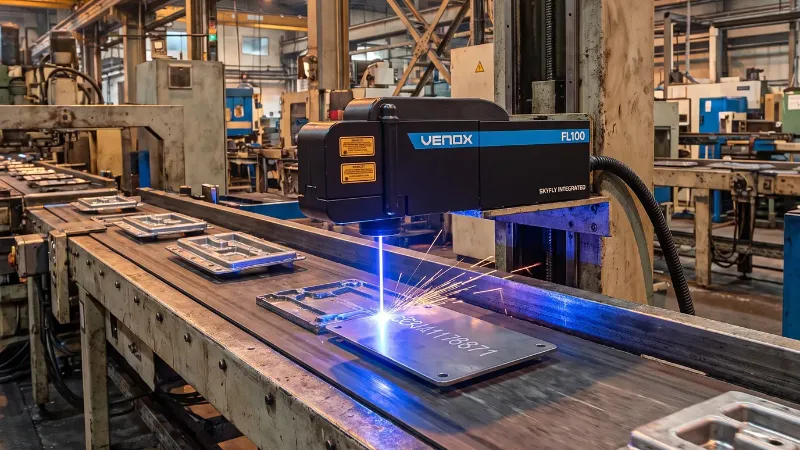
The primary objective of factory automation is to process the right product with the right information at the right time, with as little manual intervention as possible. Industrial laser marking systems contribute to this process by automatically marking serial numbers, QR codes, DataMatrix codes, barcodes, lot information, and technical data.
How Are Industrial Laser Marking Systems Integrated into Factory Automation?
The Marking Process Can Be Controlled by PLCs
PLC systems are among the fundamental control structures that enable machines and equipment to operate in coordination on automated production lines. A laser marking system can communicate with a PLC and operate according to commands received from the production line.
When a product reaches the marking station, the PLC can send a trigger signal. Once marking is completed, the laser system can transmit the process result back to the PLC, allowing the product to move to the next station.
This enables the marking process to be synchronized with the overall cycle time of the production line.
Continuous Production with Conveyor Systems
In high-volume manufacturing, manually transporting products to the marking area can result in time losses. Conveyor integration allows products to be automatically transported to the marking station.
When a sensor detects that the product has reached the correct position, the laser marking process can begin. Depending on the application, the product may be stopped briefly, or marking can be performed while the production line is moving when a suitable system is used.
This structure can provide significant efficiency improvements in mass production lines such as automotive, electronics, plastics, and packaging manufacturing.
Flexible Marking with Robotic Arms
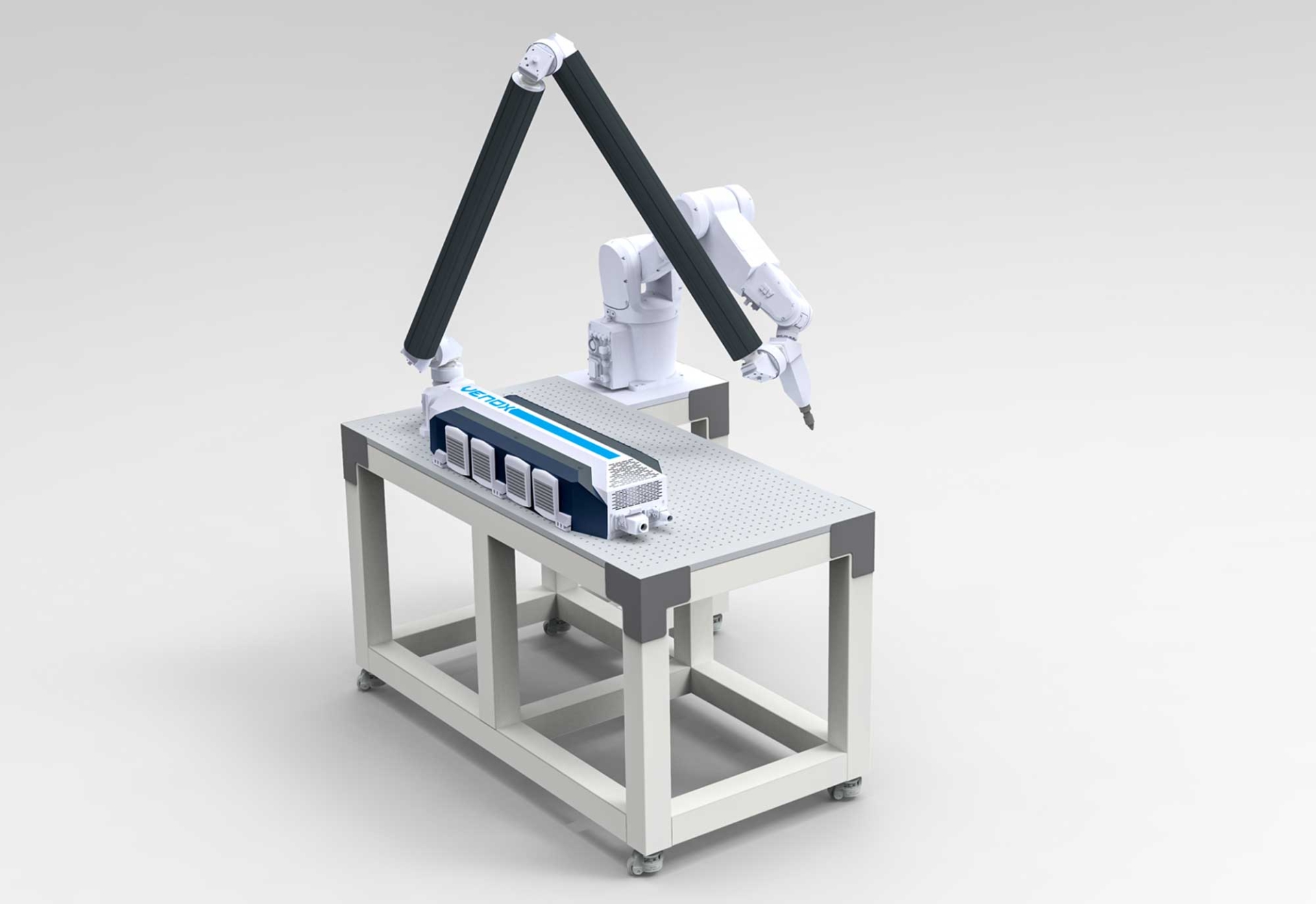
For some products, the surface to be marked may not be in a fixed position. Robotic systems can be used in applications requiring marking on different sides of a product or on three-dimensional geometries.
A robotic arm can position the product in front of the laser system or help the marking head operate at different positions. This allows different product geometries to be processed within a single production cell.
In robotic integration, product positioning, focal distance, cycle time, and laser safety must be planned together.
Product and Position Monitoring with Sensors
In automated marking systems, it is necessary to detect whether the product is in the correct position. Optical sensors, proximity sensors, or other industrial detection systems can be used for this purpose.
Information from sensors is transmitted to the control system to prevent the laser from operating when the product has not reached the marking area or to prevent incorrectly positioned components from being marked.
This structure helps improve both process safety and production accuracy.
Marking Verification with Camera Systems
Camera systems can be used for post-marking quality control in factory automation. Serial numbers, QR codes, barcodes, or DataMatrix codes marked on products can be read by a camera.
The information read can be compared with the expected data in the production system. If the code is incorrect, unreadable, or missing, the product can be automatically rejected.
This approach reduces dependence on manual inspection, particularly in high-volume production, and helps prevent incorrectly marked products from proceeding to subsequent processes.
Data Flow with ERP and MES Systems
Industrial laser marking systems can be integrated into factory automation not only mechanically but also digitally. Production data obtained from ERP or MES systems can be transferred directly to the marking software.
Production orders, serial numbers, lot information, customer codes, or product models can be retrieved automatically from the system. This reduces the need for operators to enter data manually.
After marking is completed, the result can be recorded back into the production system, enabling the creation of a product history.
Variable Data Can Be Managed Automatically
In mass production, each product may need to be assigned a different identity. The laser marking system can automatically increment the serial number during each cycle or retrieve a unique code from a central database.
The same structure can also be used for production dates, shift codes, lot numbers, QR codes, and DataMatrix content.
Automated variable data management reduces the risk of incorrect coding while strengthening the traceability infrastructure.
How Is Traceability Achieved in Factory Automation?
The unique code on a product establishes a connection between the physical component and its digital production record. As the product passes through different stations, its code can be scanned to record the operations performed.
This makes it possible to retrospectively track which production line manufactured the product, which quality inspections it underwent, which shift processed it, and which batch it belongs to.
This structure contributes to more systematic management of quality control, service, warranty, and product recall processes.
What Should Be Considered in a Factory Automation Project?
For successful integration, the laser marking system should not be evaluated in isolation. All data flows and material movements throughout the production line must be planned together.
- The cycle time per product should be determined.
- The PLC communication structure should be planned.
- Conveyor and sensor placement should be evaluated.
- The need for robotic integration should be analyzed.
- ERP and MES data flows should be defined.
- The serial number and variable data structure should be determined.
- Camera-based code verification should be planned.
- The marking area and product positioning should be tested.
- Laser safety and the working area should be considered.
- Cycle tests should be performed using actual products.
Clarifying these criteria at the beginning of the project helps integrate the laser marking system into factory automation more efficiently.
Laser Marking for Factory Automation with Venox
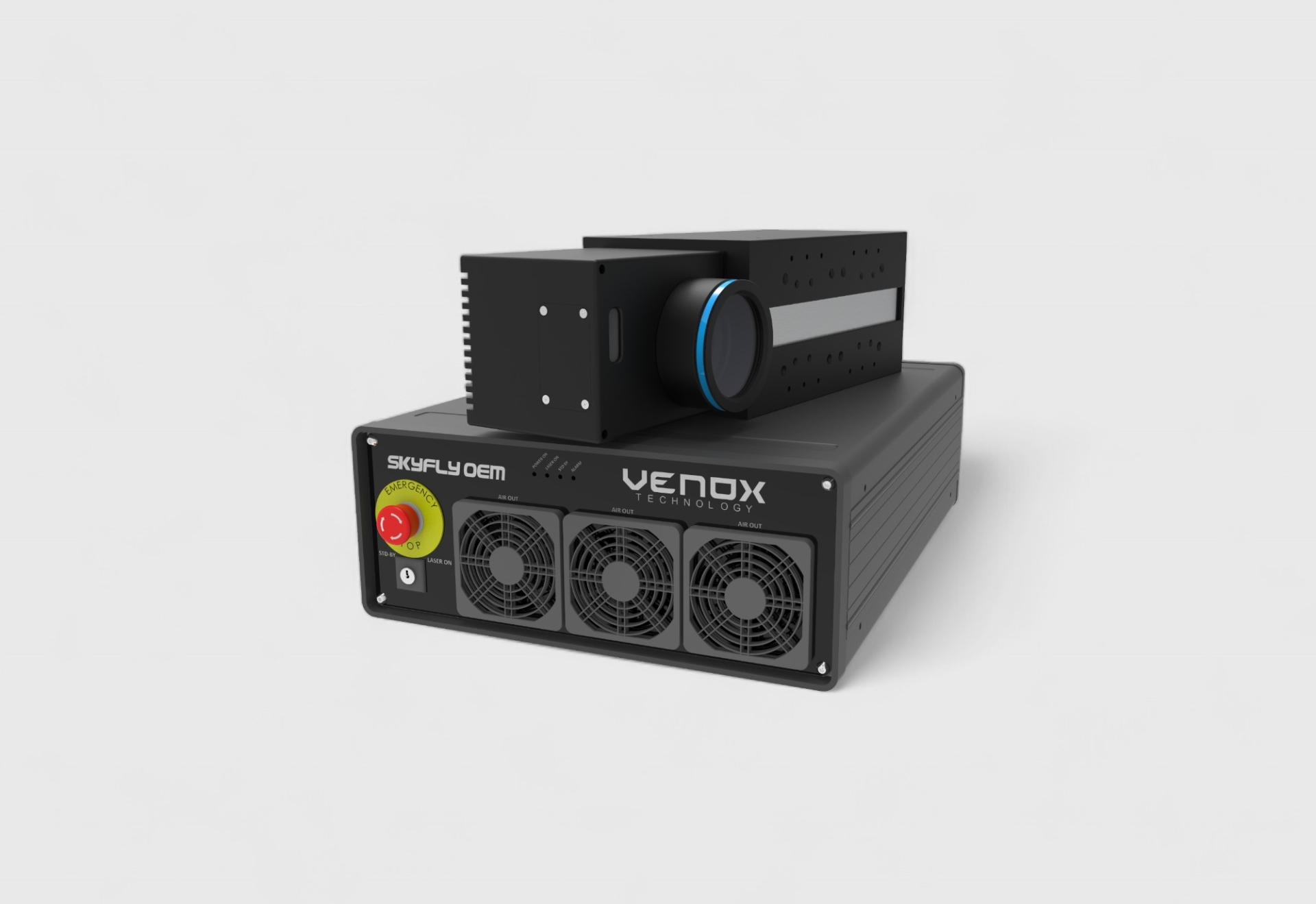
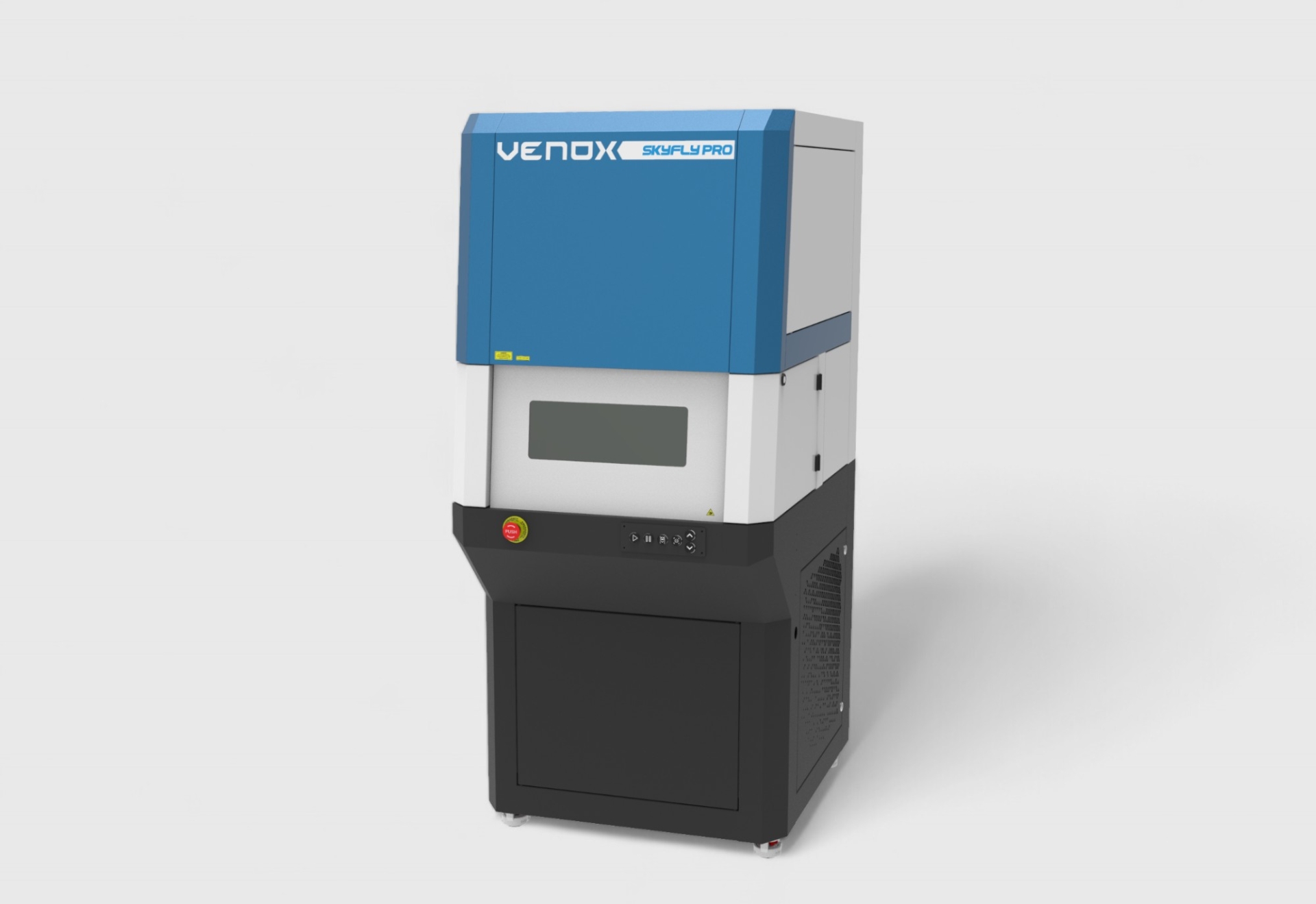
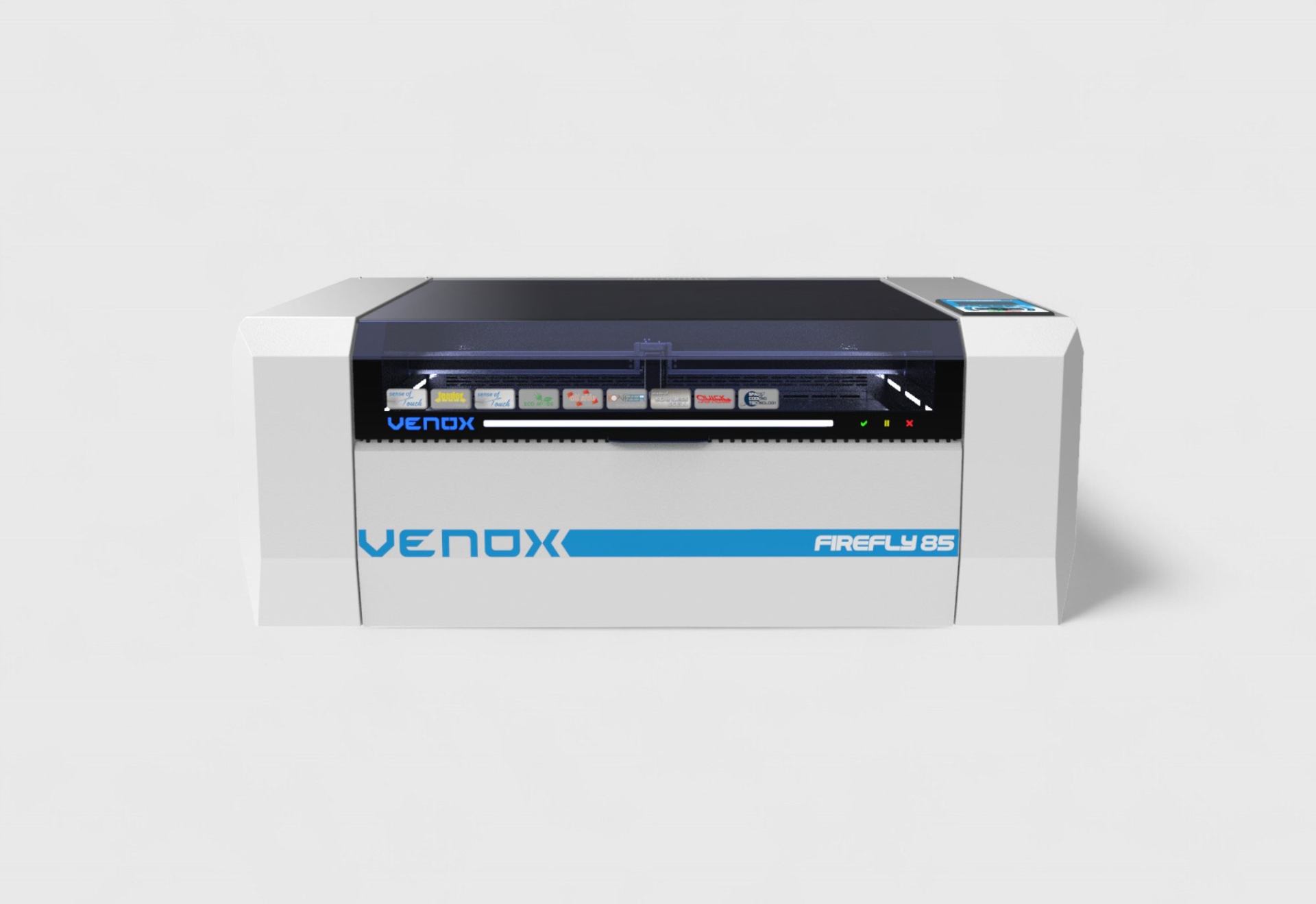
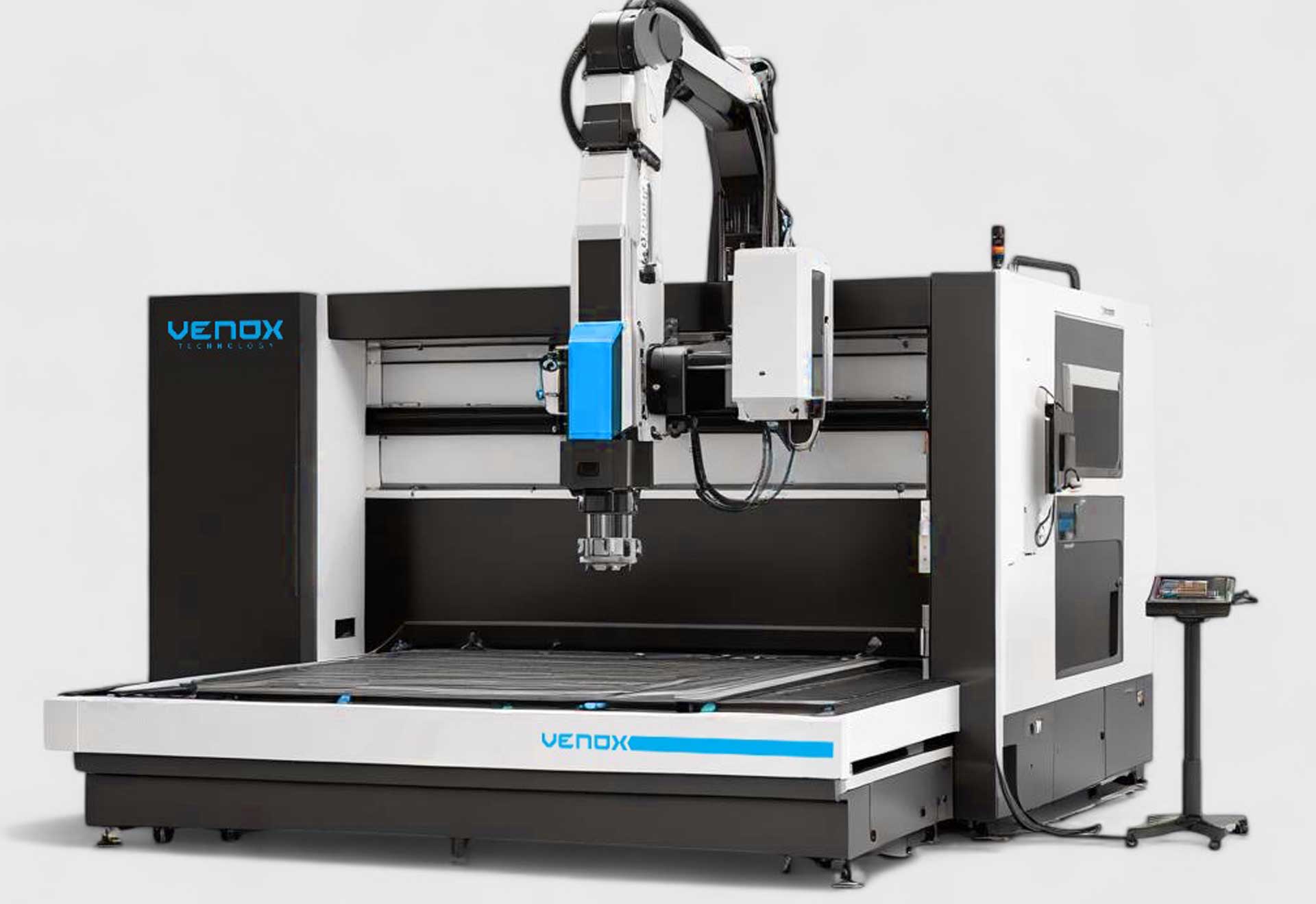
Venox offers Laser Marking Systems that can be integrated into automated production lines. The appropriate system can be configured by jointly evaluating the product type, cycle time, data structure, PLC infrastructure, and automation requirements.
For marking projects requiring PLC, robot, conveyor, camera, or ERP/MES integration, you can evaluate your production scenario with the Venox team. For technical evaluation, sample testing, and quotations, you can contact us through the Contact Us page.
Properly configured industrial laser marking systems can combine data management, product identification, quality control, and traceability into a single workflow within factory automation. This allows production processes to become faster, more controlled, and compatible with digital infrastructure.
Frequently Asked Questions
Can an industrial laser marking system be connected to factory automation?
Yes. Suitable integration can be achieved with PLCs, conveyors, sensors, robots, cameras, ERP, and MES systems.
Can a laser marking system receive data from ERP?
With suitable software and communication infrastructure, serial numbers, lot information, product codes, and various production data can be retrieved from ERP or MES systems.
Can marked codes be checked automatically?
Yes. QR codes, barcodes, and DataMatrix markings can be read automatically using a camera or code reader system and compared with the expected data.
Can laser marking be used in robotic production lines?
Yes. A robotic arm can help position the product or marking head correctly, enabling marking on different surfaces and geometries.
Does Venox offer laser marking solutions suitable for factory automation?
To explore Venox's solutions, you can visit the Laser Marking Systems page or contact the Venox team through the contact page for your automation project.
