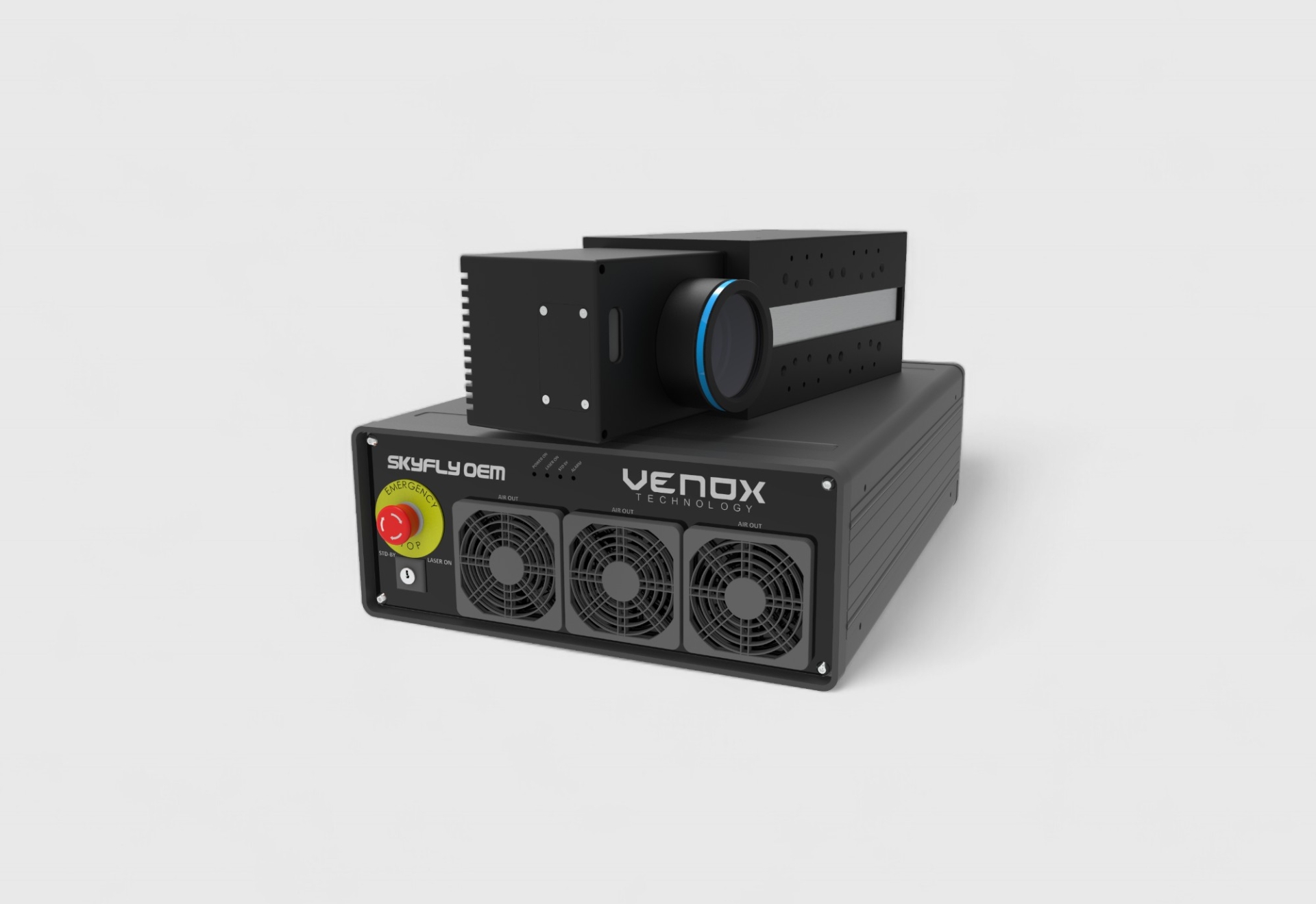
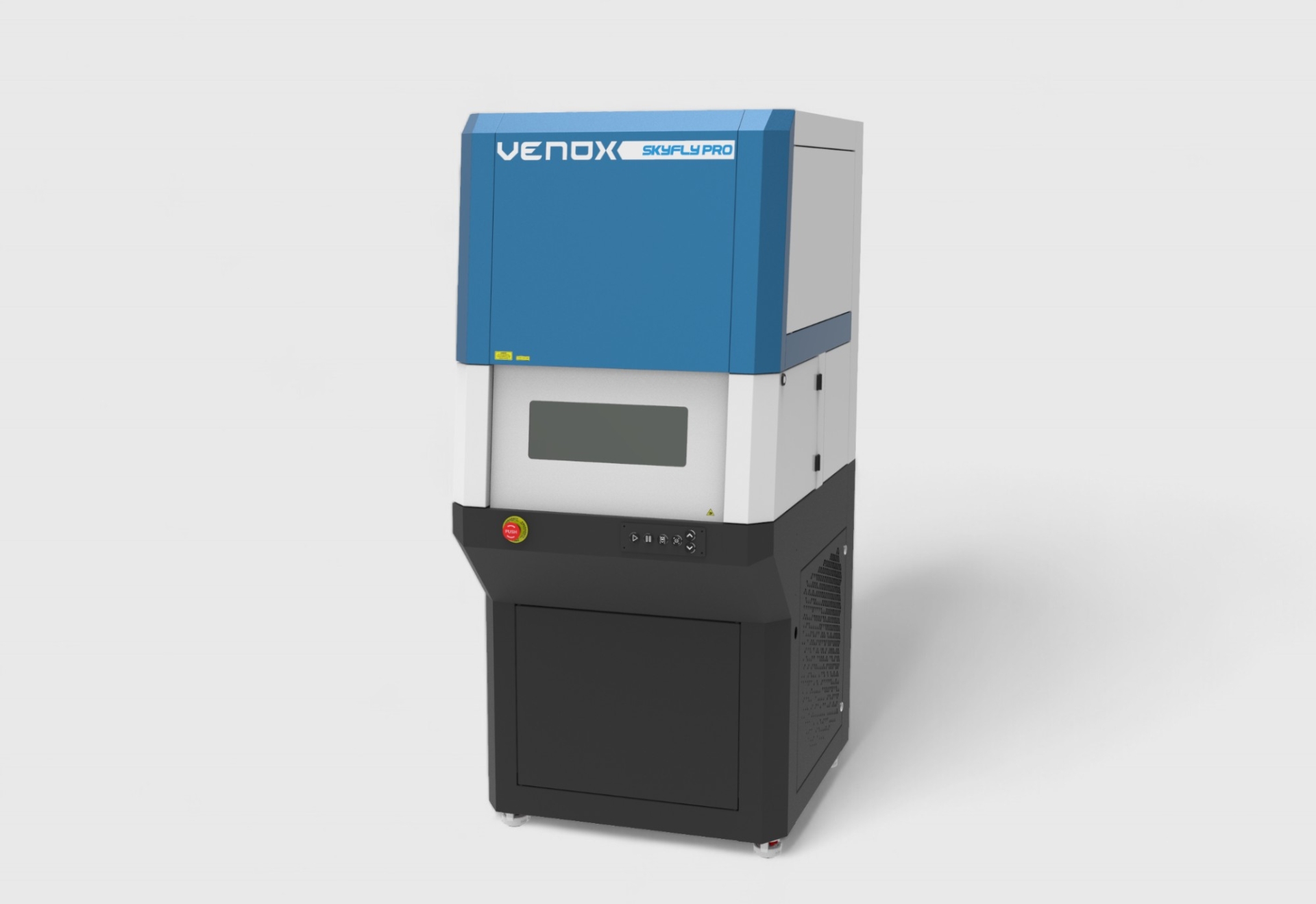

FXL Series In-Line Fiber Laser Marking Machines
The Venox FXL Series is an industrial fiber laser system developed for marking applications in fully automated production lines that require high speed, synchronization, and data integration. This content has been prepared from the perspective of technical specifications, operational integration, PLC/TCP-IP data flow, cycle time, and quality verification. The goal is not only to introduce a “laser machine,” but to explain clearly and measurably how an in-line traceability infrastructure is established.
In-Line Integration and Technical Architecture
1) Which production scenario is the FXL Series designed for?
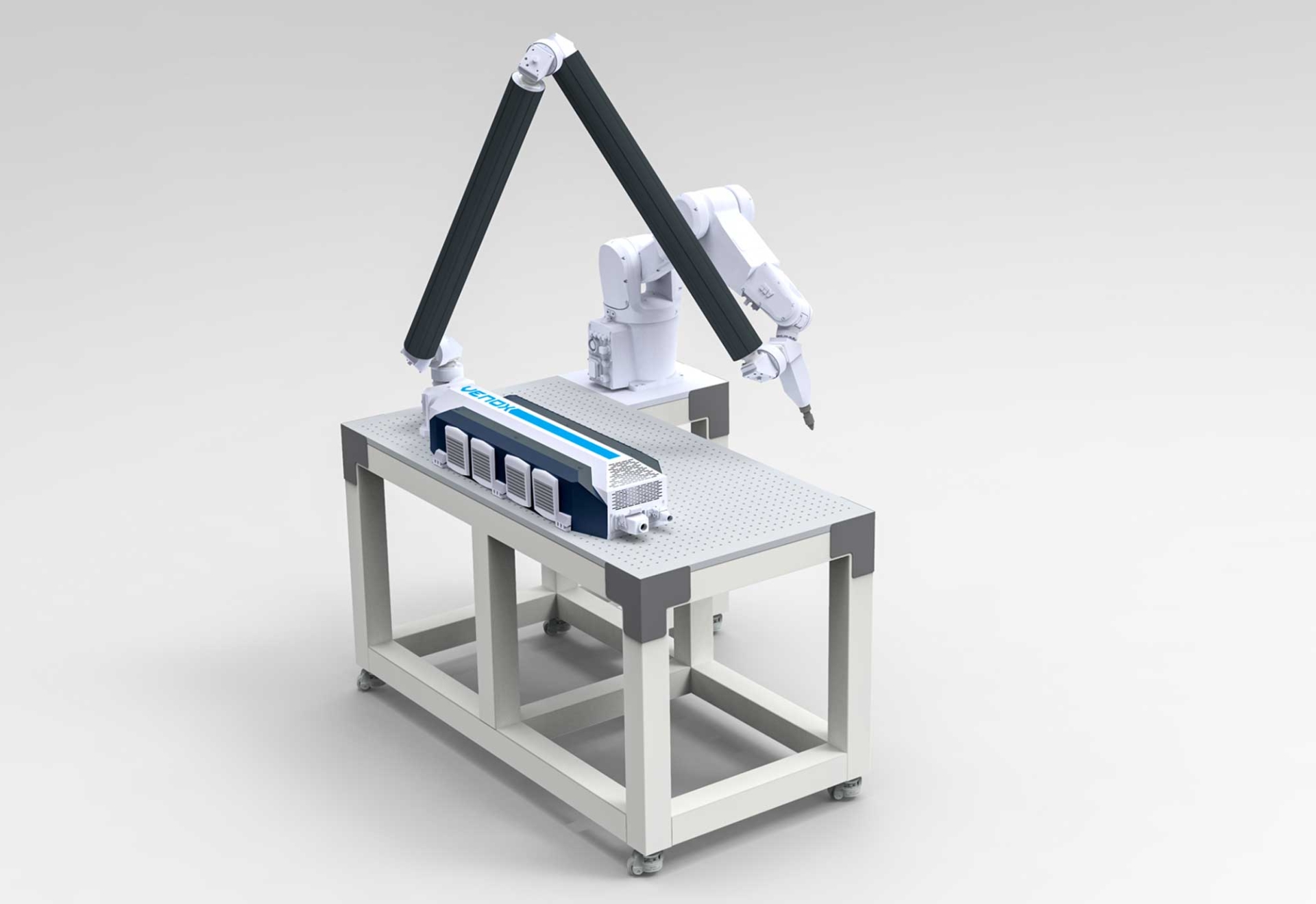
The FXL Series is designed for scenarios in conveyor systems, robotic cells, or transfer lines where marking must be performed without stopping product flow. In the automotive, white goods, medical, and metalworking industries, the typical need is to apply unique data to every part and record that data in the ERP/MES system. FXL minimizes operator intervention by automating the trigger–mark–verify chain.
2) Who is it ideal for?
- Automotive OEMs and Tier 1 suppliers
- High-volume metal part manufacturers
- Factories using robotic production cells
- Production facilities with MES/ERP integration
- 24/7 serial production lines
3) Which applications is it used for?
The FXL Series is suitable for serial numbers, VIN codes, DataMatrix, QR codes, lot information, timestamps, and technical markings. It delivers performance especially in applications that require millisecond-level triggering on high-speed moving parts. Permanent marking can be applied on metal housings, chassis, engine blocks, aluminum parts, and hardened steel surfaces.
4) Technical infrastructure and laser architecture
Based on fiber laser technology (1064 nm), the system can be offered with 30W / 50W / 80W power options. The higher power option provides an advantage in applications requiring higher speed and deeper marking. The galvo scanning system operates in sync with line speed through fast positioning. Lens selection determines the working distance and marking field.
5) Technical features (industry-focused)
- Laser type: Fiber
- Power range: 30W – 80W
- Integration: PLC, TCP/IP, digital I/O
- Data transfer: Automatic serial number and variable data
- Supported codes: DataMatrix, QR, barcode, alphanumeric
- Line synchronization: Encoder-assisted marking option
6) How does in-line data flow work?
Marking is initiated by a trigger signal from the production line. The serial number, product code, or batch information coming from ERP/MES is transferred to the laser software via TCP/IP. When marking is completed, a “process complete” signal is sent to the PLC. If required, code verification can be performed with a camera system and the quality level can be recorded. This structure supports traceability requirements.
7) Decision block: Why the FXL Series?
The FXL Series combines high speed with stable performance. Thanks to the advantage of local manufacturing, it provides fast service and spare parts access. Sample testing and cycle time analysis can be performed before the project. In this way, how the system will operate under real production conditions can be measured in advance.
8) Recommended configurations
- Medium-speed lines: 30W + F160 lens
- High-speed serial production: 50W + encoder trigger
- Deep marking requirement: 80W + optimized scan parameters
9) Cycle time and performance approach
Cycle time depends on the marking field, content density, and power level. In sample testing, measurement is typically performed in seconds. The objective is to mark without reducing line speed.
10) Real application example
In a DataMatrix marking scenario on an automotive metal part, a cycle time of under 1 second can be achieved with a 50W configuration. The quality grade is measured via camera verification and recorded in the ERP system.
Technical FAQ and Purchasing Criteria
1) If the line speed is high, can the laser keep up?
When power and scan parameters are selected correctly, it can adapt to high speeds.
2) Is encoder integration possible?
Yes, an encoder can be used for synchronized marking on moving products.
3) Is camera verification mandatory?
It is not mandatory, but it is recommended for quality traceability.
4) How does it communicate with the PLC?
It can communicate via digital inputs/outputs and TCP/IP protocols.
5) Is 80W always required?
No, power selection should be made according to the application.
6) Is deep engraving possible?
Deep engraving can be performed with higher power and multiple passes.
7) Is it suitable for 24/7 operation?
Thanks to its industrial design, it is suitable for continuous operation.
8) How is the safety system configured?
Safety can be ensured with an enclosure, interlock, and sensor systems.
9) Is MES integration supported?
Yes, data exchange and record integration are possible.
10) How long does the sample test take?
Testing and reporting can typically be completed within 24–48 hours.
