
How Can You Tell the Difference Between a Manufacturer and a Seller When Choosing a Laser Marking Company?
When investing in a laser marking machine, one of the most important questions businesses face is whether the company they plan to work with is truly a manufacturer or merely a supplier selling ready-made systems. Companies that appear to offer similar laser marking machines at first glance can differ significantly in terms of technical capability, application engineering, automation, custom project development, and after-sales support.
The fact that a laser marking system includes a fiber, CO₂, or UV laser source alone does not mean that the company is a manufacturer. An industrial laser system is an integrated structure in which the laser source, galvo scanner, lens, control electronics, mechanical body, safety enclosure, motion systems, software, fixture, and, when necessary, camera or automation components work together.
Therefore, when choosing a laser marking company, it is not enough to look only at the machine models in the catalog, Watt ratings, or price quotation. It should also be evaluated whether the company can analyze a real application, customize the system according to the product, and provide an engineering approach for integration into the production line.
Understanding the difference between a manufacturer and a seller is particularly important for laser marking systems that will be used for many years and become a critical part of the production line. Choosing the right company can affect not only the initial investment cost, but also system efficiency, maintenance processes, future revisions, and the total cost of ownership.
What Are the Main Differences Between a Laser Marking Manufacturer and a Seller?
1. Ability to Analyze the Application and Select the Correct Technology
One of the first differences between a laser marking manufacturer and a company that only sells machines can be seen in how the application is analyzed. A company selling ready-made products may often focus on recommending one of its existing machine models. A manufacturer or a company with strong application development capabilities, on the other hand, first analyzes the actual technical requirements of the product.
Whether the material to be marked is metal, plastic, wood, leather, or glass affects the laser technology to be used. However, the general name of the material alone is not sufficient. The alloy of stainless steel, whether aluminum is anodized, the pigment structure of plastic, or the coating on the surface can change the marking result.
Therefore, a manufacturer should be able to determine whether fiber, CO₂, or UV technology is appropriate not only based on catalog information, but also according to the characteristics of the actual product and application tests.
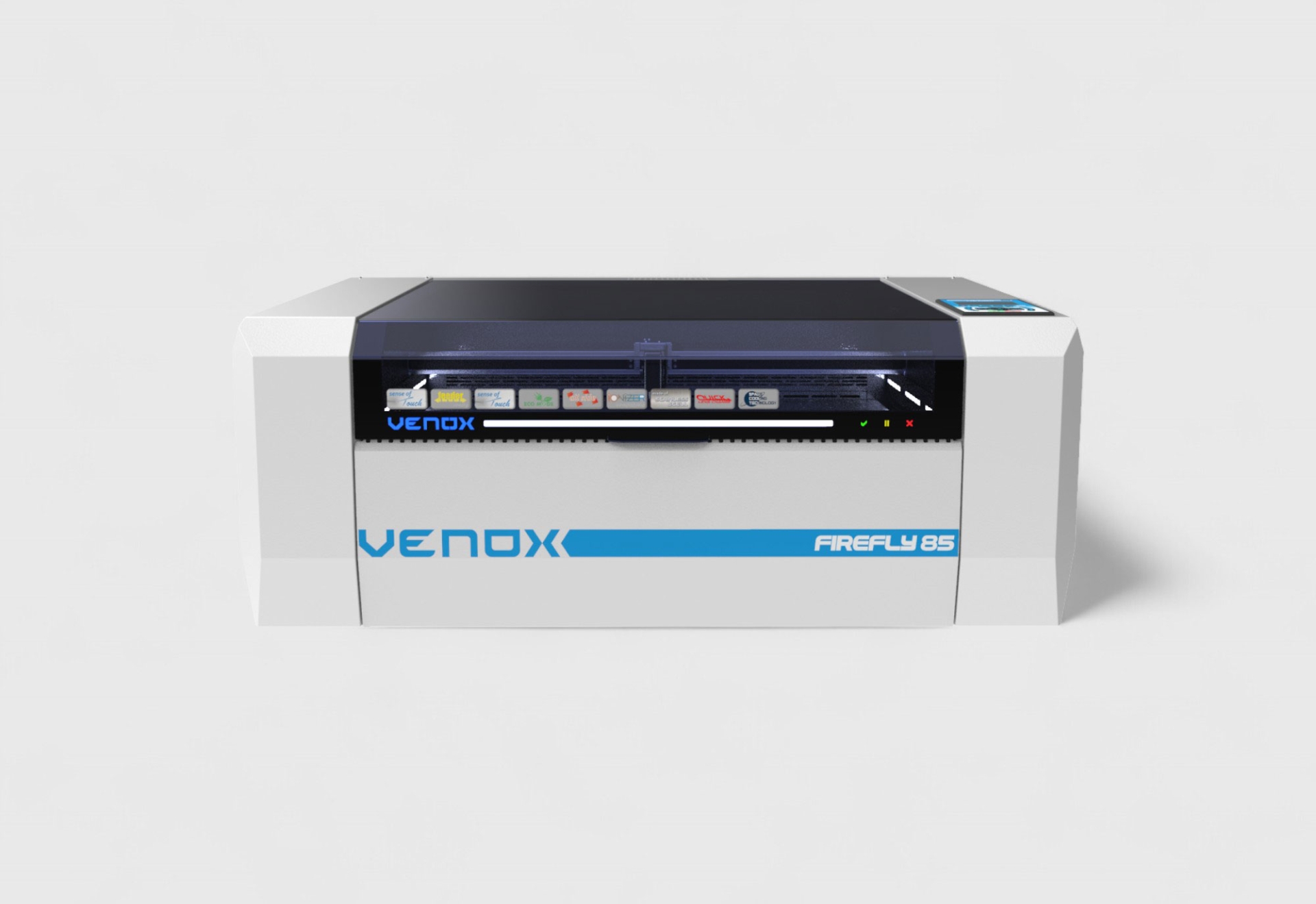
When evaluating Venox’s laser marking systems for different applications, it is also important to make the system selection based on the product and production process.
2. Ability to Perform Sample Marking Tests
One of the most important questions to ask when choosing a laser marking company is whether sample testing can be performed on the actual product. This is because theoretical technical information about laser technologies does not always fully indicate the result that will be obtained on the real surface.
During sample testing, criteria such as contrast, marking time, surface effect, engraving depth, line clarity, and code readability can be evaluated. Different laser technologies or different power levels can be compared on the same product.
For example, a plastic part may not achieve sufficient contrast with a fiber laser but may provide a more controlled result with a UV laser. On another plastic material, however, a fiber laser may be sufficient and faster.
Therefore, if a company tests the application and evaluates the results according to technical criteria instead of merely selling a machine, it can be considered to have a stronger application engineering approach.
3. Mechanical Design and Custom Fixture Development
A standard laser marking machine may not be suitable for every product. The geometry, weight, or position of the area to be marked may require custom mechanical design.
A true system manufacturer should be able to develop custom fixtures, machine enclosures, motion axes, or product positioning mechanisms according to the requirement. Especially in mass production, keeping the part in the same position during every cycle is important for marking quality.
Rotary axes can be used for cylindrical products, motorized Z axes for products with varying heights, X-Y motion systems for large surfaces, or other custom mechanical solutions can be developed.
If a company only offers standard desktop machines and cannot make mechanical modifications according to the product process, its custom manufacturing capability may be considered limited.
4. Automation and PLC Integration
In industrial laser marking projects, the machine often does not operate independently. It may need to communicate with the PLC, sensors, conveyor, robot, or other automation systems on the production line.
When the product reaches the marking station, it can be detected by a sensor, the PLC can select the correct recipe, and the laser marking system can automatically start operation. When the process is completed, the system can send information back to the PLC.
Such integrations allow the laser marking machine to become not just a fixed device, but an active station within the production line.
If a company can provide support for PLC communication, input-output signals, automatic recipe selection, or production line synchronization, it may have a more advanced system integration capability.
5. Software, Database, and Traceability Capabilities
In modern production, laser marking is often used for more than simply applying a logo or fixed text. Each product may need to receive a unique serial number, QR code, or DataMatrix code.
In this case, the laser marking system may need to communicate with ERP, MES, an SQL database, or another production software system. Automatically marking data received from the central system and sending the process result back to the system is an important part of traceability projects.
A manufacturer or company with strong integration capabilities can evaluate software requirements not only at the level of the laser program, but also within the overall production data flow.
This capability becomes particularly important in automotive, electronics, medical, defense, and other mass-production industries.
Which Technical and Commercial Criteria Should Be Checked When Choosing a Laser Marking Company?
6. Camera and Machine Vision Solutions
If quality control is required after laser marking, camera systems can be included in the project. The camera can read the QR code or DataMatrix code on the product and verify that the code has been generated correctly.
In some projects, the camera can be used not only for post-marking inspection, but also to determine the position or orientation of the product before the process.
If the product does not arrive at exactly the same point in every cycle, the machine vision system can detect reference points and help correct the marking coordinates.
Therefore, a laser marking company that can provide camera integration may offer a structure capable of managing not only the laser source, but the entire marking and quality control process.
7. Technical Service Organization and Response Capability
If the laser marking machine is a mandatory process on the production line, system downtime can cause significant production losses. Therefore, the after-sales technical service organization should definitely be evaluated when selecting a company.
Before purchase, it should be clarified whether the company offers remote support, how quickly on-site service can be reached, the availability of spare parts, and how maintenance is organized.
A company that has developed the system and knows its own machine architecture, mechanical design, and automation structure can make troubleshooting easier.
A company that only sells machines may need to contact the original manufacturer or an overseas supplier when a technical problem occurs. In some projects, this can extend the technical response time.
8. Spare Parts and System Revisions
An industrial laser marking system is an investment that can be used for many years. During this period, some mechanical or electronic parts may need to be replaced, the system may need to be adapted to new products, or its capacity may need to be increased.
If the manufacturer can develop a new fixture, lens, motion axis, or automation component for the existing machine, the service life of the system can be extended.
For example, a system that initially operates only with manual loading can later be integrated into a conveyor line. A machine that initially marks fixed data can later be developed to receive serial numbers from an ERP system.
Therefore, when purchasing a machine, not only today’s requirement but also possible future revision needs should be considered.
9. Reference Projects and Application Experience
When evaluating a laser marking company, it can be useful to look not only at the product models on its website, but also at real application examples it has completed.
Projects the company has carried out with similar materials or in similar industries can provide important information about its technical experience. Especially in custom machine and automation projects, previously developed applications can demonstrate the company’s engineering capability.
However, when evaluating references, it is not correct to focus only on the number of customers. The technical scope of the project, the level of integration, and which parts of the project the company carried out in-house are also important.
For example, simply delivering a standard machine does not demonstrate the same engineering level as developing a complex system that includes product recognition, camera verification, PLC integration, and ERP data connection.
10. Checking What Is Included in the Quotation
When comparing prices between laser marking companies, it should always be checked whether the quotations include the same scope. Two quotations may appear to include fiber laser machines with the same Watt rating, yet the machine specifications can differ significantly.
The laser source, galvo, lens, enclosure structure, safety equipment, software, fixture, installation, training, warranty, and technical service included should be clearly stated in the quotation.
It should also be clarified whether additional work such as automation, camera integration, or custom software is included in the initial price.
The lowest-priced quotation may not always be the most economical option. If the system cannot meet the required production speed, requires frequent service, or does not support future integration needs, the total cost of ownership may become higher.
Therefore, the best way to understand the difference between a laser marking manufacturer and a seller is not to look at which brand of laser source the company offers, but at how the company analyzes, develops, tests, and supports the system.
A company that understands the production requirement, performs sample testing on the actual product, develops custom mechanical systems when necessary, provides PLC and data integration, and can provide technical support for its own system after the sale offers a different service model from a company that only sells standard machines.
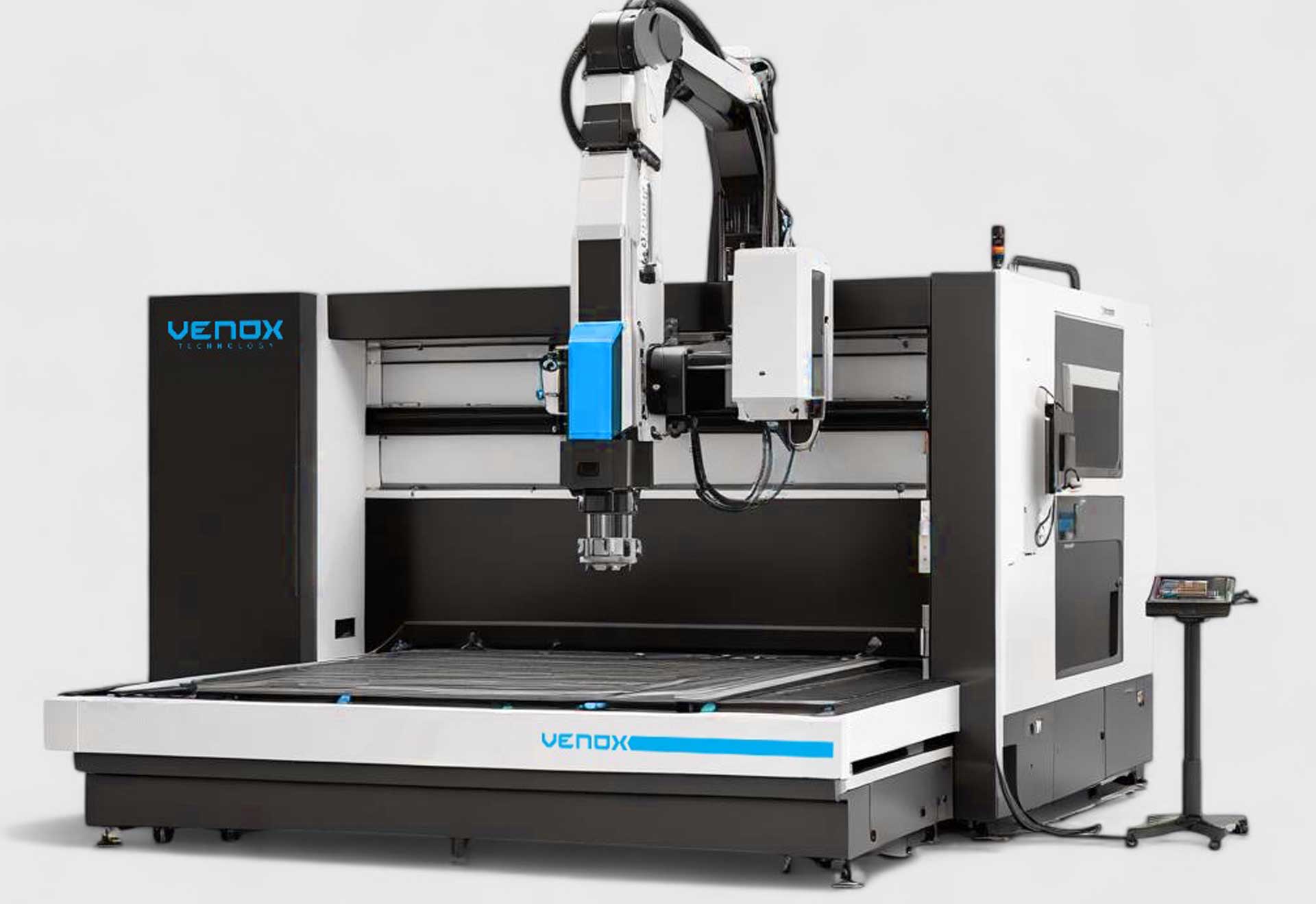
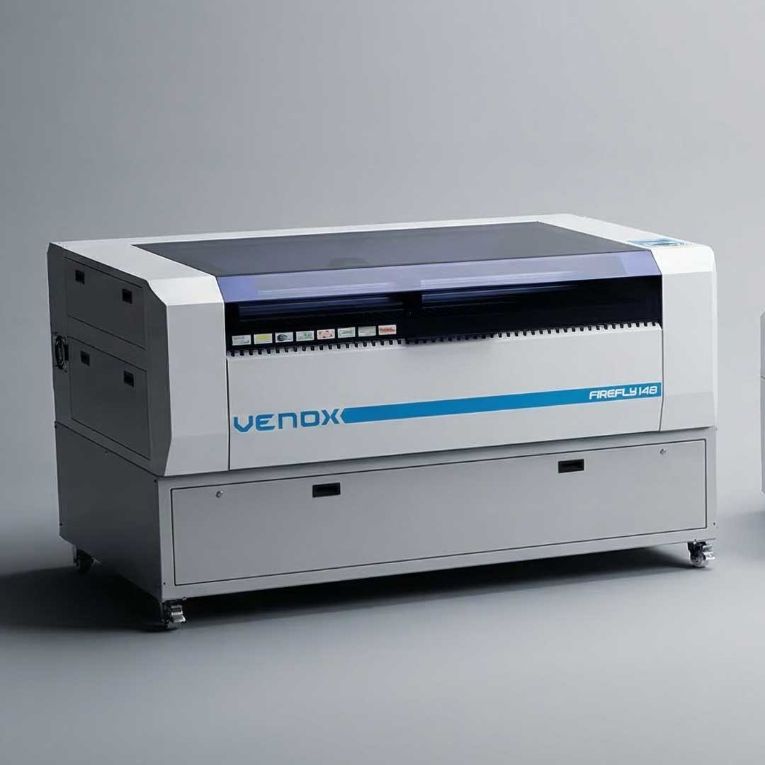
Venox’s laser marking machines can be evaluated for both standard systems and systems that can be customized according to the application.
For solutions that can be used in metal-focused marking applications, you can review the fiber laser marking machines page.
For a technical evaluation regarding laser marking system selection, sample testing, custom machines, automation, or production line integration, you can contact Venox.
