
How Do Laser Marking Machines Work? Technology and Advantages
Laser marking machines are advanced systems that enable products to be marked permanently, quickly, and contactlessly in industrial production. These machines are used to process logos, serial numbers, barcodes, QR codes, DataMatrix codes, production dates, and technical information on metal, plastic, glass, ceramic, and coated surfaces. Unlike traditional printing or labeling methods, laser marking is applied directly to the surface and provides a long-lasting marking result.
As the need for product identification, quality control, and traceability in production processes has increased, the importance of laser marking technology has also grown. Especially for businesses engaged in mass production, laser marking machines offer a strong solution in terms of both operational efficiency and product safety.
Working Principle of Laser Marking Machines
Laser marking machines work by directing a concentrated laser beam onto a specific surface. The laser beam creates the desired text, symbol, code, or visual on the surface through computer-controlled optical systems. During this process, the machine does not physically contact the surface. Therefore, the process is carried out both precisely and reliably.
The marking process can create different effects depending on the laser source used, the type of material, and the purpose of the application. While a color change may occur on some surfaces, engraving, annealing, or foaming effects may occur on others. In this way, marking results suitable for the needs of different sectors can be achieved.
How Does the Laser Beam Leave a Mark on the Surface?
The laser beam transfers high energy to the surface from a very small point. This energy creates a controlled change in the surface structure of the material. As a result of the process, text, logo, code, or symbol is permanently processed onto the surface. One of the most important advantages of laser marking is that this process can be performed quickly and with high precision.
The parameters used during marking are determined according to laser power, scanning speed, frequency, focal distance, and the structure of the surface to be processed. When the correct settings are used, results that are both readable and aesthetically high-quality can be obtained.
Basic Components Used in Laser Marking Technologies
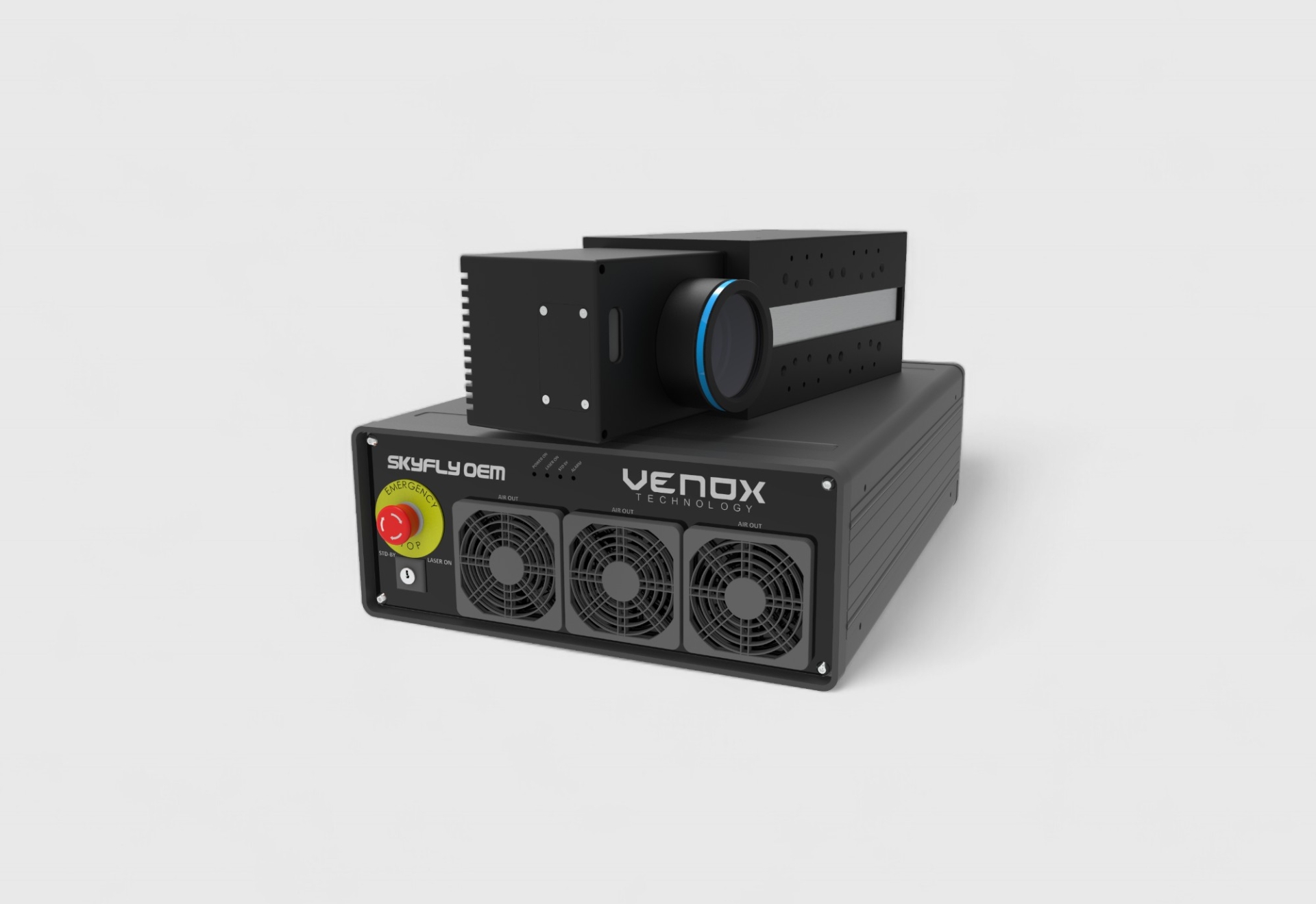
Laser marking machines provide high performance through the combined operation of multiple technical components. Each component plays an important role in terms of marking quality and processing speed.
Laser Source
The laser source is the main energy generation center of the system. Different source types such as fiber laser, CO2 laser, and UV laser can be used. While fiber laser systems show high performance especially on metal surfaces, CO2 lasers may be preferred on organic materials and some plastics. UV lasers stand out with their ability to mark sensitive surfaces with low heat impact.
Galvo Scanning System
The galvo system consists of optical mirrors that allow the laser beam to move very quickly across the surface. Thanks to this structure, the marking process is performed at high speed and with precision. It is one of the most important components that meets the need for fast marking in mass production lines.
Focusing Lens
The focusing lens concentrates the laser beam onto a specific point. The correct focal distance directly affects marking quality. If the focus setting is not correct, the marking may be blurry, weak, or irregular.
Control Software
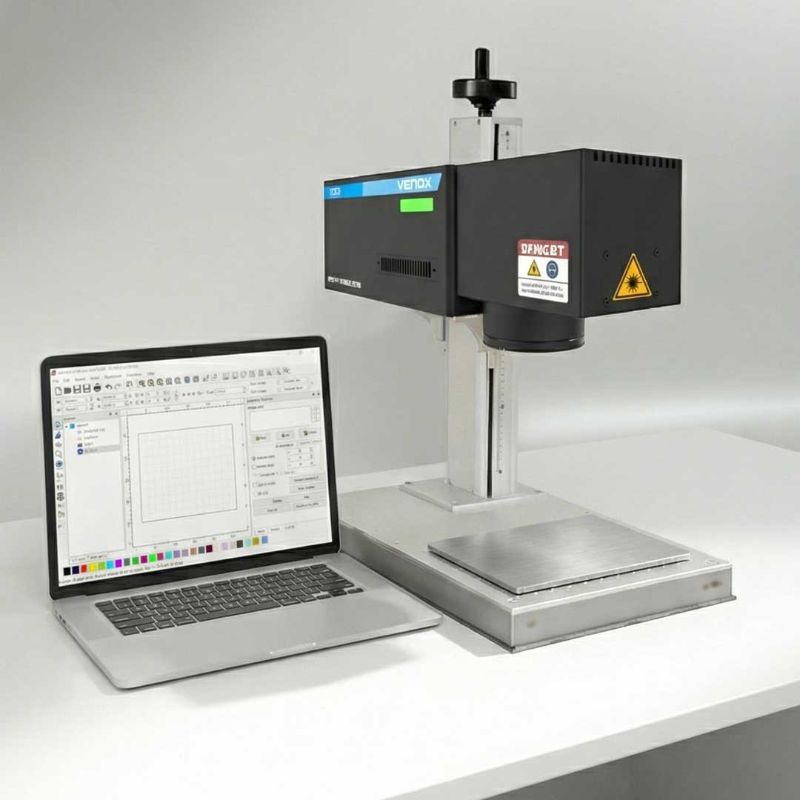
Laser marking software allows users to transfer the text, logo, code, and graphic data to be marked into the system. Font, size, position, depth, speed, and coding information can be adjusted through the software. In addition, variable data such as QR codes, barcodes, and serial numbers can be generated automatically.
Which Technologies Do Laser Marking Machines Use?
The technology used in laser marking systems is selected according to the type of material to be marked and the targeted result. When the right laser type is selected, both high-quality and long-lasting marking results are obtained.
Fiber Laser Marking
Fiber laser marking is a technology widely preferred especially on metal surfaces. Clear and permanent marking can be performed on stainless steel, aluminum, brass, copper, titanium, and coated metals. It is frequently used in the automotive, defense industry, machinery manufacturing, and medical sectors.
CO2 Laser Marking
CO2 laser systems can deliver effective results on wood, leather, glass, cardboard, paper, fabric, and some types of plastics. They are used in packaging, decorative products, textile, and promotional product sectors.
UV Laser Marking
UV laser marking is preferred on sensitive surfaces thanks to its low heat impact. It can provide successful results in electronic components, medical products, thin plastics, and applications requiring high precision.
How Does the Laser Marking Process Proceed?
The laser marking process consists of certain stages. First, the product or part to be marked is determined. Then the surface type, marking area, and data to be processed are analyzed. Afterwards, laser parameters are adjusted and a test marking is performed.
- The material and surface type to be marked are determined.
- The logo, text, barcode, or QR code design is prepared.
- Laser power, speed, and frequency settings are adjusted.
- The focal distance is checked.
- Test marking is applied.
- Final settings are saved for mass production.
Thanks to this process, the marking operation becomes repeatable and sustainable with standard quality. This standardization provides a major advantage especially in production lines where thousands of parts in the same product group need to be marked.
Advantages of Laser Marking Machines
Laser marking machines provide businesses not only with permanent marking, but also significant advantages in terms of production efficiency and cost control. Their contactless working structure, low maintenance requirement, and high marking quality make these systems a strong option in industrial production.
Permanent and Durable Marking
Marking performed with laser maintains its permanence on the surface for a long time. Unlike methods such as ink, labels, or printing, which can be easily erased by external factors, laser marking can be more resistant to abrasion, heat, and chemical effects.
Contactless and Precise Application
During laser marking, no mechanical pressure is applied to the product surface. Therefore, sensitive parts can be marked without being damaged. This feature is highly important for electronic components, medical equipment, and thin metal parts.
No Consumables Used
The laser marking process generally does not require ink, solvent, labels, or molds. This reduces consumable costs for businesses. It also contributes to a cleaner and more organized working environment in the production area.
Compatibility with High-Speed Production
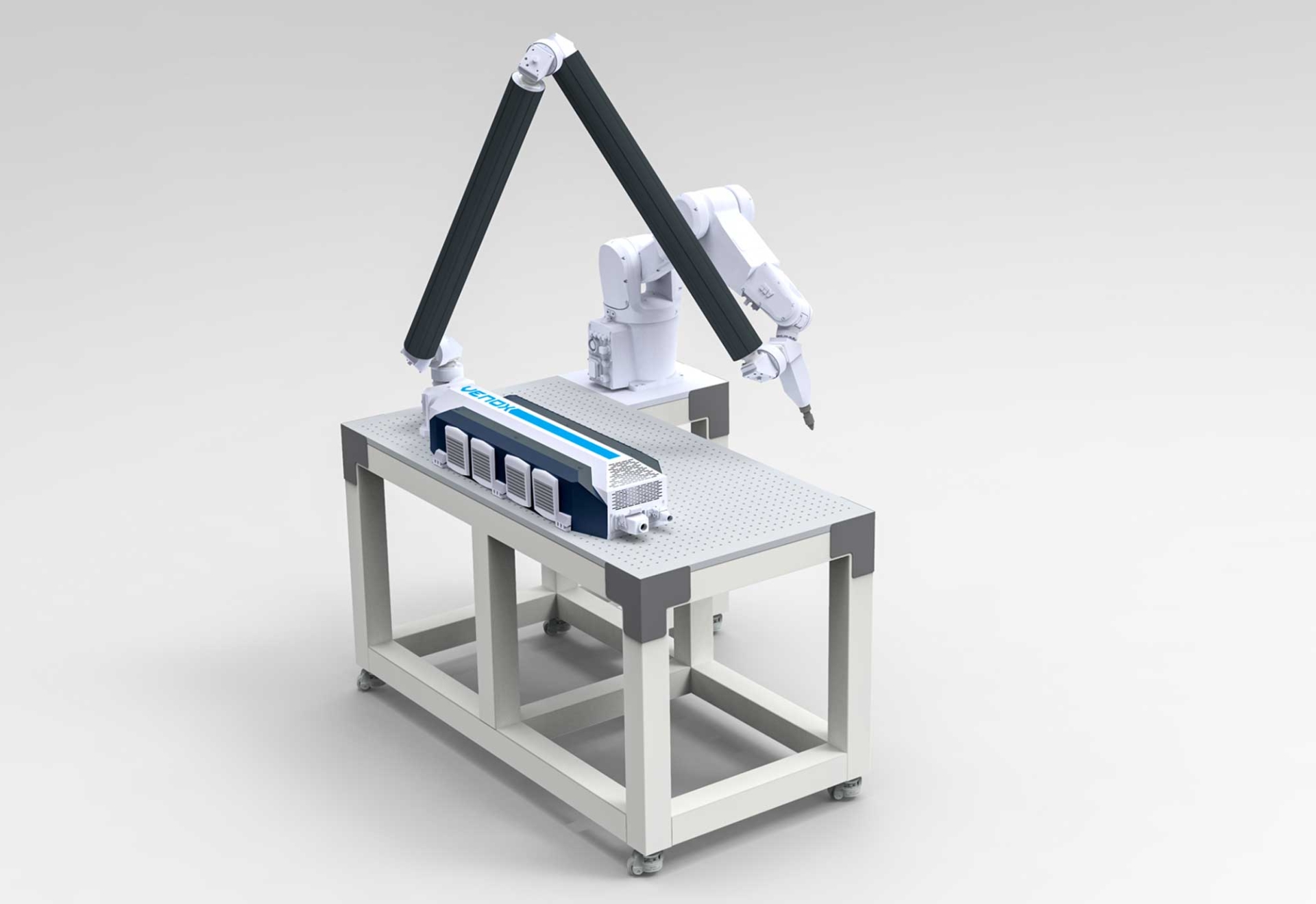
Speed is a critical factor in mass production lines. When properly configured, laser marking machines can operate integrated with the production line. Thus, products can be marked without stopping or with minimum waiting time.
Variable Data Marking
Variable information such as serial number, batch number, production date, QR code, and barcode can be automatically generated through laser marking software. This feature provides great convenience in terms of traceability and inventory management.
Laser Marking and Traceability
In modern production, traceability is one of the basic requirements for product safety and quality management. Knowing on which line, on which date, and with which batch number a product was produced makes quality control processes more effective. Laser marking machines support this process by processing permanent data directly onto the product.
Digital tracking data such as QR codes, DataMatrix codes, and barcodes can be applied to the product surface with laser. In this way, all stages of products from production to shipment, from storage to after-sales tracking can be controlled.
In Which Sectors Are Laser Marking Machines Used?
Laser marking technology is a flexible solution that can be used in many different sectors. It has a wide range of applications in terms of product identification, quality control, security, and brand visibility.
- Automotive and spare parts production
- Machinery and metal processing sector
- Medical device and surgical equipment production
- Electronic board and component production
- Plastic injection products
- Packaging and coding applications
- Defense industry parts
- Jewelry, accessories, and promotional products
Technological Solution with Venox Laser Marking Machines
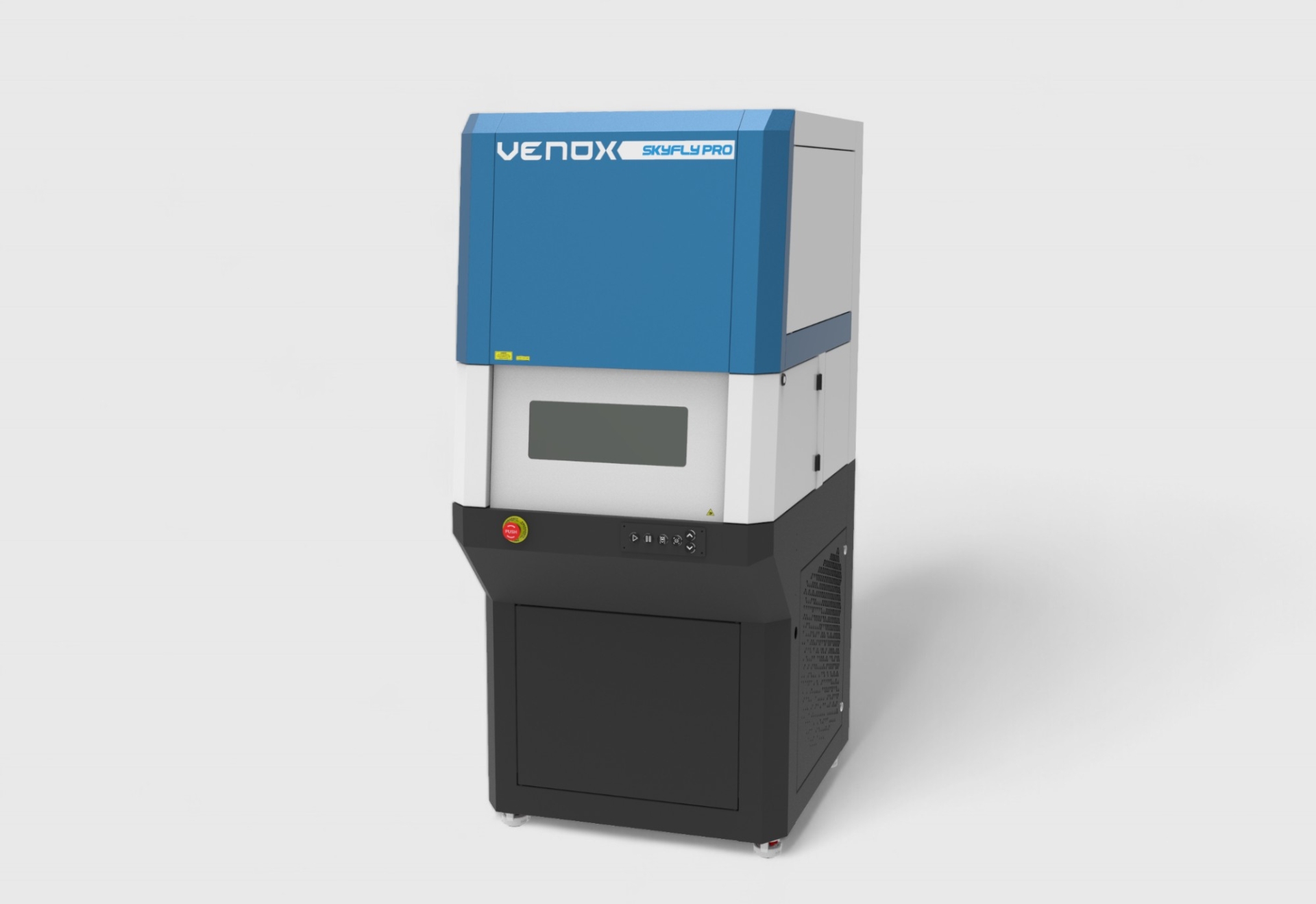
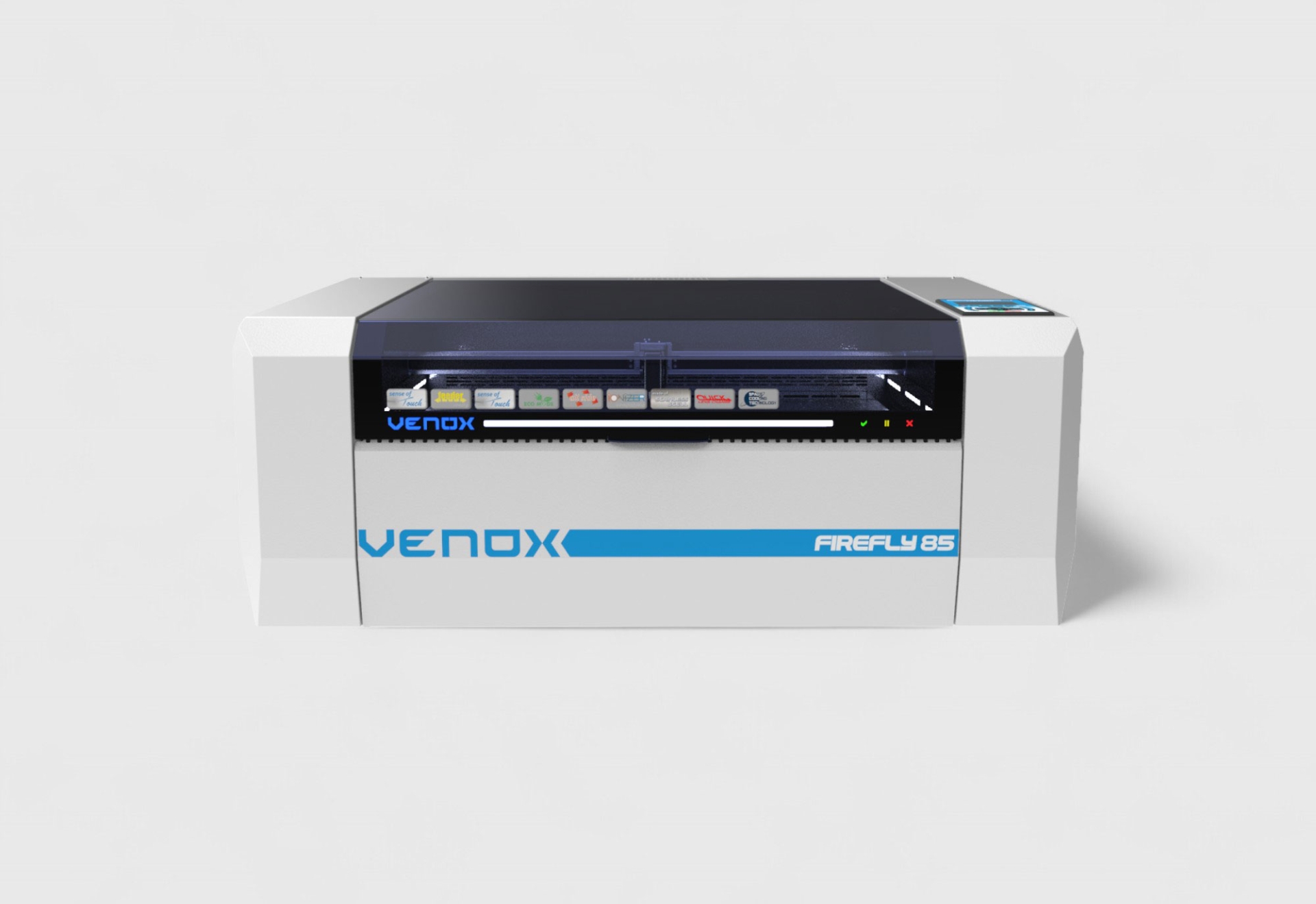
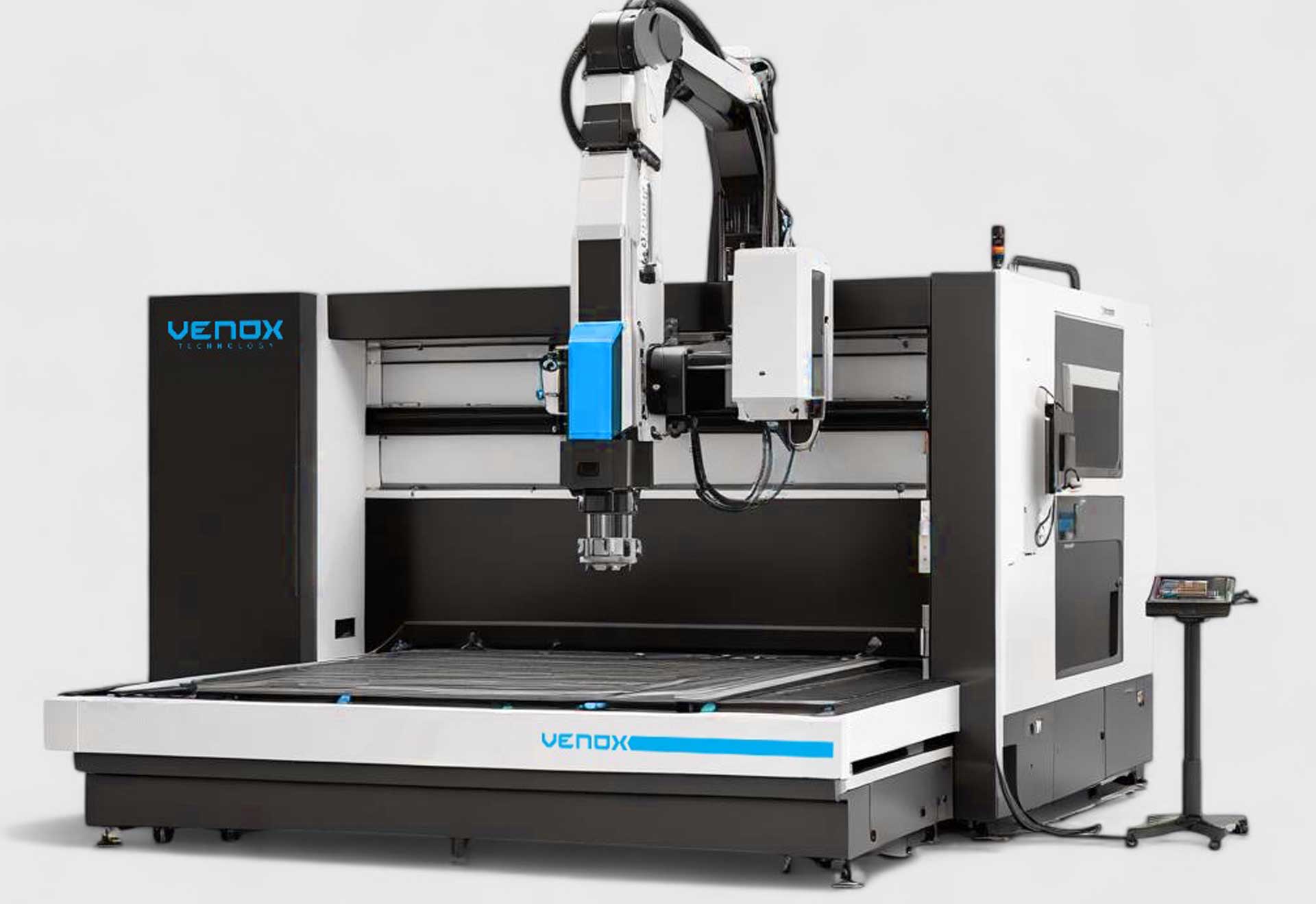
Venox offers permanent, fast, and reliable solutions for industrial production processes with Laser Marking Machines suitable for the needs of different sectors. With systems that can be integrated into production lines, marking options applicable on different surfaces, and a technical support approach, solutions suitable for the needs of businesses can be developed.
You can benefit from Venox’s laser technologies to make your business’s marking process more efficient, traceable, and professional. To get detailed information about products, application areas, and system options suitable for your needs, you can contact the Venox team through the Contact Us page.
Conclusion: What Does Laser Marking Technology Add to Production?
Laser marking machines have an important place in modern production processes thanks to their working principle and the advantages they offer. Their contactless processing, not requiring consumables, providing high precision, and producing permanent results create a serious advantage for businesses.
When the right laser marking system is selected, product identification, traceability, quality control, and brand security processes become stronger. Therefore, laser marking technology is not only a marking method, but also a strategic investment that supports the digitalizing structure of industrial production.
Frequently Asked Questions
How do laser marking machines work?
Laser marking machines work by directing a concentrated laser beam onto the product surface. The laser beam creates a controlled change on the surface, and information such as text, logo, barcode, or serial number is processed permanently.
Does the laser marking process damage the surface?
When the correct laser type and parameters are used, the marking process is performed in a controlled manner. Since it works contactlessly, safe and high-quality results can be achieved on many sensitive parts.
On which materials is fiber laser marking used?
Fiber laser marking is generally used on stainless steel, aluminum, brass, copper, titanium, and coated metal surfaces. It can also provide successful results on some types of plastics.
Are laser marking machines suitable for mass production?
Yes. Since laser marking machines can operate at high speed and be integrated into automation lines, they are widely preferred in mass production processes.
How can I get information about Venox laser marking machines?
To get information about Venox’s laser marking solutions, you can review the Laser Marking Machines page or contact the Venox team through the contact page.
