
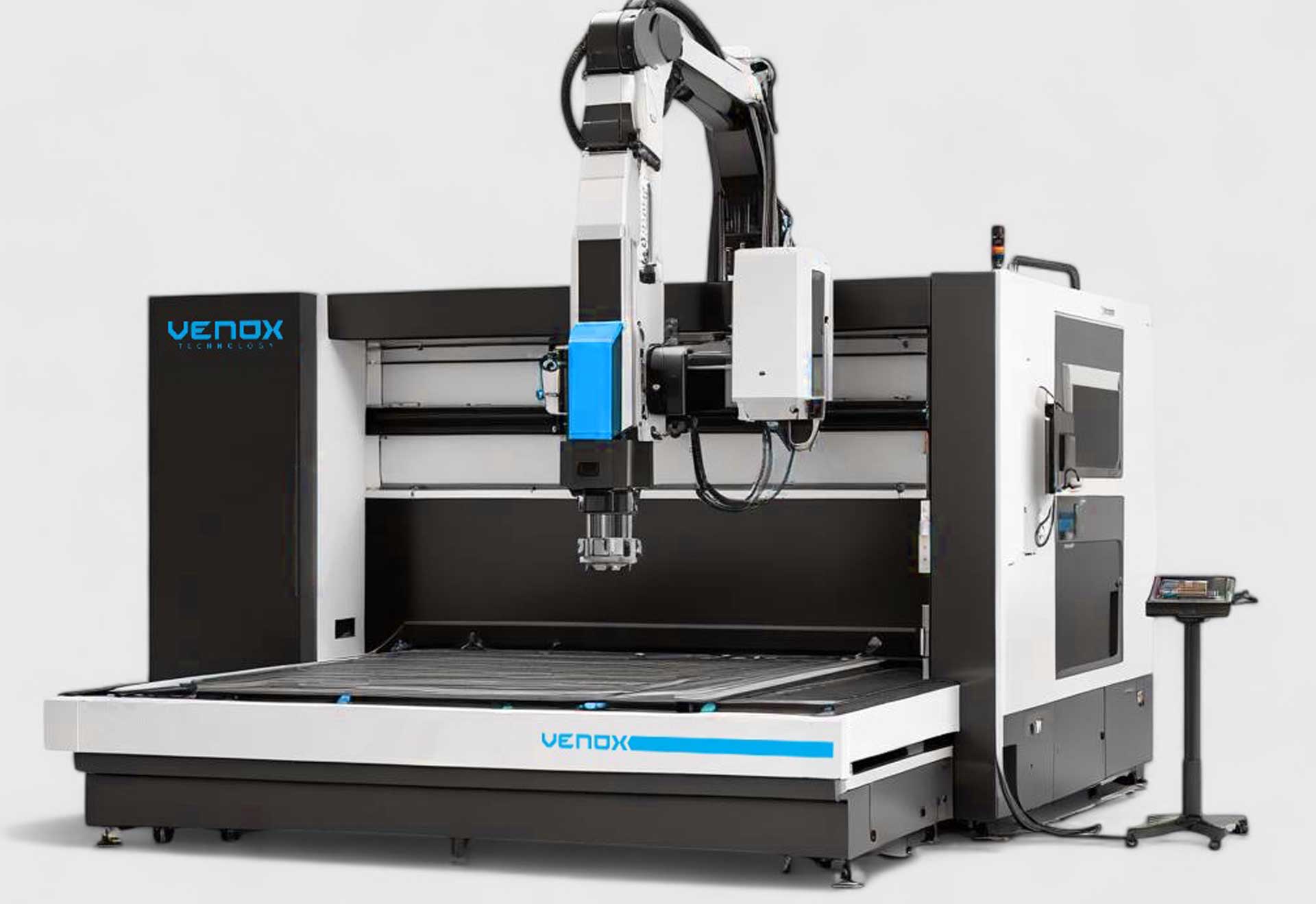

How Is Laser Marking Depth Adjusted? Industrial Engraving and Marking Parameters
Laser marking depth refers to how much material the laser beam removes from the material surface or how much effect it creates on the surface during the marking process. Depth adjustment is determined by the correct combination of parameters such as laser power, scanning speed, frequency, focal point, and number of passes. The correct marking depth is especially important in metal part traceability, mold engraving, and industrial labeling applications.
Technical Factors That Determine Laser Marking Depth
Laser power
Laser power is one of the most important parameters that directly affects marking depth. Higher laser power allows more energy to be transferred to the surface, which can create deeper engraving.
Scanning speed
Scanning speed determines how fast the laser beam moves across the surface. At lower speeds, the laser beam remains on the surface longer, which can increase the marking depth.
Frequency setting
Frequency refers to the number of laser pulses per second. The correct frequency setting affects the energy distribution on the surface, determining the marking quality and depth.
Focal distance
The more accurately the focal point of the laser beam is adjusted to the surface, the higher the energy density becomes. This makes deep engraving easier.
Number of passes
In deep engraving applications, the laser can pass over the same area multiple times. This method enables deeper marking in a controlled manner.
Material type
Different materials absorb laser energy in different ways. For example, stainless steel and aluminum require different parameters.
Laser wavelength
Fiber, CO₂, and UV lasers have different wavelengths. This changes the interaction between the laser and the material and can affect the marking depth.
Lens selection
The lens used determines the focal size of the laser beam. Smaller focal points provide higher energy density.
Cooling and heat control
In deep engraving processes, the heat generated on the surface must be controlled. Otherwise, material deformation may occur.
Testing and parameter optimization
The best parameter combination for each material should be determined through sample tests.
Laser Engraving and Deep Marking in Industrial Applications
Stainless steel engraving
Serial number and logo engraving on stainless steel parts is a common application.
Aluminum marking
Aluminum surfaces are among the suitable materials for laser marking.
Mold marking
Permanent marking may be required on industrial molds.
Automotive parts
Deep marking can be applied for part traceability in the automotive industry.
Medical device marking
Permanent and readable marking is required on medical devices.
Metal tag marking
Metal tags used in industrial equipment can be marked with lasers.
High-contrast marking
In some applications, contrast is more important than depth.
Inline production
In mass production lines, laser marking parameters are adjusted according to the production speed.
Camera verification
After deep marking, the readability of codes is checked with a camera system.
How is the right parameter selected?
Material type, laser power, and production speed should be evaluated together.
How deep can laser marking be?
Depending on the application, it can vary from micron level to millimeter level.
Which laser is used for deep engraving?
Fiber laser systems are generally preferred.
Does deep engraving affect production speed?
Yes, deeper engraving requires longer processing time.
Can deep engraving be done on plastic surfaces?
It can be done to a limited depth on some plastics.
Is lens selection important?
Yes, focal size determines the energy density.
Why is scanning speed important?
It determines how long the laser beam stays on the surface.
What is the purpose of frequency setting?
It determines the density of laser pulses.
Is deep engraving permanent?
Yes, it is permanent because material is removed from the surface.
Can deep engraving be used in inline production?
Yes, but parameters suitable for the production speed are required.
Are sample tests necessary?
Yes, they are recommended to determine the best marking parameters.
