

In Which Industries Are Venox Laser Marking Systems Used?
Laser marking technologies are used in modern manufacturing to identify products, ensure traceability, permanently apply technical information to surfaces, and associate production data with the physical product. Therefore, laser marking systems are not machines intended for only a specific industry; they can be applied to a wide range of product groups, from metals and plastics to electronic components and industrial machine parts.
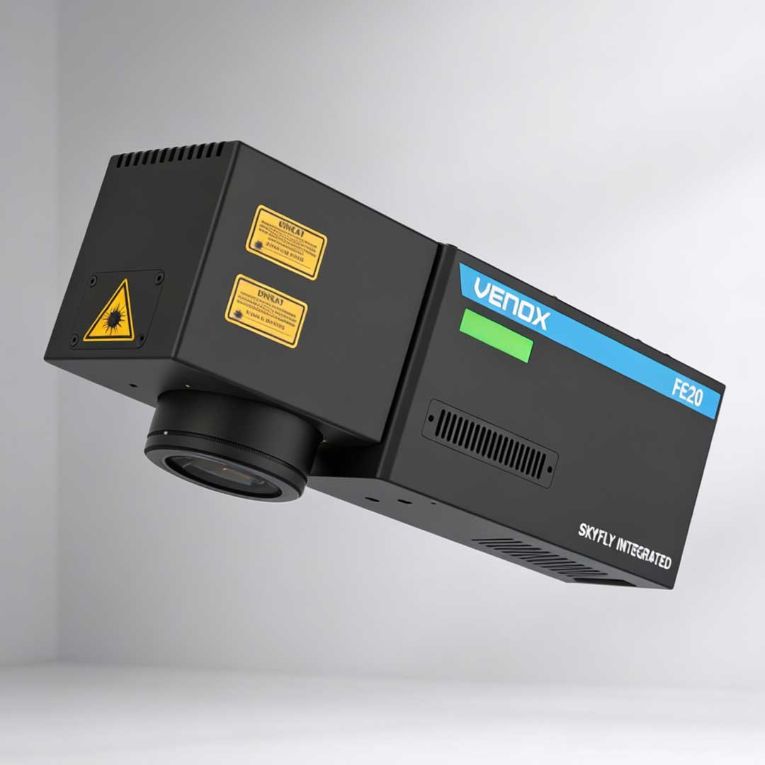
Venox laser marking systems can also be configured according to the material, production speed, marking area, and automation requirements of different industries. Depending on the application, fiber, CO₂, or UV laser technologies can be considered; the systems can be used either as a standard marking station or designed as a custom solution integrated into the production line.
When determining the correct laser system for an industry, it is not sufficient to consider only the name of the industry. Two different products used in the same industry may be manufactured from completely different materials and may have different marking requirements. For example, a metal engine component and a plastic electronic connector used in the automotive industry may not require the same laser technology.
Therefore, in Venox laser marking solutions, the material, geometry, production volume, cycle time, data to be marked, and the position of the system within the production line should be evaluated together.
Main Industries Where Venox Laser Marking Systems Can Be Used
1. Automotive and Automotive Supply Industry
The automotive industry is one of the production areas where product traceability and part identification are important. Engine components, metal connection parts, chassis elements, plastic parts, electronic components, and various automotive supply industry products can be laser marked.
Serial numbers, part numbers, DataMatrix codes, QR codes, production dates, or manufacturer information can be applied to products in these applications. Especially on mass production lines where each part must be assigned a unique identity, the laser marking system can operate together with production data.
While fiber laser systems can be considered for metal automotive parts, different technologies such as UV lasers may be required for sensitive plastic components. Therefore, it is possible to use more than one laser technology within the same automotive manufacturing facility.
In high-volume production, laser stations integrated with sensors, PLCs, and camera systems can enable automatic product detection, marking, and code verification.
2. Defense, Aerospace, and Precision Mechanical Manufacturing
In the defense and aerospace industries, it may be important for the identity of parts to remain intact for a long period and to be associated with their production history. Metal mechanical components, electronic housings, technical parts, and various subsystems can be marked using laser technology.
Identification data such as serial numbers, part codes, production information, or DataMatrix codes can be used on these products. While surface marking may be sufficient in some applications, deeper and more durable marking may be required under demanding operating conditions.
If the geometry of the part is not suitable for a standard marking machine, product-specific fixtures, motorized axes, or different mechanical systems can be used.
Therefore, in precision manufacturing industries, mechanical design, marking repeatability, and system validation are also important alongside the laser source.
3. Electronics and Electrical-Electronics Manufacturing
A significant portion of the products used in the electronics industry are small and delicate. Connectors, sensor parts, electronic housings, control components, metal enclosures, and various plastic components can be laser marked.
Model codes, manufacturer logos, serial numbers, or small DataMatrix codes can be applied to product surfaces. In cases where the marking area is limited, high resolution and clarity become particularly important.
While fiber lasers can be used on metal electronic housings, UV laser technology can be considered for certain sensitive plastic components. Since the pigment and additive structure of plastic materials can affect the result, testing on the actual product is important.
If variable data is used in production, the laser software can automatically generate the product's serial number or code information.
4. Medical, Laboratory, and Healthcare Technologies
Product identification and traceability may be important for medical and laboratory products. Metal or plastic medical components, device parts, laboratory equipment, and various technical products can be marked using laser technologies.
On sensitive surfaces, it is important that the marking process does not create unwanted deformation on the product. Therefore, different technologies such as UV or fiber lasers can be considered depending on the material structure.
Serial numbers, production information, model codes, or two-dimensional codes can be applied to products. When necessary, this information can be associated with the company’s digital production or quality records.
The suitability of the laser technology for the material and the durability of the marking under the intended operating conditions should be verified through sample testing.
5. Machinery, Metalworking, and Industrial Equipment
The machinery and metalworking industry is one of the areas where fiber laser marking technology can be widely used. Components manufactured from stainless steel, carbon steel, aluminum, brass, and various metal alloys can be laser marked.
Model information, product codes, serial numbers, technical values, or manufacturer logos can be applied to machine parts. Permanent identification can make it easier to correctly identify the product during maintenance, service, or spare parts processes.
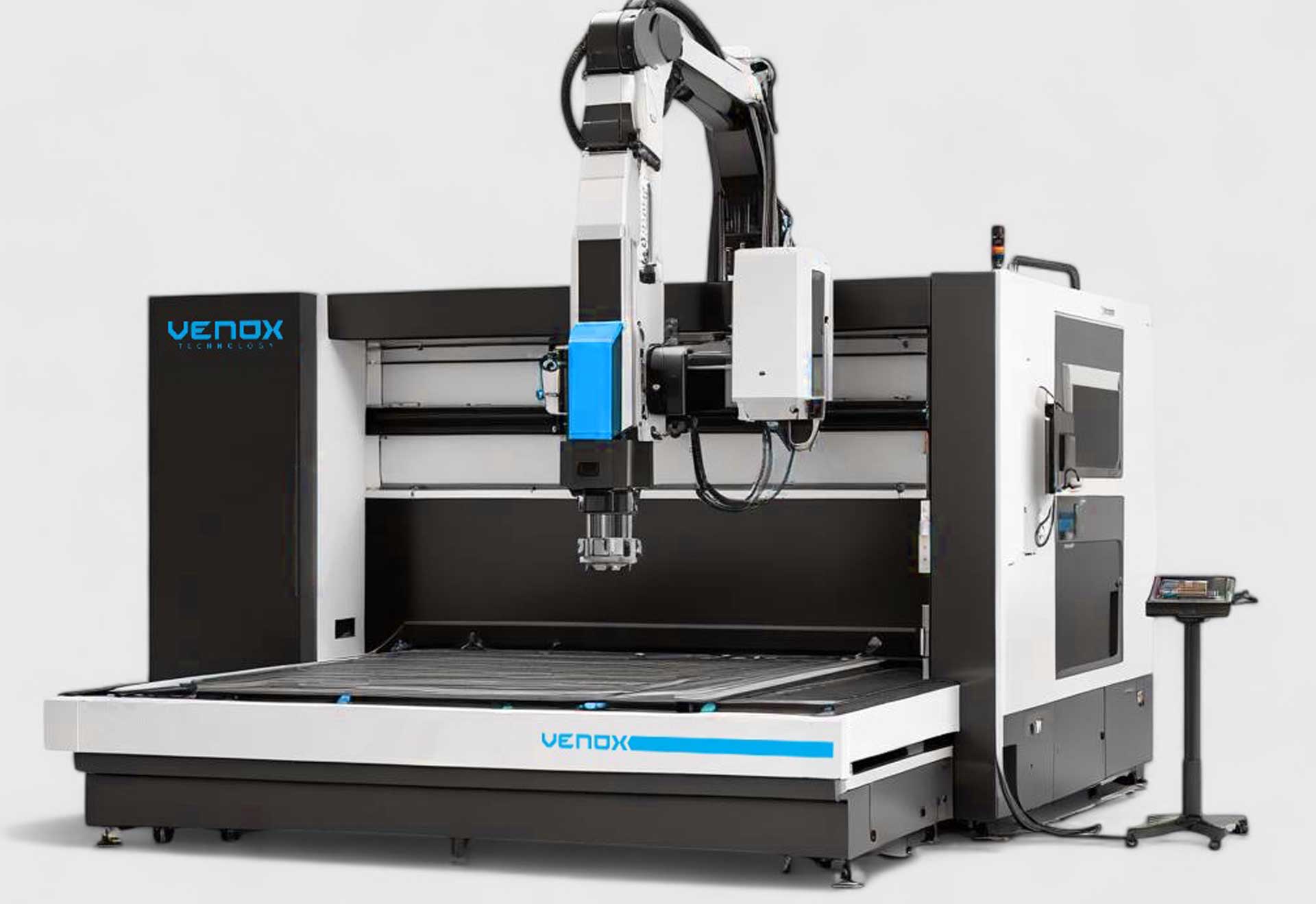
Standard desktop systems may not be sufficient in applications where heavy or large parts need to be marked. In such cases, custom enclosures, movable laser heads, or different axis systems can be used.
For system options intended for metal applications, you can review the fiber laser marking machines page.
How Can Venox Laser Marking Solutions Be Used in Other Industries?
6. Home Appliances and Durable Consumer Goods
In home appliance production, many different metal, plastic, and electronic components are used together. Therefore, a single laser technology may not meet all production requirements.
While stainless steel or coated metal parts can be marked with fiber lasers, fiber, CO₂, or UV laser technologies can be considered for plastic components depending on the material structure.
Part numbers, serial numbers, production dates, and traceability codes can be applied to products. In high-volume production, the laser marking station can be designed to operate automatically in accordance with the cycle time of the production line.
Depending on the production scenario, it may also be possible to apply a different serial number to each product using data received from ERP or MES systems.
7. Plastics and Injection Molding Industry
Laser marking can be used on injection-molded plastic products for automotive, electronics, home appliance, medical, and general industrial applications. However, plastics are materials that require careful analysis in terms of laser marking.
ABS, polycarbonate, polyamide, and different engineering plastics may react differently to the laser beam. Pigments, fillers, and additives can significantly change the marking contrast.
While color change can be achieved on the surface of some plastics, engraving or foaming-like effects may occur on others. UV laser technology can stand out for sensitive plastics.
Therefore, before selecting a system for plastic products, it is important to carry out testing on an actual production sample.
8. Packaging, Food, and Consumer Products
In the packaging industry, product codes, batch numbers, production dates, QR codes, or different variable information may need to be applied to the packaging surface.
Depending on the material structure, CO₂ or other laser technologies can be used on paper, cardboard, and certain plastic packaging materials. Since laser marking does not require physical contact, it can be integrated into moving production lines.
Cycle time is particularly important in packaging applications. If products move at very high volumes on the production line, the code marking time must be capable of matching the existing line speed.
At the same time, if variable date or batch information is used, the marking software can automatically update this data.
9. Wood, Furniture, Leather, and Decorative Products
CO₂ laser technologies can be used for logos, patterns, text, and decorative marking on wood, leather, and various organic surfaces.
Furniture parts, wooden accessories, promotional products, leather bags, wallets, belts, or different consumer products can be personalized using laser technology.
Since the surface properties of natural materials may not be homogeneous, variations in the appearance of the marking may occur. The grain structure and resin content of wood, as well as the type and surface coating of leather, can affect the result.
For synthetic materials, laser processing should not be carried out without knowing the chemical composition. Certain materials that are not suitable for laser processing may generate harmful gases or unwanted surface effects.
10. Cables, Fasteners, and General Industrial Manufacturing
The marking of cables, connectors, terminals, fasteners, bearings, tools, molds, and various technical products is also among the important application areas of industrial laser systems.
On these products, the marking area can sometimes be very small. Therefore, information such as serial numbers or DataMatrix codes must be applied clearly within a limited surface area.
Custom fixtures and rotary systems can be used for cylindrical or irregularly shaped products. When production volume is high, product feeding and unloading processes can also be incorporated into the automation system.
This approach transforms the laser marking system from a standalone device that simply writes on the product into a controlled station within the production process.
The basic approach when adapting Venox laser marking systems to different industries is to evaluate the actual production requirement rather than offering a standard machine for a specific industry. Even within the same industry, material, cycle time, product geometry, and traceability expectations can vary significantly.
Therefore, when determining the system, the technical characteristics of the product to be marked should first be analyzed, and then the appropriate fiber, CO₂, or UV laser technology should be selected. If necessary, custom fixtures, motorized axes, cameras, PLCs, and production line integrations can be included in the system.
Venox's laser marking systems and laser marking machines for different technologies can be evaluated according to production requirements.
If you have laser marking requirements in industries ranging from automotive and electronics to machinery and plastics manufacturing, you can contact Venox to obtain information about sample testing on your product, selecting the appropriate technology, or designing a custom system for your production line.
