

Industrial Marking Standards: Traceability and Quality Requirements in Manufacturing
Industrial marking is a critical identification method that ensures the traceability of products throughout the manufacturing process. Serial numbers, DataMatrix codes, QR codes, and product information are permanently marked onto parts using marking systems. These markings must comply with international standards and maintain their readability throughout the production chain. This guide explains in detail industrial marking standards, traceability requirements, and marking technologies used in modern manufacturing systems.
Industrial Marking and Traceability Standards
What is industrial marking?
Industrial marking is the process of marking products or parts with a unique identity during production. This identity may be in the form of a serial number, code, or symbol.
Why is traceability important?
Thanks to traceability, a product’s manufacturing process, the materials used, and its production date can be tracked. This provides a major advantage in quality control and recall processes.
GS1 standard
GS1 defines the standard coding systems used in the global supply chain. It is frequently used in QR code and DataMatrix applications.
ISO/IEC marking standards
ISO and IEC standards define the structure of coding systems and quality criteria.
UID and UDI systems
UID (Unique Identification) and UDI (Unique Device Identification) systems are used especially in the defense and medical industries.
Direct part marking (DPM)
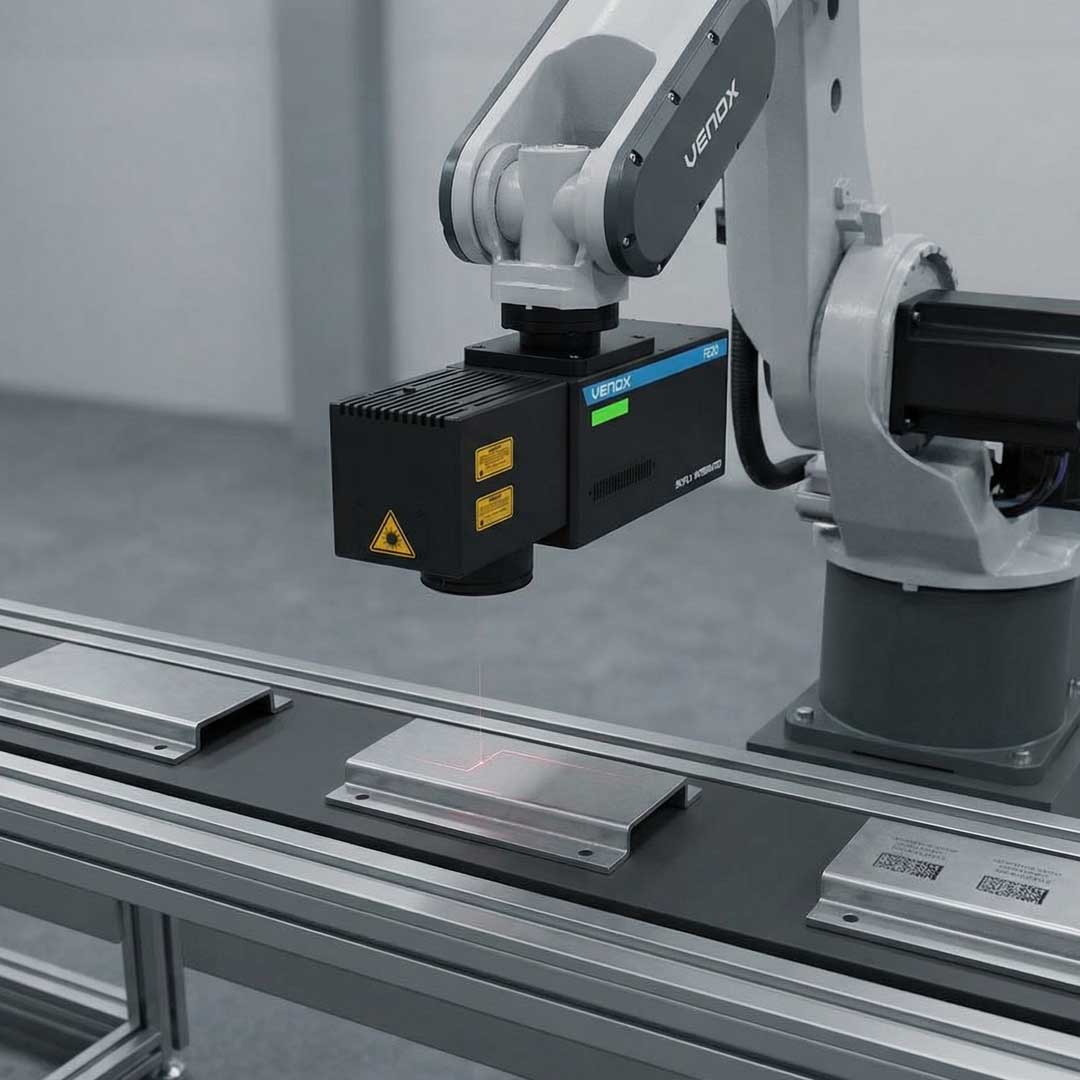
Direct Part Marking refers to processing codes directly onto the part surface. This method can be performed with laser marking.
Code readability
In industrial marking systems, codes must remain readable throughout the production line.
Quality grading
Code quality is graded according to ISO standards, and readability is analyzed.
Automation systems
In modern production lines, marking systems work integrated with PLC and MES systems.
Industrial marking technologies
- Laser marking
- Dot peen marking
- Inkjet marking
- Labeling systems
Industrial Marking Applications and Technologies
Automotive industry
Part traceability is very important in automotive manufacturing, and each part is assigned a unique identity.
Aerospace industry
In the aerospace industry, traceability is mandatory due to safety requirements.
Medical device manufacturing
The UDI coding system is used for medical devices.
Electronics manufacturing
Small-sized coding systems are used on electronic components.
Metal part marking
Laser marking creates permanent and durable marks on metal surfaces.
Plastic part marking
UV and CO₂ laser systems can be used on plastic surfaces.
Inline production
In mass production lines, marking systems operate automatically.
Camera verification
The readability of codes is checked with camera systems.
Automation integration
Data integration can be provided with PLC, ERP, and MES systems.
Choosing the right marking system
Material type, production speed, and traceability requirements are decisive factors in selecting the right system.
Why is industrial marking necessary?
It enables the manufacturing process of products to be tracked.
In which industries is the DataMatrix code used?
In the automotive, medical, and electronics industries.
Can traceability be achieved with a QR code?
Yes, QR codes can be used for data storage.
Is laser marking permanent?
Yes, it is generally permanent.
Can marking be done on metal surfaces?
Yes, it is possible with a fiber laser.
Is camera verification necessary?
It is recommended to verify code readability.
Can it be used in inline production?
Yes, it can work integrated with automation systems.
What is the GS1 standard?
It is the global coding standard used in the supply chain.
In which industry is the UDI system used?
In medical device manufacturing.
Are sample tests necessary?
Yes, they are recommended to determine the most suitable marking parameters.
