

Is Venox a Domestic Manufacturer? How Does the Laser Marking Machine Production Process Take Place in Türkiye?
One of the most frequently researched topics for businesses planning to purchase a laser marking system is whether the company they will work with is a manufacturer or merely a supplier selling ready-made systems. Especially for businesses looking for a laser marking machine manufacturer in Türkiye, engineering, mechanical design, system integration, application development, and after-sales technical support are among the important selection criteria.
Venox operates in Türkiye as a brand that develops industrial laser marking systems and application-specific laser solutions. However, in order to correctly evaluate the concept of a “domestic manufacturer” in the laser marking industry, it is not sufficient to look only at the origin of the laser source or a single electronic component.
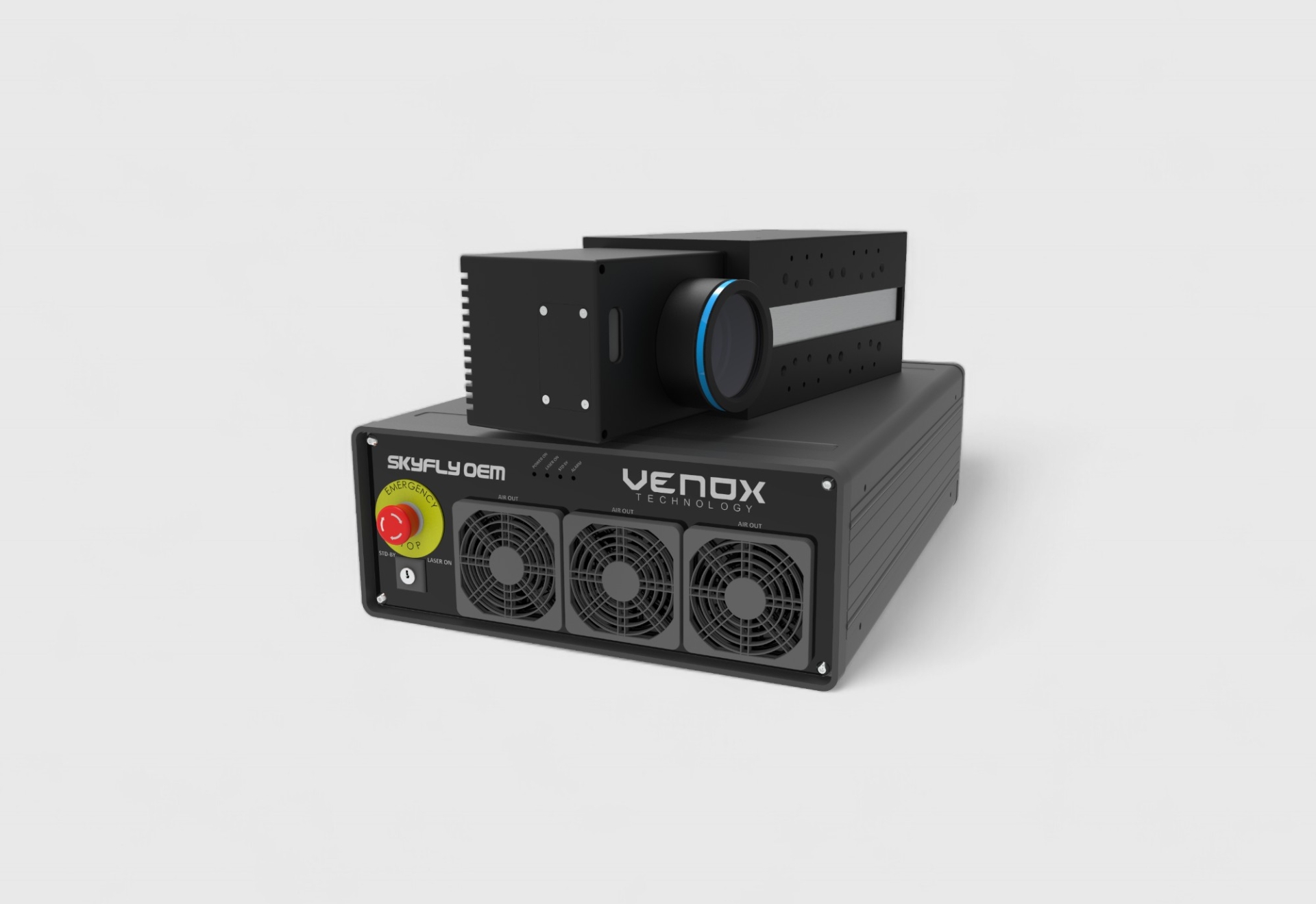
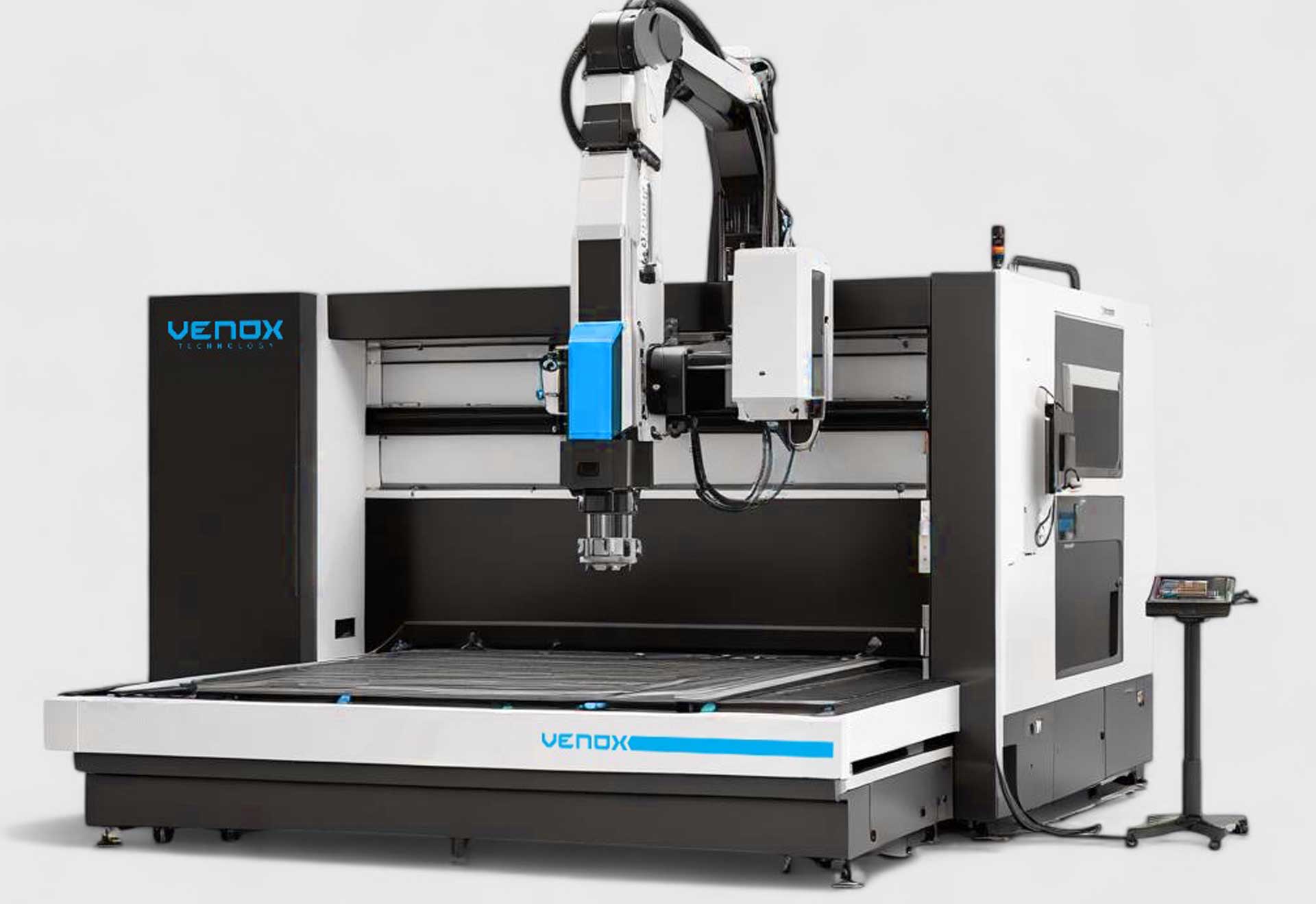
An industrial laser marking machine consists of many different components such as the laser source, optical system, galvo scanner, control electronics, mechanical body, safety enclosure, motion systems, software, fixture, automation, and, when required, a camera. Selecting these components appropriately and turning them into a functioning system according to actual production requirements requires a significant engineering process.
Therefore, when evaluating domestic laser marking machine production, it is necessary to consider to what extent processes such as system design, mechanical production, automation, software integration, application testing, commissioning, and after-sales support can be developed and implemented.
Venox’s Laser Marking Machine Production and Engineering Approach
1. Technical Analysis of the Application Requirement
The first stage of the laser marking machine production process is to accurately analyze which product the customer wants to mark and how the marking should be carried out. This is because it is not possible to use the same laser source, the same power level, or the same machine structure for every application.
The material, dimensions, surface structure, production volume, marking area, and target processing time of the product to be marked constitute the basic data for system selection. It should also be determined whether only a logo will be applied to the product or whether variable data such as serial numbers, QR codes, or DataMatrix codes will be processed.
In addition, it is evaluated whether the product will be marked at a standalone station or on an existing production line. In this way, not only the laser source but the entire operating architecture of the system begins to be defined.
2. Determining the Correct Laser Technology
Different laser technologies such as fiber, CO₂, and UV can be used in laser marking systems. Each technology has a different wavelength and interacts differently with materials.
While fiber laser technologies are generally evaluated for metal surfaces, CO₂ laser systems can be used on wood, leather, and certain organic materials. UV laser technology may be preferred for sensitive plastics, electronic components, or certain applications where low heat impact is important.
Therefore, when creating a Venox laser marking system, it is important that the technology selection is made according to the actual material used in the application.
For information about different system options, you can visit the laser marking systems page.
3. Sample Marking and Application Tests
One of the critical stages in laser marking machine production is the application test carried out on the actual product. Even two materials identified by the same name in technical catalogs may react differently to the laser beam due to differences in surface coating, pigment, alloy, or production method.
During sample testing, it is not sufficient to check only whether marking can be performed. Contrast, readability, processing time, surface deformation, engraving depth, and the overall quality of the mark are evaluated together.
In QR code or DataMatrix applications, it is not enough for the code to be visually visible. It should also be tested whether the code can be reliably read by an appropriate reader or camera system.
As a result of these tests, the laser technology, power level, lens, and marking parameters to be used can be determined more accurately.
4. Mechanical Design and Construction of the Machine Body
An industrial laser marking system consists of more than just the laser source. A mechanical system suitable for the application is required in order to use the laser safely and efficiently.
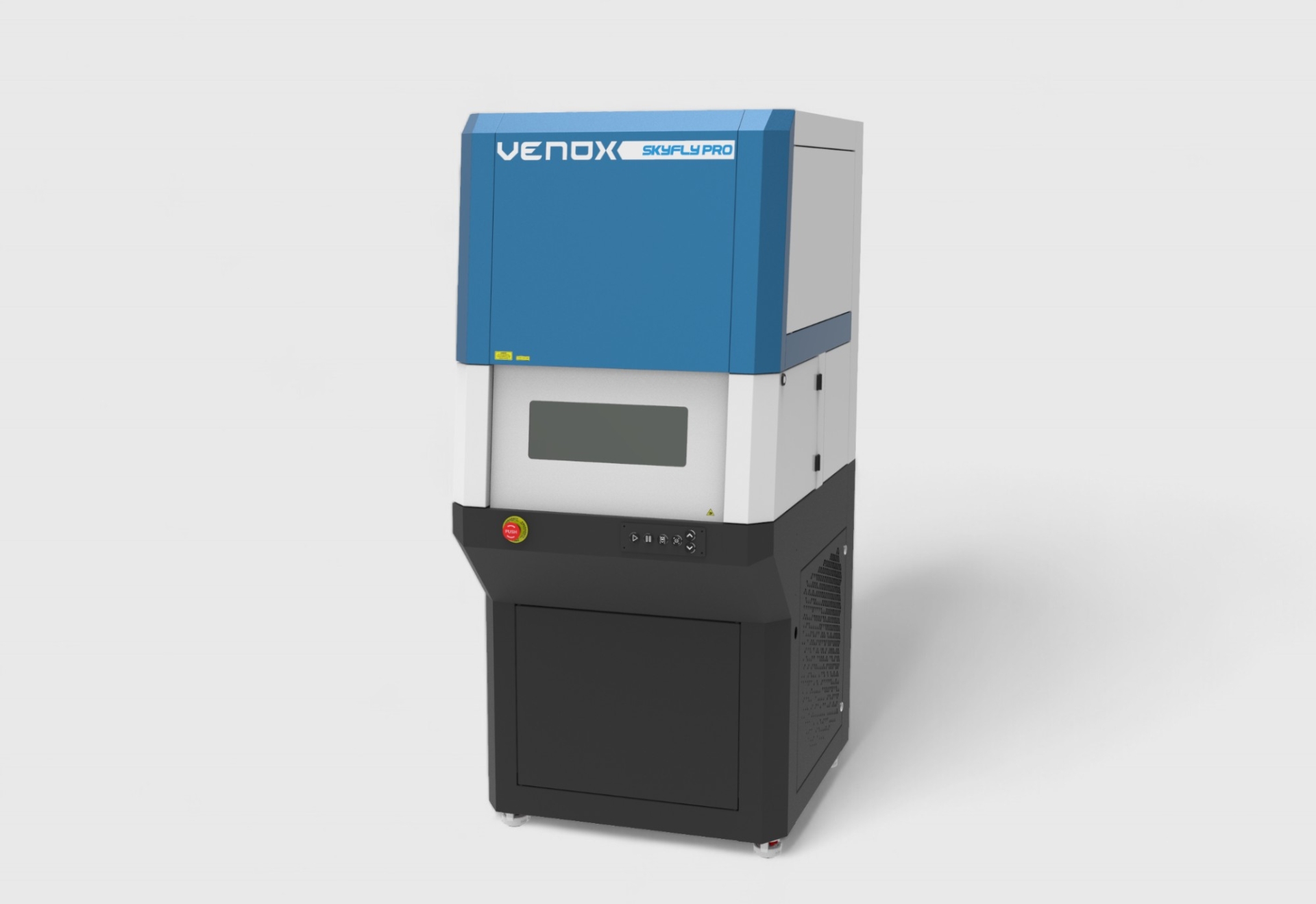
The machine body, working area, and operator access can be designed according to the size, weight, and geometry of the product to be marked. If the system needs to be enclosed, the protective structure, laser safety windows, door mechanism, and interlock systems also become part of the design.
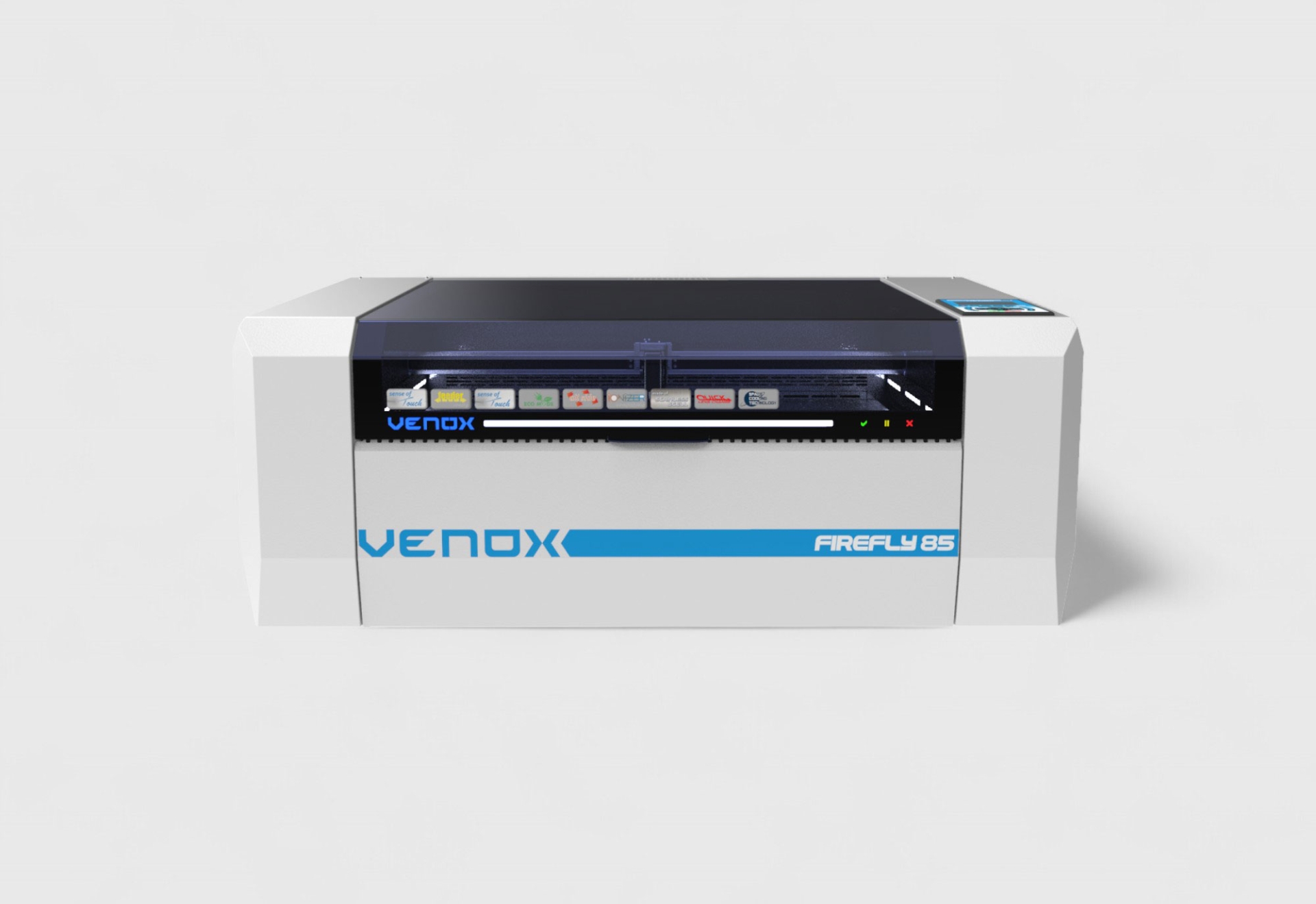
While a standard desktop system may be sufficient for some applications, certain projects may require custom enclosures with a large working volume. In systems where heavy parts are processed, operator ergonomics and how the part will be loaded into the machine should also be taken into consideration.
5. Design of Fixtures and Motion Systems
In order for marking to be performed in the same position and with the same quality on every product, the part must be fixed correctly. Therefore, product-specific fixture design is one of the important components of a laser marking system.
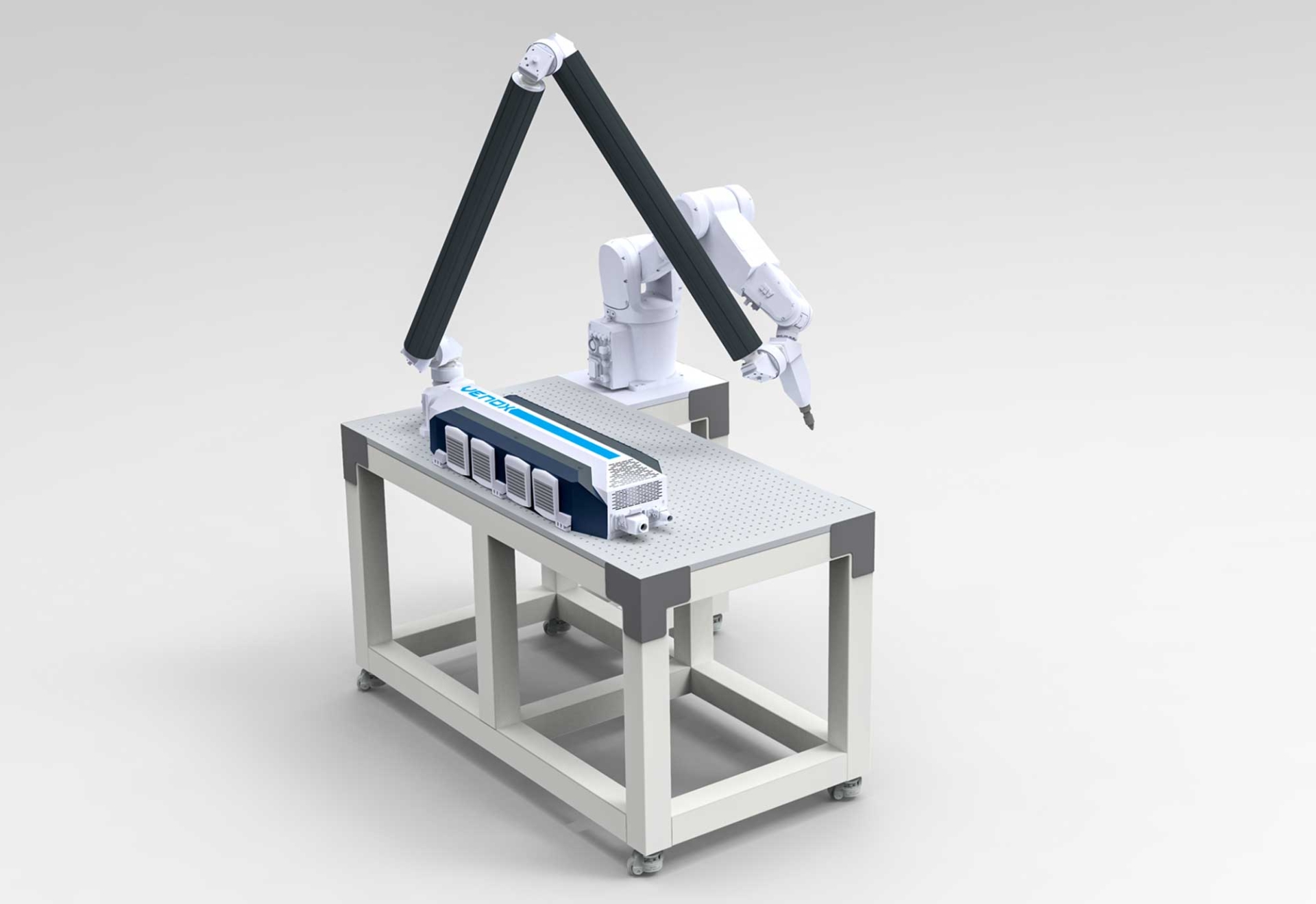
Rotary systems can be used for cylindrical products, motorized Z axes for products of different heights, or X-Y motion systems in applications where different areas of large parts need to be processed.
Correct product positioning can both improve marking quality and help reduce operator-related errors.
Especially in mass production, it is important for fixture design to support fast product loading and unloading in terms of total cycle time.
Automation, Software, and After-Sales Processes in Domestic Laser Marking Production
6. Electrical, Electronic, and Automation Integration
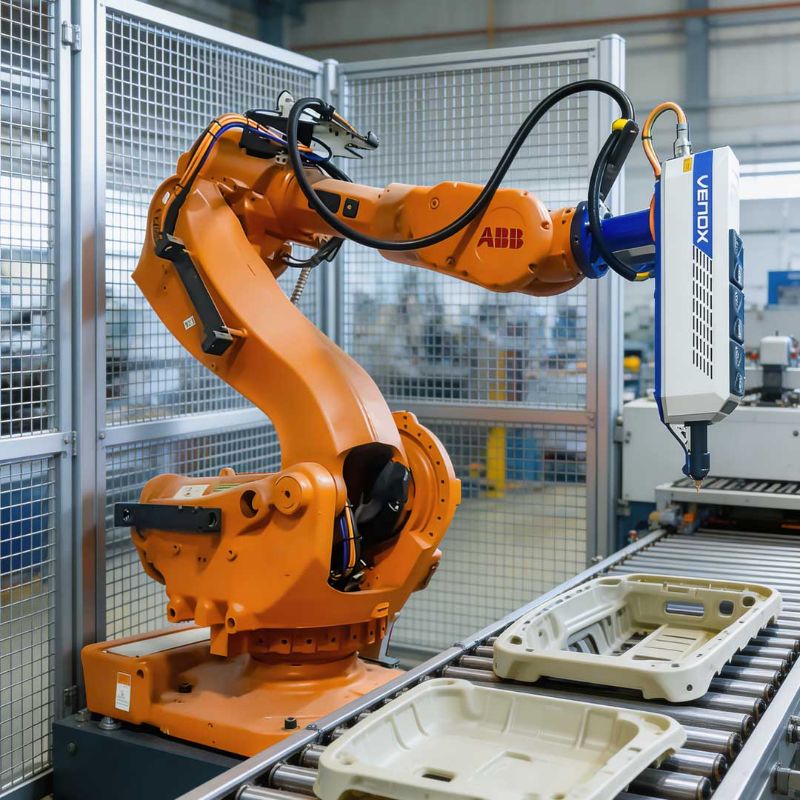
In custom laser marking projects, the electrical and automation infrastructure must also be developed according to the application, alongside the mechanical system. Sensors, PLCs, motor drives, safety components, and various control elements can operate together with the laser system.
For example, when a product arrives at the marking station on a production line, a sensor can detect the part. The PLC can transmit the correct product information to the laser system, and the marking process can be started automatically.
Once the process is completed, the laser system can send a completion signal to the production line. In this way, the product can be transferred to the next stage of production.
This structure transforms the laser marking machine from a standalone device into an automatically operating part of the production line.
7. Software and Variable Data Management
In modern laser marking machines, software is one of the core components of the system. In addition to content such as logos and fixed text, variable information such as serial numbers, production dates, product codes, QR codes, and DataMatrix codes can be generated automatically.
If each product in production needs to be assigned a unique serial number, the software can generate these numbers sequentially. In more advanced projects, information can be retrieved from ERP, MES, databases, or different production management systems.
This structure can reduce the need for manual data entry by the operator and help control the risk of marking incorrect information.
In projects where product traceability is important, the marked data can later be associated with production records.
8. Camera and Machine Vision Integration
In some laser marking systems, camera technologies are an important part of the production process. A camera can be used before marking to check whether the part is in the correct position.
After the marking process is completed, the QR code or DataMatrix code on the product can be read to verify that the process has been carried out correctly.
Camera systems can reduce the operator’s manual quality control workload, especially on high-volume production lines. Depending on the application, the orientation, position, or accuracy of the marked content can be checked automatically.
In this way, laser technology, automation, and machine vision can work together within a single production station.
9. Machine Testing and Commissioning
Once the laser marking system is completed, it should be tested not only to determine whether the machine operates, but also whether it meets the targeted production conditions.
Cycle time, marking quality, code readability, product positioning accuracy, automation signals, and safety functions should be checked.
For systems connected to production lines, it is important to conduct tests under conditions that are as close as possible to actual production scenarios. This is because an application that operates without problems in a laboratory environment may reveal different requirements when operating at real production speeds.
Following the tests, the system can be commissioned on site and the necessary parameter optimizations can be carried out.
10. Technical Service and the System Life Cycle
The production process of a laser marking machine does not end when the machine is delivered. Since industrial systems can be used for many years, technical service and after-sales support constitute an important part of the system’s overall life cycle.
Operator training, maintenance processes, software support, spare part requirements, and technical intervention in the event of possible failures affect the sustainability of the investment.
In addition, the company’s products or production methods may change over time. It may become necessary to add new fixtures, lenses, motion systems, or automation components to the existing machine.
Therefore, when selecting a laser marking machine manufacturer, not only the initial purchasing process but also the long-term technical support capability should be evaluated.
The concept of a domestic manufacturer should also be evaluated within this overall context. It may not be necessary for all components used in a laser marking system to be manufactured in a single country. One of the key considerations is how the machine’s engineering, mechanical design, adaptation to the application, integration, and technical support are carried out.
In Venox’s approach, the laser marking system is considered not merely as a standalone laser source, but as a comprehensive industrial solution configured according to the production requirement.
To explore solutions that can be used for metal marking applications, you can visit the fiber laser marking machines page.
For product options intended for different applications, you can review the laser marking machines page; and for information about a system suitable for your existing production line, sample testing, or custom project requirements, you can contact Venox.
