

Logo and Graphic Processing with Laser Marking: High Resolution and Brand Visibility
Logo and graphic processing with laser is an advanced marking application that enables brands to create a permanent and high-resolution visual identity on products. By using fiber laser, CO₂ laser, and UV laser technologies, detailed logos, text, and graphic processing can be performed on metal, plastic, wood, glass, and textile surfaces. In this process, high quality is achieved by using the correct resolution, line spacing, and laser parameters. This guide explains laser graphic processing techniques, resolution settings, and industrial applications in detail.
Laser Graphic and Logo Processing Technology
What is logo processing with laser?
Logo processing is the permanent application of a brand’s visual identity onto a product surface.
Graphic processing principle
Laser systems can transfer vector or raster graphics onto the surface.
Vector processing
Line- and contour-based graphics are processed with high precision.
Raster (fill) processing
Images are transferred onto the surface on a pixel basis.
Resolution (DPI)
Higher DPI values provide more detailed results.
Line spacing (hatch)
Line spacing determines the fill density.
Contrast control
Contrast intensity can be adjusted with laser parameters.
Result according to surface type
Different visual results are obtained on metal, plastic, and wood surfaces.
Color marking
Color logo processing on metal surfaces is possible with MOPA fiber laser.
Industrial application areas
- Brand logos
- Product labels
- Decorative graphics
- Advertising products
Logo and Graphic Marking Applications
Logo processing on metal surfaces
High-contrast logos are processed on metal surfaces with fiber laser.
Wood and decorative products
Aesthetic graphics are created on wood surfaces with CO₂ laser.
Plastic products
Logos are processed on plastic surfaces with UV and CO₂ laser systems.
Graphic processing on glass surfaces
Graphics are created on glass surfaces by the frosting method.
Textile and leather applications
Patterns can be processed on textile and leather surfaces with CO₂ laser.
Inline production
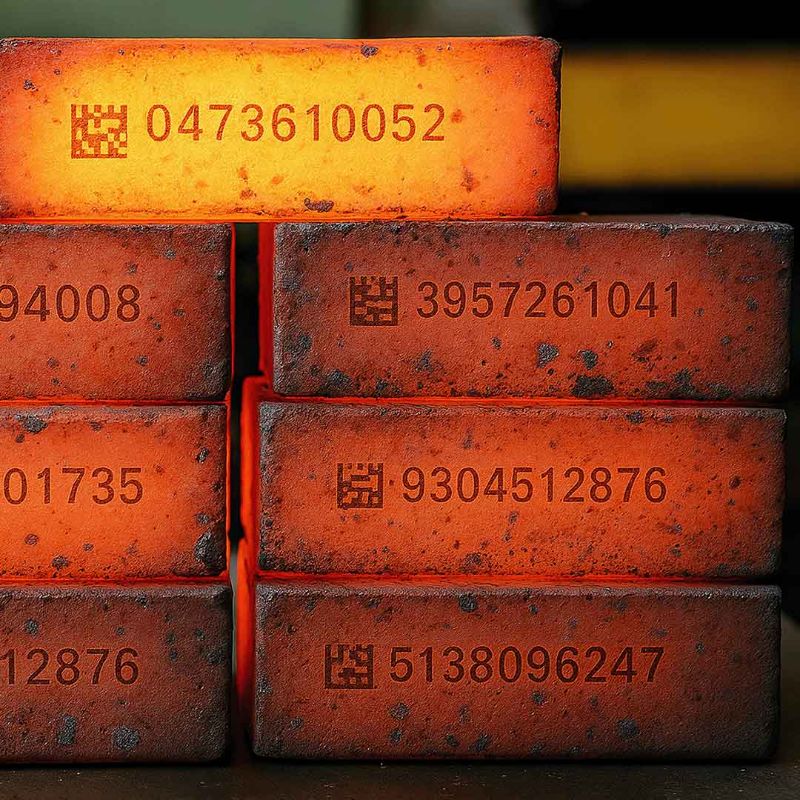
Laser systems can work integrated into production lines.
Camera verification
Graphic and logo quality can be checked with camera systems.
Automation integration
Integration with PLC and MES systems is possible.
Parameter optimization
Power, speed, and hatch settings determine graphic quality.
Sample testing process
Test studies should be carried out for different surfaces.
Industrial advantages
Laser marking offers an aesthetic, permanent, and high-resolution solution.
Can a logo be processed with laser?
Yes, it can be processed with high precision.
How is graphic resolution increased?
It is increased with DPI and hatch settings.
Can logos be made on metal surfaces?
Yes, it is possible with fiber laser.
Can graphics be processed on wood?
Yes, it can be done with CO₂ laser.
Is a colored logo possible?
It is possible with MOPA laser.
Can it be used in inline production?
Yes, it works integrated with automation.
Can quality control be done with a camera?
Yes, verification can be performed.
Can logos be made on plastic surfaces?
Yes, it is possible with the appropriate laser.
Is there a maintenance requirement?
Laser systems generally require low maintenance.
Are sample tests necessary?
Yes, they are recommended for the best results.
