
Laser Marking Machine Manufacturers in Türkiye and Company Selection Criteria
The need for laser marking technologies in Türkiye is becoming increasingly important across automotive, defense, electronics, white goods, machinery, metalworking, plastics, cable, medical, and many other manufacturing industries. For companies that want to apply serial numbers, logos, DataMatrix codes, QR codes, barcodes, technical information, or production data onto their products, laser marking systems offer a permanent, fast, and automation-compatible solution.
However, selecting the right laser marking system is not limited to choosing a machine model or determining laser power. The manufacturer of the system, its application experience, engineering capability, technical service structure, automation expertise, and after-sales support model can also directly affect the long-term success of the investment.
For this reason, when researching laser marking machine manufacturers in Türkiye, it is necessary to evaluate the company’s actual technical capabilities and project development approach rather than focusing solely on price comparisons.
The laser system suitable for a company’s needs may vary depending on the material to be marked, production speed, product geometry, desired marking quality, production line structure, and traceability requirements. For the same reason, the same laser marking machine may not be the right choice for two different companies.
What Should Be Considered When Choosing a Laser Marking Machine Manufacturer in Türkiye?
Understanding the Difference Between a Manufacturer and a Seller
One of the first issues to consider when purchasing a laser marking system is whether the company is a manufacturer, an integrator, or simply a supplier that sells products. These three structures may differ from one another, and each may contribute to the project at a different level.
It is not sufficient for a laser marking machine manufacturer to simply source the laser source and offer the system for sale. Mechanical design, electrical and electronic infrastructure, safety structure, optical system selection, software integration, fixture design, and automation components must be combined appropriately according to the project requirements.
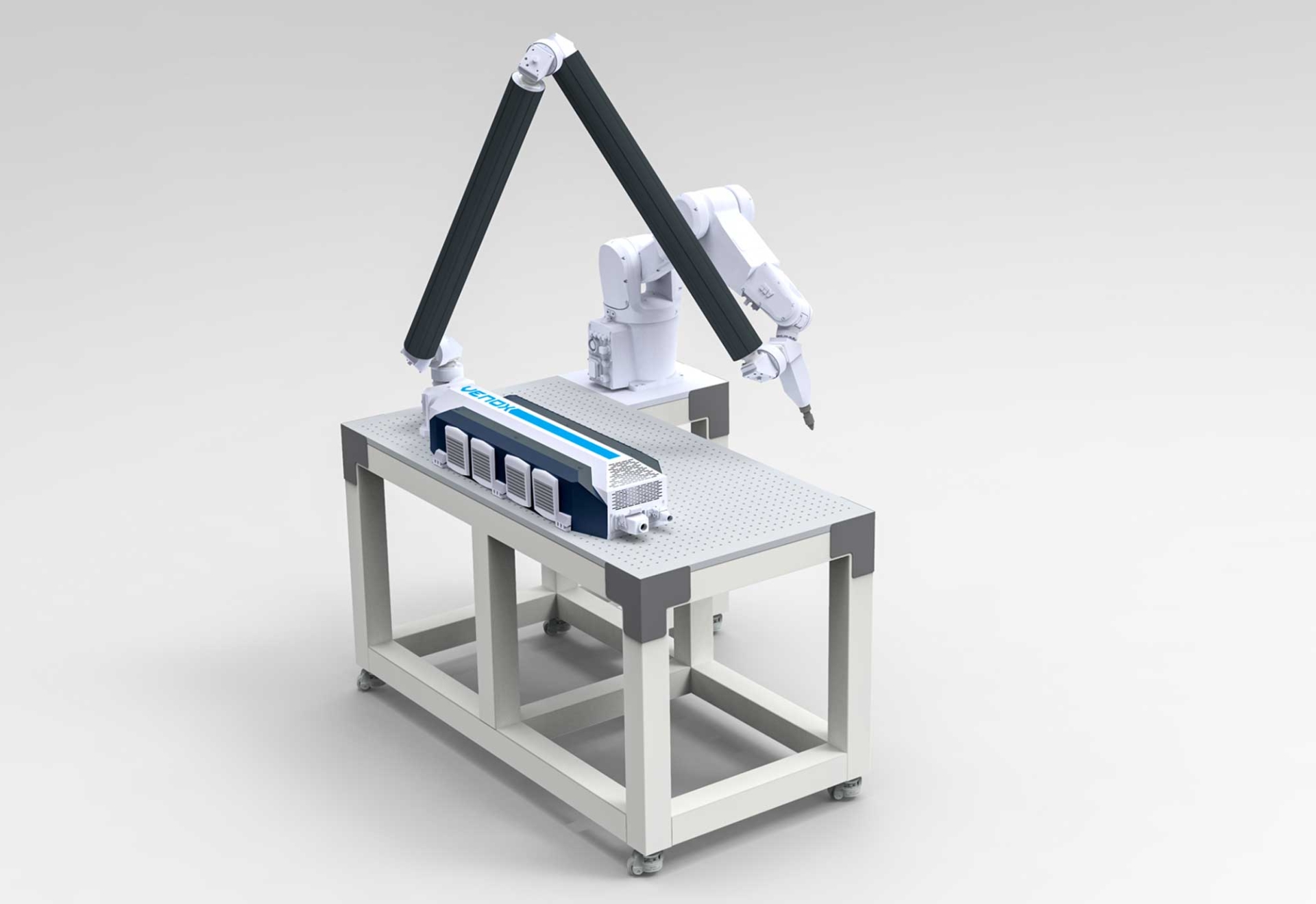
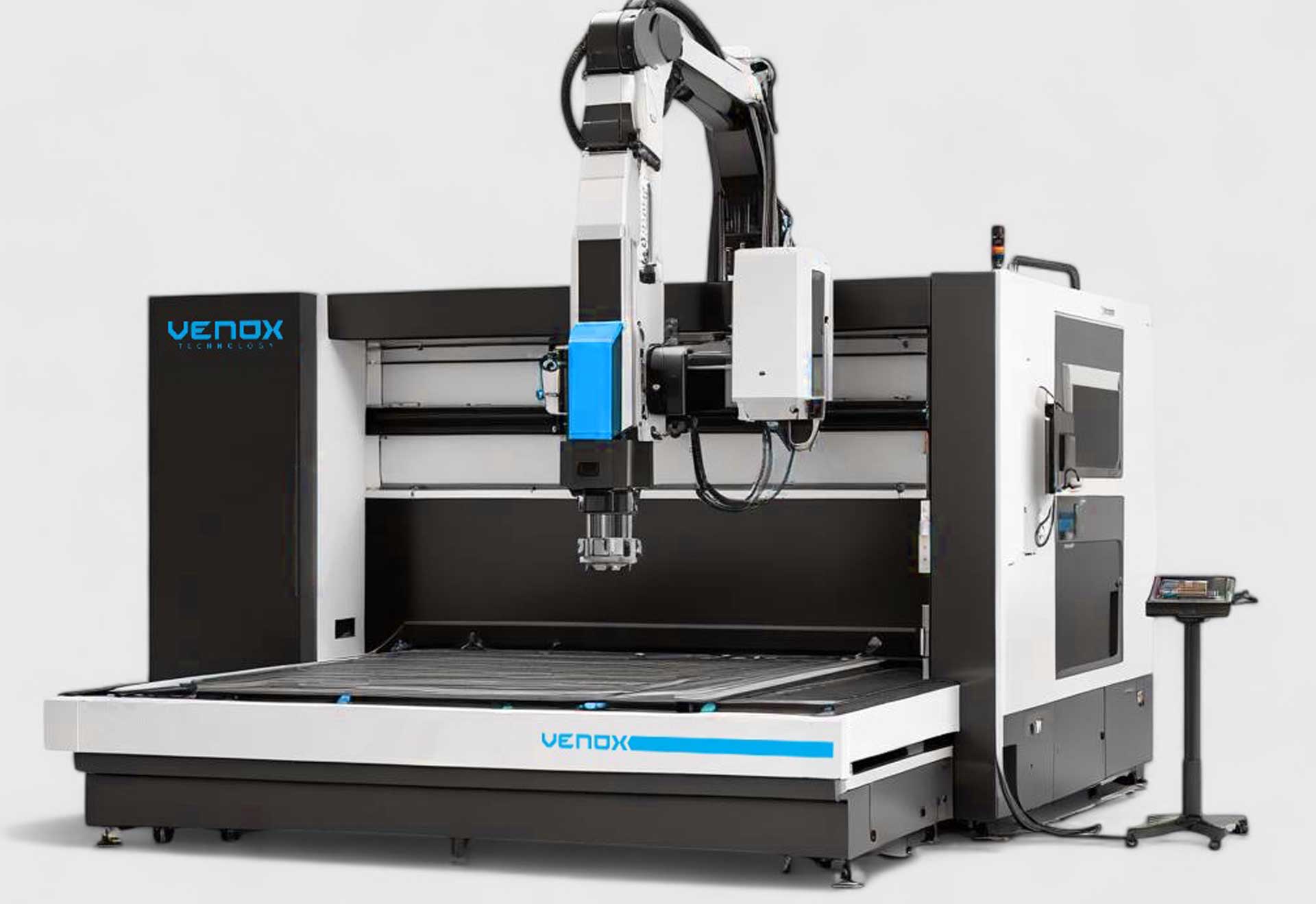
Especially in applications that cannot be solved with a standard machine, the manufacturer’s engineering and custom project development capabilities become decisive. Requirements such as part-specific fixtures, automatic doors, rotary axes, linear axes, conveyors, camera systems, or robot integration may arise.
R&D and Engineering Capability
A strong manufacturer of industrial laser systems does more than simply offer ready-made products; it analyzes the application, determines the appropriate technology, and can make system-specific developments when necessary.
At this point, the company’s knowledge of mechanical design, electrical and electronics engineering, automation, software, and laser applications is important. Especially in systems to be integrated into production lines, a single discipline is not sufficient. The laser source, sensors, PLC, cameras, motion systems, and production data may need to work together.
For this reason, when selecting a manufacturer, it is important to evaluate not only the company’s product catalog but also the types of applications it has completed and its solution development capabilities.
Sample Marking and Application Tests
Before purchasing a laser marking system, it is important, whenever possible, to perform tests on the actual product or a sample. This is because marking quality does not depend solely on the laser technology.
The alloy, surface coating, color, geometry, thickness of the material, and the processes it will undergo after production can affect the marking result. For example, two plastic materials identified by the same name may respond differently to the laser beam due to additives or surface structure.
Sample tests allow marking contrast, speed, readability, depth, surface effect, and process time to be evaluated in advance. This approach reduces the risk of selecting the wrong laser technology.
Selecting the Right System Among Fiber, CO₂, and UV Technologies
Different laser technologies can be used in laser marking applications. Fiber lasers are commonly preferred especially for metal surfaces, while CO₂ lasers can be used on many organic materials and non-metallic surfaces. UV lasers may stand out in certain plastic, electronics, and sensitive product applications where low heat impact and high precision are important.
However, technology selection should not be based solely on the general name of the material. The purpose of the application, the targeted marking characteristics, cycle time, and production conditions should be evaluated together.
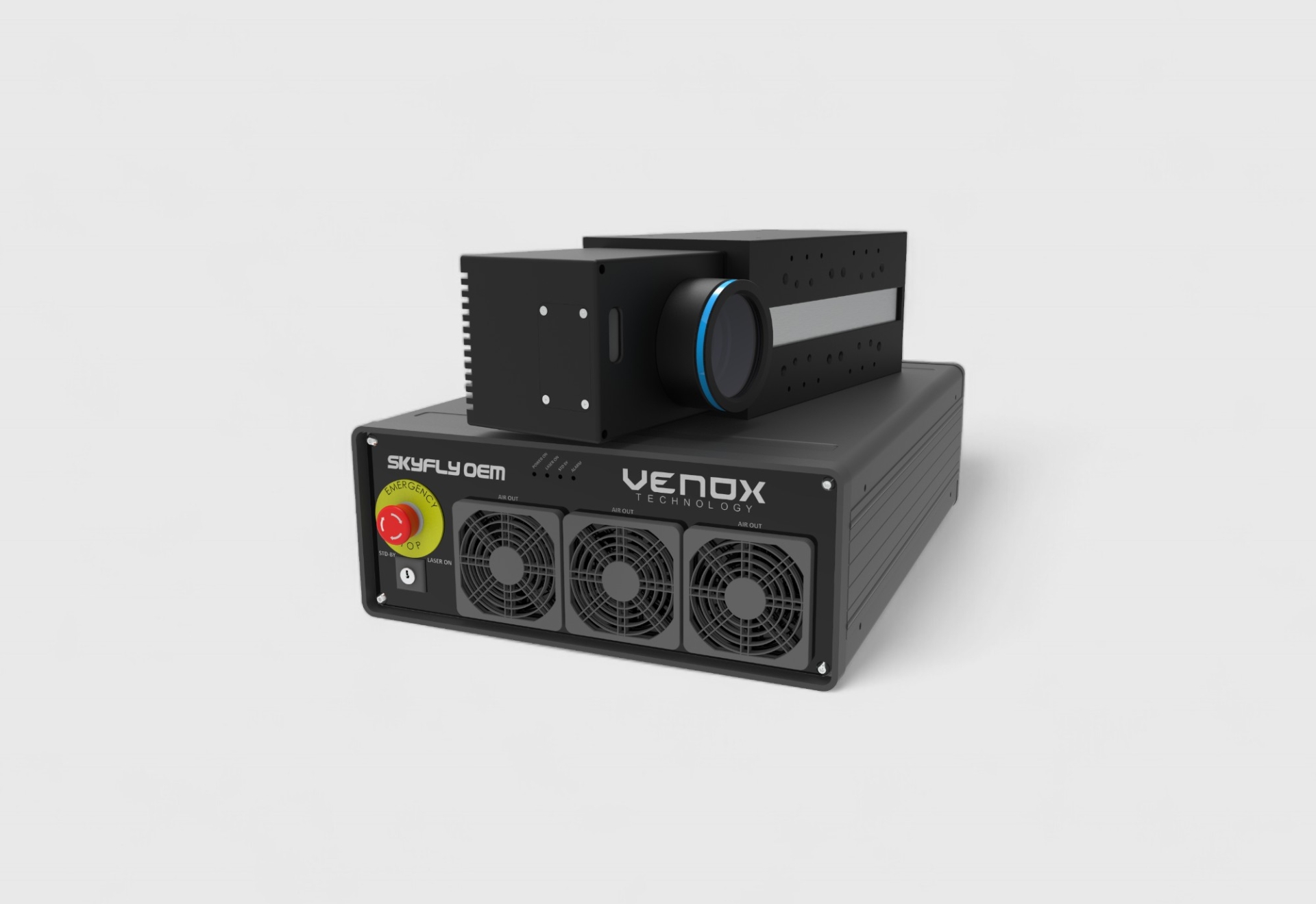
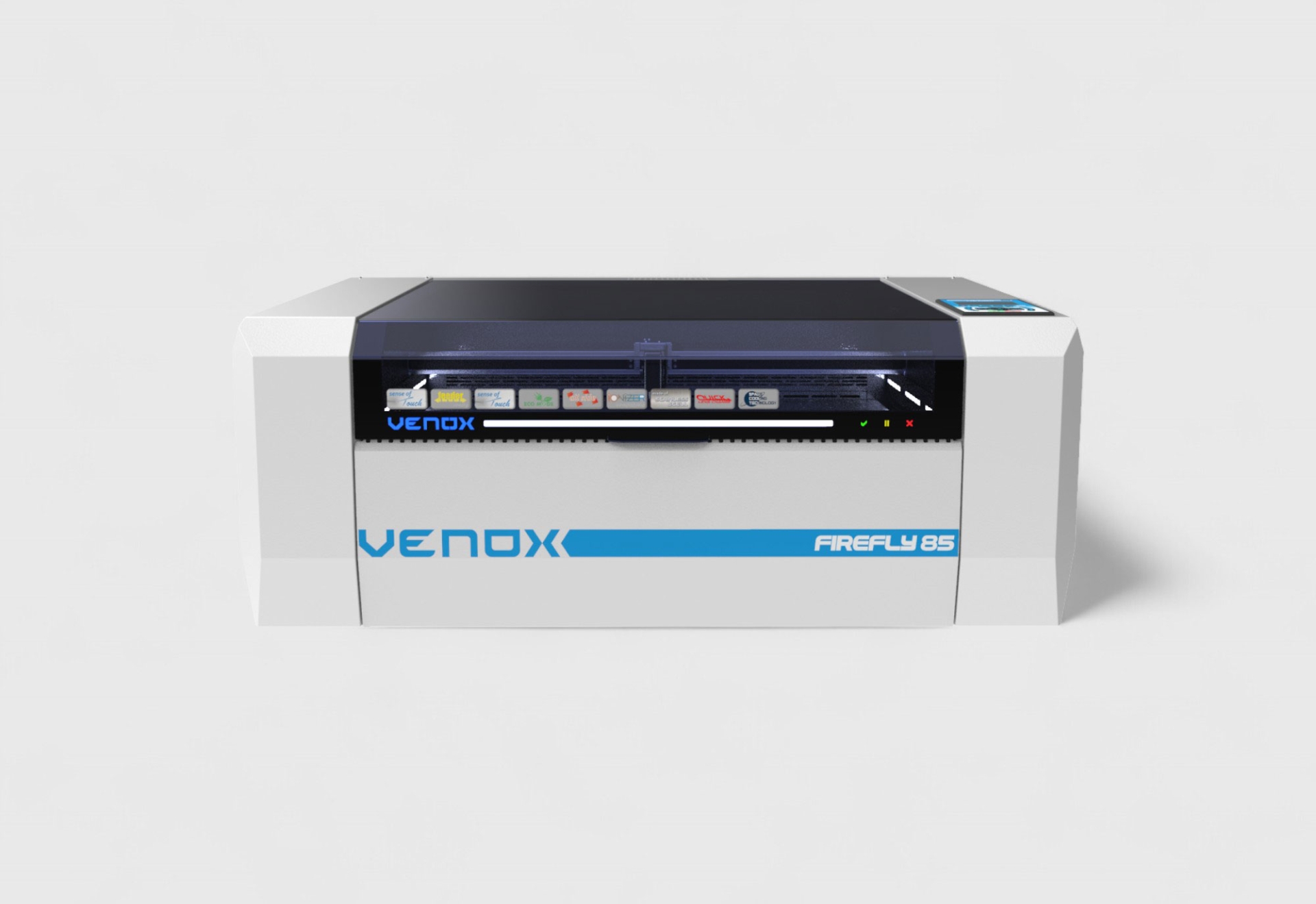
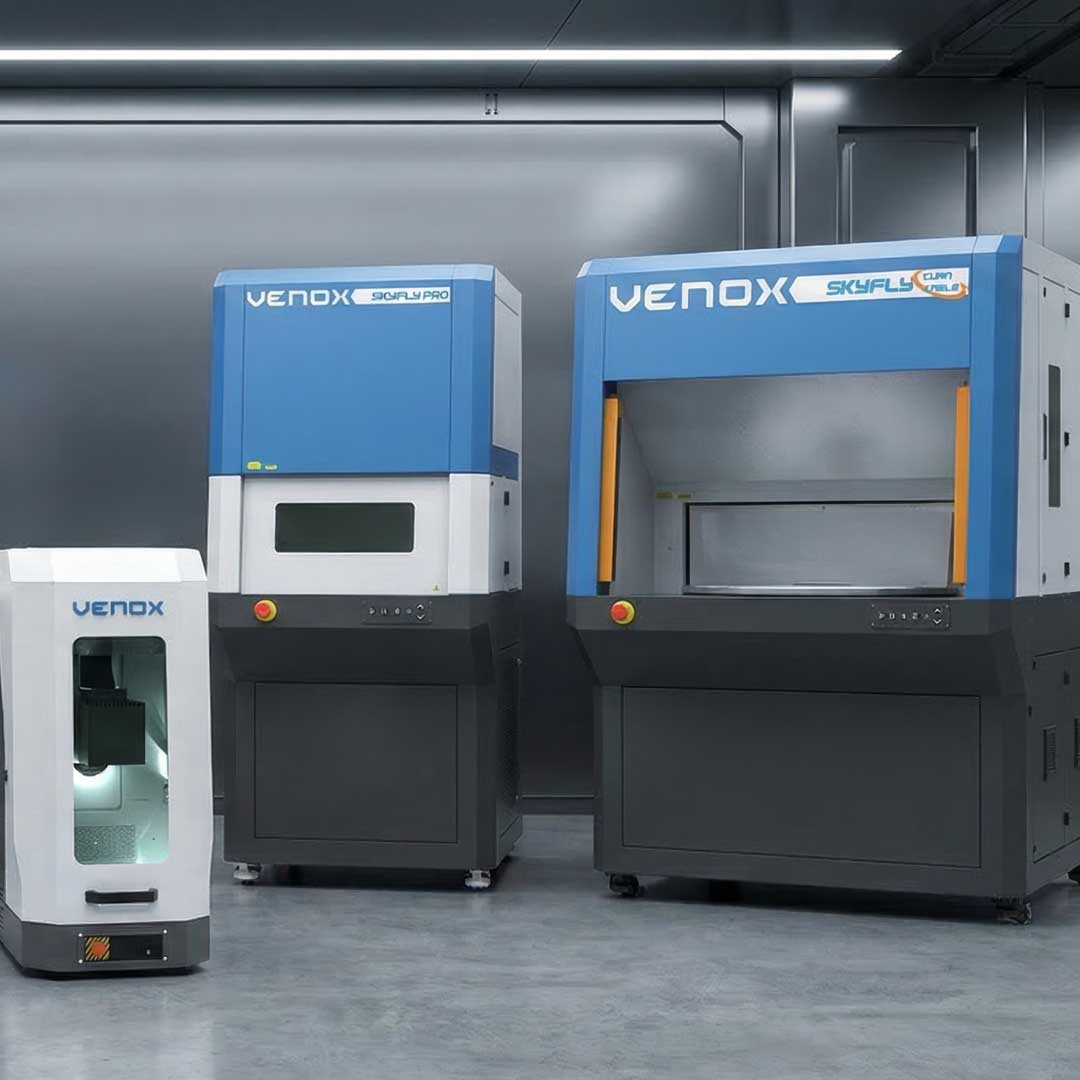
For more detailed information about Venox’s solutions for different laser technologies, the laser marking machines page can be reviewed.
Technical Service and After-Sales Support
In industrial equipment investments, support after purchase is as important as the initial cost of the system. When a laser marking system used in production stops operating, this does not merely mean that the machine is not functioning; it may cause the production line to slow down or stop completely.
For this reason, when selecting a manufacturer, the technical service organization, remote support capabilities, spare parts availability, maintenance process, and procedures to be followed in the event of a failure should be evaluated.
Providing operator training after installation also supports the correct use of the system. Incorrect focusing, unsuitable parameter settings, or insufficient maintenance can negatively affect marking quality and system performance.
What Does the Right Laser Marking Manufacturer Provide to a Business?
System Design Suitable for the Production Line
Not every laser marking application is carried out on a standalone machine. In mass-production facilities, the system may need to be integrated into the existing production line.
In such applications, the entire process, from the product entering the station to marking, verification, and exit, can operate automatically. Sensors can detect the product’s position, the PLC system can transmit the necessary signals, and the laser system can automatically perform the marking process.
When required, a camera system can be used to check the presence or readability of the processed code. Production data can be received from central software, allowing a different serial number or DataMatrix code to be applied to each part.
For this reason, in projects requiring production line integration, it is important for the laser manufacturer to have sufficient technical experience in automation.
Capability to Develop Project-Specific Machines
Standard laser marking machines may be sufficient for many applications. However, in some production processes, standard systems may be physically or operationally inadequate.
For example, marking large and heavy parts, processing products with very different heights in the same system, circumferential marking of cylindrical parts, or minimizing operator intervention may be required.
In such cases, special fixtures, motorized axes, rotary systems, custom enclosures, automatic doors, or different mechanical solutions can be developed.
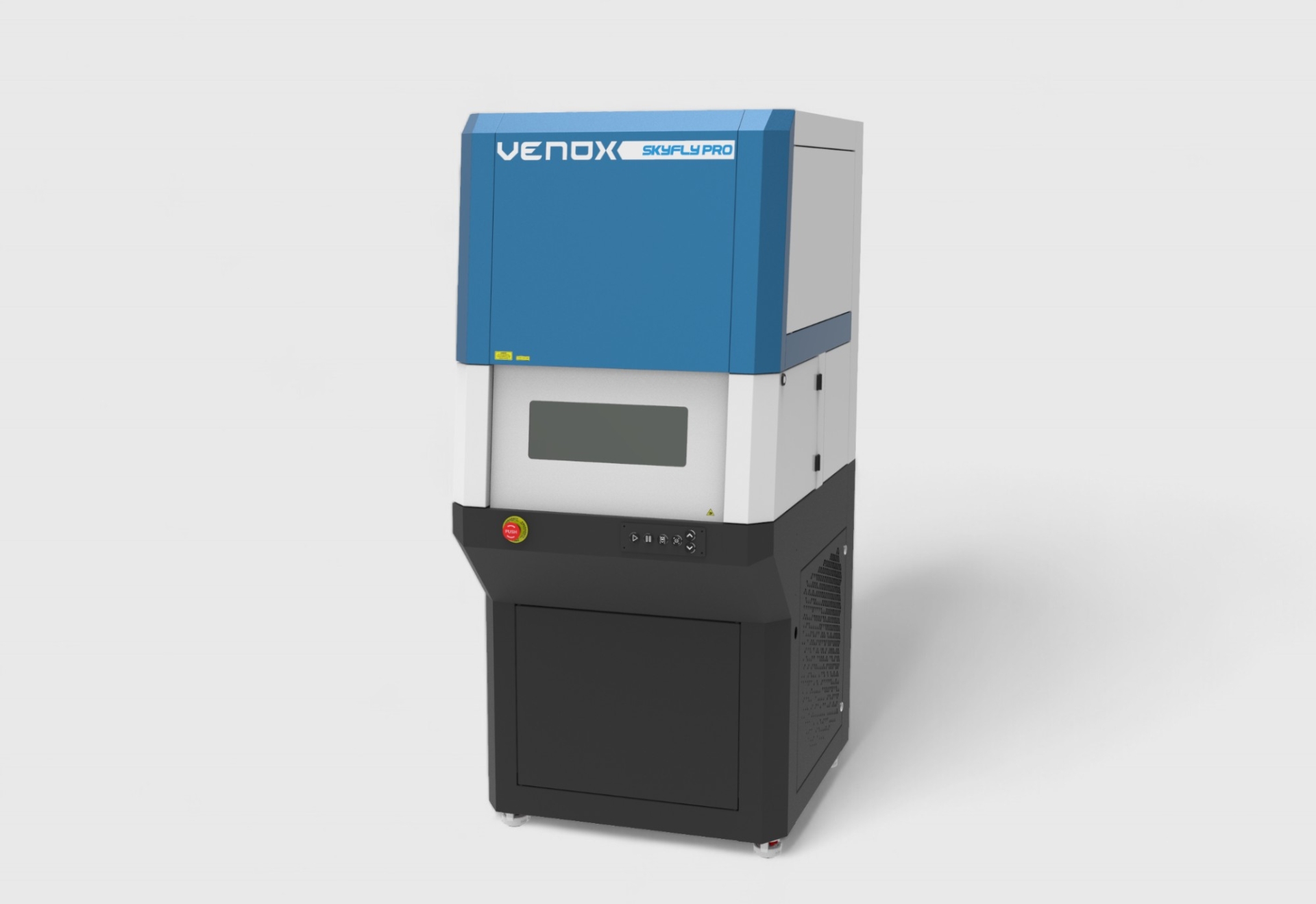
When evaluating Venox’s laser marking machine and system solutions, it is important to consider the system not merely as a laser source but as a complete industrial workstation.
Traceability and Data Integration
In modern production systems, it may not be sufficient for the marked information to simply be visible on the product. The marking may need to match production data, be unique, and be verifiable when required.
For this reason, the laser marking system can be configured to operate with information received from ERP, MES, databases, or production management software. A unique serial number, QR code, or DataMatrix code can be generated for each product.
This structure makes it possible to establish a relationship between the physical product and the digital production record. It can be tracked when a product was manufactured, which batch it belongs to, or which production stages it has passed through.
Especially in the automotive, defense, medical, electronics, and high-volume mass-production industries, this type of traceability application is an important production requirement.
Evaluating the Total Cost of Ownership
When selecting a laser marking system, comparing only the initial purchase price is not the right approach. The total cost generated by the system over its service life should be evaluated.
Maintenance costs, failure risk, production downtime, access to technical service, energy consumption, spare parts requirements, operator efficiency, and the system’s ability to adapt to future production needs can affect the total cost of ownership.
For example, a system with a low initial cost but unable to keep up with production speed or experiencing frequent downtime may create higher costs for the business in the long term.
For this reason, the right system is not simply the lowest-priced system; it is the system that reliably meets production requirements and can operate sustainably over the long term.
Potential Advantages of Working with a Local Manufacturer in Türkiye
Working with a laser marking manufacturer operating in Türkiye can provide important operational advantages in some projects. Access to the technical team, the ability to inspect the application on site, faster service organization, and easier management of project-specific mechanical developments may be among these advantages.
Especially in systems integrated into production lines, the project does not end with the delivery of the machine alone. Commissioning, parameter optimization, operator training, and revisions that may be required in later stages are also part of the process.
For this reason, when evaluating a local manufacturer, it should be investigated to what extent the company manages its engineering, production, integration, and service processes in-house.
Final Evaluation When Selecting a Laser Marking Company
When choosing among laser marking machine manufacturers in Türkiye, technical and operational requirements should be evaluated together rather than relying on a single criterion.
The manufacturer’s experience in laser technologies, ability to conduct sample tests, capability to develop project-specific systems, automation knowledge, technical service organization, and after-sales support model are important indicators in the decision-making process.
In addition, the company should be expected to analyze the intended application correctly and create a system configuration suited to the actual need rather than recommending the same product for every project.
Venox offers system options for different production requirements in laser marking and industrial laser applications. When selecting fiber, CO₂, UV, or application-specific systems, the material, production speed, marking expectations, and integration requirements should be evaluated together.
For information about laser cutting applications, you can review the laser cutting systems page; to determine the appropriate laser solution for your production process, you can contact Venox.
```
