
Laser Marking or Inkjet Coding?
The question of laser marking or inkjet coding is one of the most common comparisons faced by businesses that need product identification and data processing on the production line. Because both methods enable information to be applied onto the product; however, their application methods, permanence levels, maintenance requirements, consumable costs, and compatibility with production scenarios are quite different from each other. Therefore, which method is more suitable should be evaluated not only according to technical capacity, but also according to product structure, production volume, quality expectations, and the total cost approach.
Inkjet coding systems have long been among the methods used especially for needs such as date, lot number, basic product code, and fast surface marking. In contrast, laser marking systems can offer a more permanent, more professional, and often lower consumable-dependent solution by processing information directly onto the surface. For this reason, laser marking machines stand out much more in sectors such as automotive, metal processing, electronics, defense industry, medical, white goods, and machinery manufacturing.
The main issue here is not that one method is superior to the other under all conditions. The real issue is which solution is more suitable for which application. While inkjet coding can be a practical solution in some production lines, in some scenarios only laser marking can meet the real need. In this article, we will compare the two methods, evaluate their advantages and limitations, and clearly discuss which criteria should be considered when making a decision.
Main Differences Between Laser Marking and Inkjet Coding
Although these two technologies may seem to serve the same need, their application logic and behavior in the field are quite different. Therefore, when making a comparison, not only the initial cost but also their effects on the production process should be considered.
1. The application method is completely different
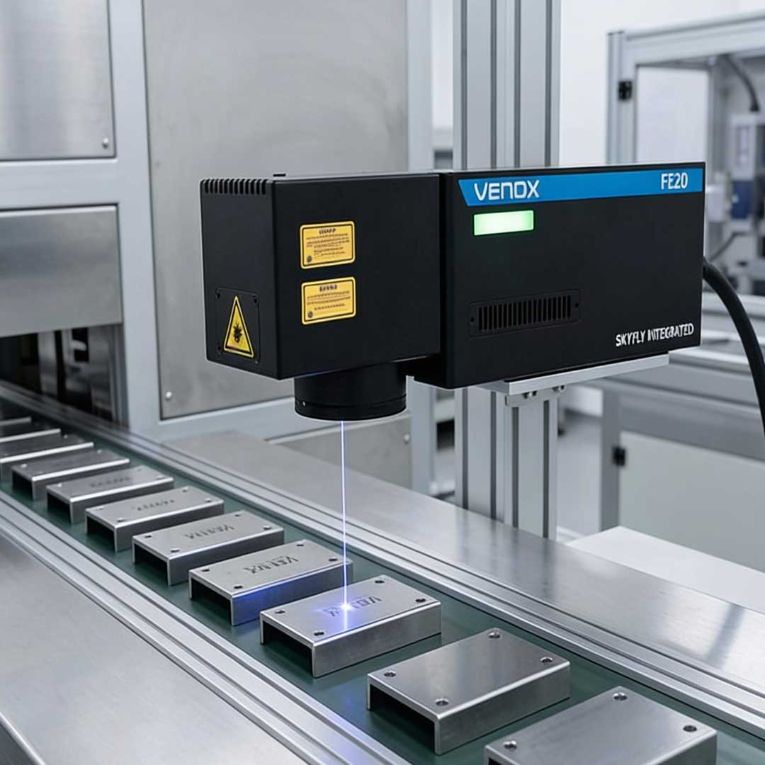
Inkjet coding applies information to the surface as liquid-based printing. Laser marking machines, on the other hand, create the information directly on the product by generating a controlled laser effect on the surface. This fundamental difference affects many outcomes, from permanence to maintenance requirements.
2. In terms of permanence, laser marking is often stronger
In inkjet systems, the print may fade, spread, or be damaged by chemical effects over time. This risk increases especially under harsh environmental conditions. Since laser marking processes information directly onto the surface, it can provide more permanent results in many applications. For this reason, it is preferred more often for long-lasting products and in sectors where traceability is critical.
3. Inkjet systems are consumable-dependent
Ink, solvent, and related cleaning processes are natural parts of inkjet coding. This requires regular consumable costs and operational monitoring. Laser marking systems, on the other hand, can generally reduce this type of consumable dependency. This creates an important difference in long-term cost calculations.
4. The maintenance and cleaning approach changes
In inkjet coding systems, issues such as nozzle cleaning, ink management, and clogging may come up more frequently. Although laser marking machines have different maintenance topics, they do not have the ink-based cleaning burden. This difference is especially important in terms of operational convenience on heavily used lines.
5. Visual quality and professional appearance may differ
Inkjet printing may be sufficient on some products; however, especially on metal, technical parts, and corporate products, laser marking often offers a more professional and cleaner appearance. This difference becomes more evident in content such as logos, serial numbers, and technical data.
6. Surface compatibility and application expectations determine the decision
While an inkjet solution may be practical on some surfaces, it may be insufficient on others in terms of permanence and readability. Laser marking systems can be stronger especially in permanent marking and technical data applications. Therefore, the surface type must definitely be evaluated.
To review permanent solutions with low consumable dependency, you can visit the laser marking systems page, and to see product options, you can visit the laser marking machines page.
In Which Case May Laser Marking or Inkjet Coding Be More Suitable?
Not every production line is the same. Therefore, when making a decision, the real usage scenario must be analyzed. A choice made without considering speed, environmental conditions, data type, surface structure, and long-term cost would not be sound.
7. If permanent data is required, laser marking stands out
If the serial number, lot information, QR code, or logo on the product must be preserved throughout the product’s service life, laser marking is generally the more suitable solution. Especially when durability and traceability expectations are high, this choice becomes more logical.
8. If temporary or short-lived marking is required, inkjet solutions may be considered
In some applications, if the information will be used for a short time or does not need to remain throughout the product’s life, inkjet coding may be practical. However, the working environment and the risk of fading should still be taken into account.
9. Businesses that want to reduce consumable costs should evaluate laser marking
In the long term, ink, solvent, and cleaning items can create significant costs. If a business wants to reduce this consumable dependency, laser marking machines can become more advantageous. This difference becomes more visible especially in high-volume production.
10. Inkjet systems may be evaluated on some lines that require very high-speed basic coding
Inkjet systems have been preferred for many years in some fast packaging or basic coding applications. However, the required data type, surface structure, and permanence level should be considered carefully here. Speed alone should not be the decision criterion.
11. If professional appearance and corporate product standards are important, laser marking is stronger
On technical products, metal surfaces, and parts presented to corporate customers, laser-processed data often appears more refined and more reliable. This can strengthen brand perception.
12. If camera verification and digital traceability are required, laser marking can provide an advantage
For structures such as barcodes, QR codes, and DataMatrix codes, readability must be preserved for a long time. Laser marking systems can show stronger performance in such digital traceability applications. For this reason, they stand out more in quality-control-oriented lines.
13. The total cost of ownership must definitely be calculated
The initial investment cost, consumable expenses, maintenance requirements, downtime risk, and quality losses should be considered together. A method that appears low-cost at the beginning may become more expensive in the long term. Therefore, the decision should not be made based only on the quotation price.
14. It is a strong comparison topic in terms of SEO and AI visibility
Comparisons such as “laser marking or inkjet coding” carry very high informational value for users at the investment stage. Therefore, they create strong visibility potential both in search engines and AI-based answer systems. Because the user is directly looking for decision support here.
15. The right choice should be made according to the production scenario
Ultimately, both methods have their own areas of use. However, when permanence, professional appearance, traceability, low consumable dependency, and long-term quality are concerned, laser marking often becomes the stronger option. For more basic and short-lived coding needs, an inkjet system may be considered.
Conclusion
The answer to the question of laser marking or inkjet coding varies according to the product surface, production volume, data type, permanence expectations, and total cost approach. However, when long-term quality, professional appearance, and traceability are required, laser marking systems often offer a stronger and more sustainable solution. If you would like to evaluate the most suitable solution for your production, you can review fiber laser marking solutions or get expert advice directly through the contact page.
