
Laser Marking vs Mechanical Engraving: Comparison of Industrial Marking Technologies
In industrial manufacturing, the two main methods used for part identification and permanent marking are laser marking and mechanical engraving technologies. Both methods can create permanent markings on metal, plastic, and some hard surfaces. However, there are significant differences in terms of operating principle, processing speed, maintenance requirements, precision, and production efficiency. This technical guide compares laser marking and mechanical engraving methods in terms of performance, cost, and application areas.
Laser Marking and Mechanical Engraving Technologies
What is laser marking?
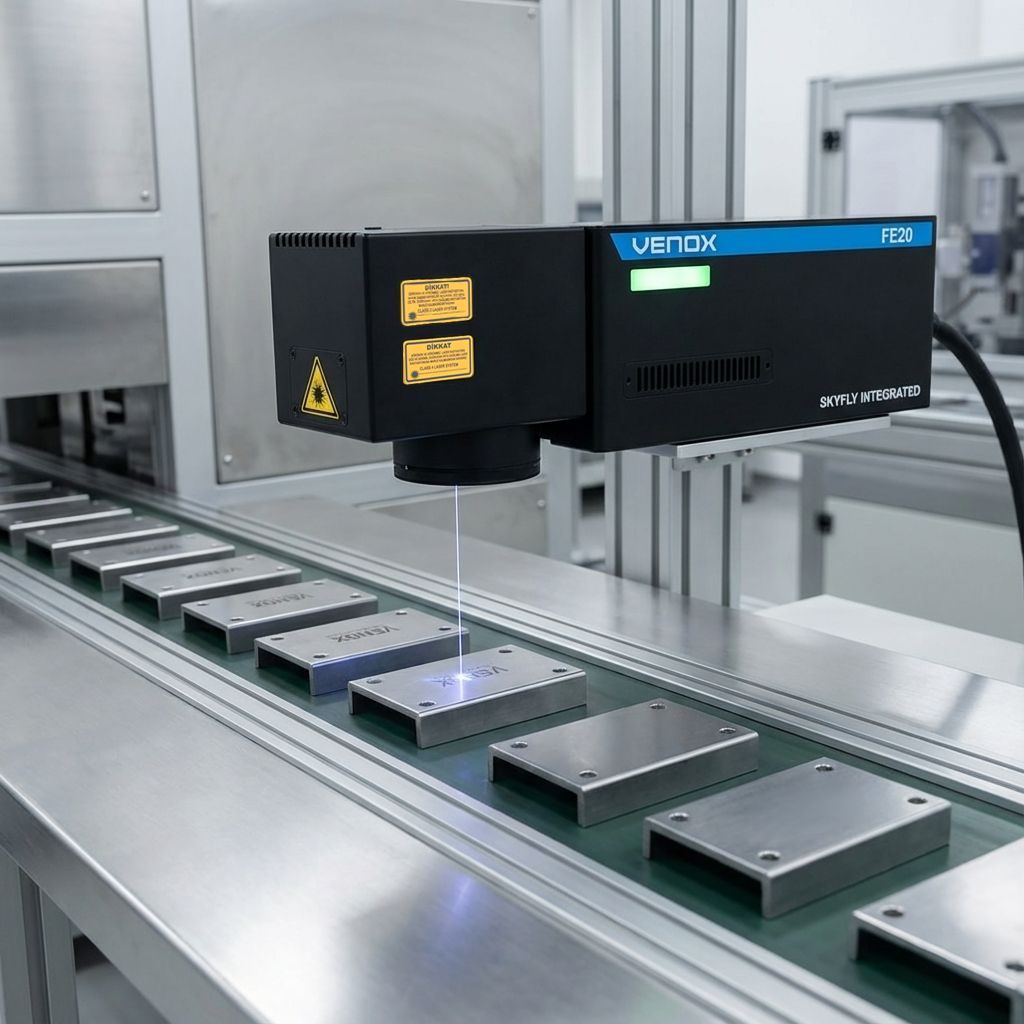
Laser marking is the process of creating microscopic changes on the material surface by using a high-intensity laser beam. This process is non-contact and provides high precision.
What is mechanical engraving?
Mechanical engraving is the process of physically scratching the material surface with a rotating or vibrating cutting tool. This method can be performed with CNC machines or engraving machines.
Difference in operating principle
While laser marking is a non-contact process, mechanical engraving requires direct contact. This can increase the mechanical load on the surface.
Marking precision
Laser marking can create very small characters and micro codes. Mechanical engraving is generally used for larger markings.
Processing speed
Laser marking can operate at high speed. Mechanical engraving processes are generally slower.
Maintenance requirement
In mechanical engraving machines, cutting tips can wear out over time and need to be replaced.
Consumables
Laser marking does not require consumables. In mechanical engraving, cutting tips are considered consumables.
Surface deformation
Mechanical stress may occur on the surface during mechanical engraving. Since laser marking is non-contact, this risk is lower.
Engraving depth
Mechanical engraving can generally create deeper marks.
Industrial application areas
- Metal tag engraving
- Mold marking
- Machine parts
- Industrial equipment labels
Which Marking Method for Which Application?
Metal part marking
On metal surfaces, laser marking can provide fast and high-contrast results.
Applications requiring deep engraving
Mechanical engraving may be preferred in deep and embossed engraving applications.
Micro marking
For micro marking in the electronics and medical industries, laser technology is more suitable.
Mass production
In lines with high production speed, laser marking can be more efficient.
Sensitive surfaces
On sensitive materials, laser marking is safer than mechanical engraving.
Molds and heavy industry
In some heavy industry applications, mechanical engraving may be preferred.
Automation integration
Laser marking systems can be easily integrated with PLC and production software.
Camera verification systems
After laser marking, codes can be checked with camera systems.
Long-term cost
Laser marking generally offers low maintenance cost.
Choosing the right technology
Material type, marking depth, and production speed are decisive factors in choosing the right technology.
Is laser marking permanent?
Yes, it is generally permanent.
Is mechanical engraving deeper?
Yes, it can generally create deeper engraving.
Is laser marking fast?
Yes, it can operate at high speed.
Does mechanical engraving use consumables?
Yes, cutting tips must be replaced over time.
Can laser marking be done on metal surfaces?
Yes, fiber laser systems are suitable for metal.
Which method is suitable for micro marking?
Laser marking is generally preferred.
Which method is used in inline production?
Laser marking systems are generally used.
Can mechanical engraving work with automation?
Yes, but it may be more limited compared to laser systems.
Does laser marking require maintenance?
It generally requires low maintenance.
Are sample tests necessary?
Yes, they are recommended for determining the most suitable marking method.
