

Laser Logo Marking: Permanent Branding on Metal and Plastic
Laser logo marking is the process of applying a brand's logo directly onto a product's material without using labels, printing, or adhesives. Logos are permanently marked with lasers on metal hand tools, machine components, kitchen utensils, jewelry and accessories, promotional products, electronic device housings, and plastic components. Laser markings resist wear, fading, and chemicals, ensuring that the brand remains visible throughout the product's service life.
The objective of logo marking is not simply to "make the logo visible" but to achieve an appearance consistent with the brand identity: sharp edges, uniform filling, appropriate contrast, and consistent repeatability. The same logo can be produced through dark thermal marking on stainless steel, light-colored engraving on aluminum, coating removal on anodized surfaces, or color changes on plastics. Therefore, selecting the appropriate material and marking method is fundamental to successful logo marking.
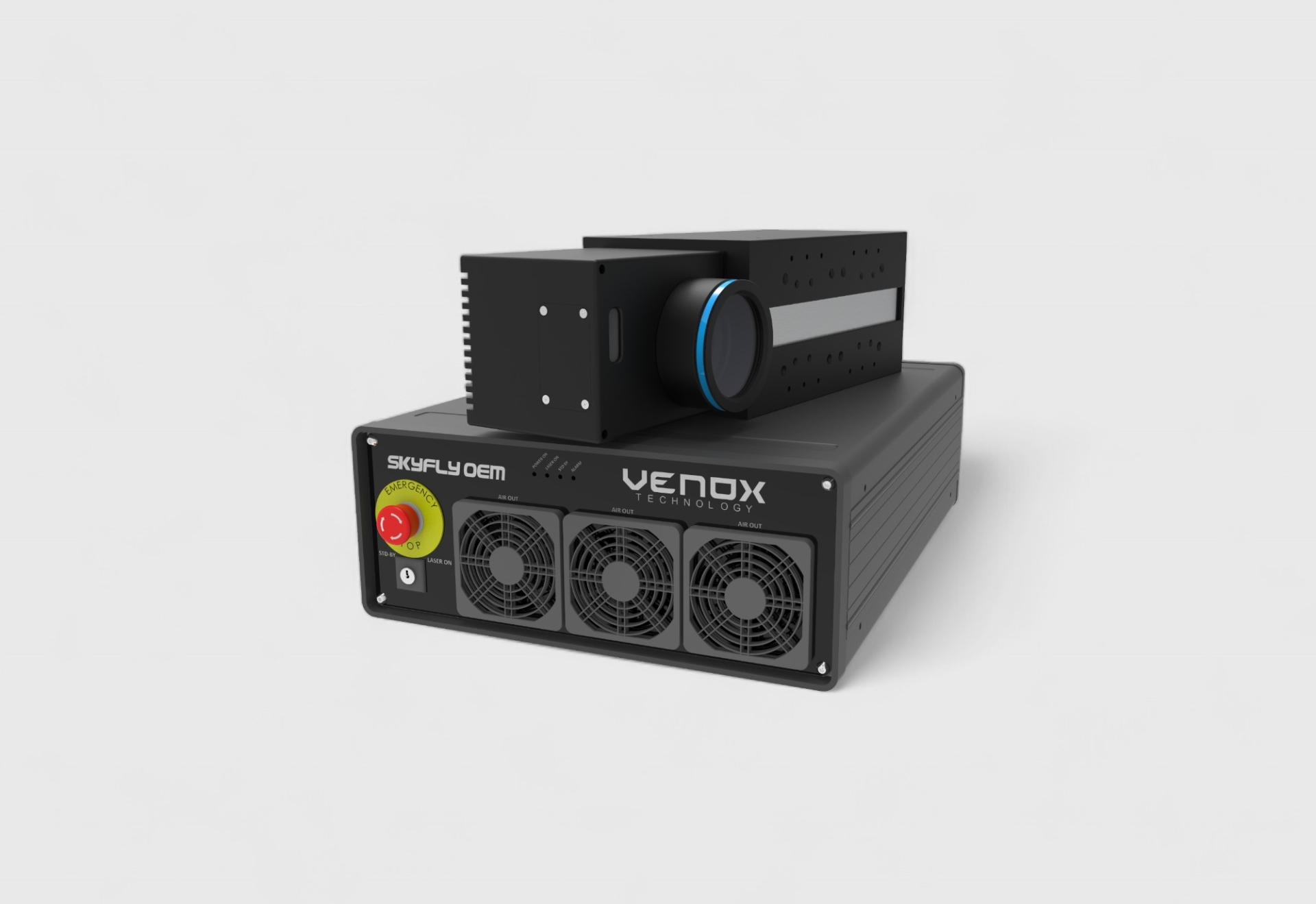
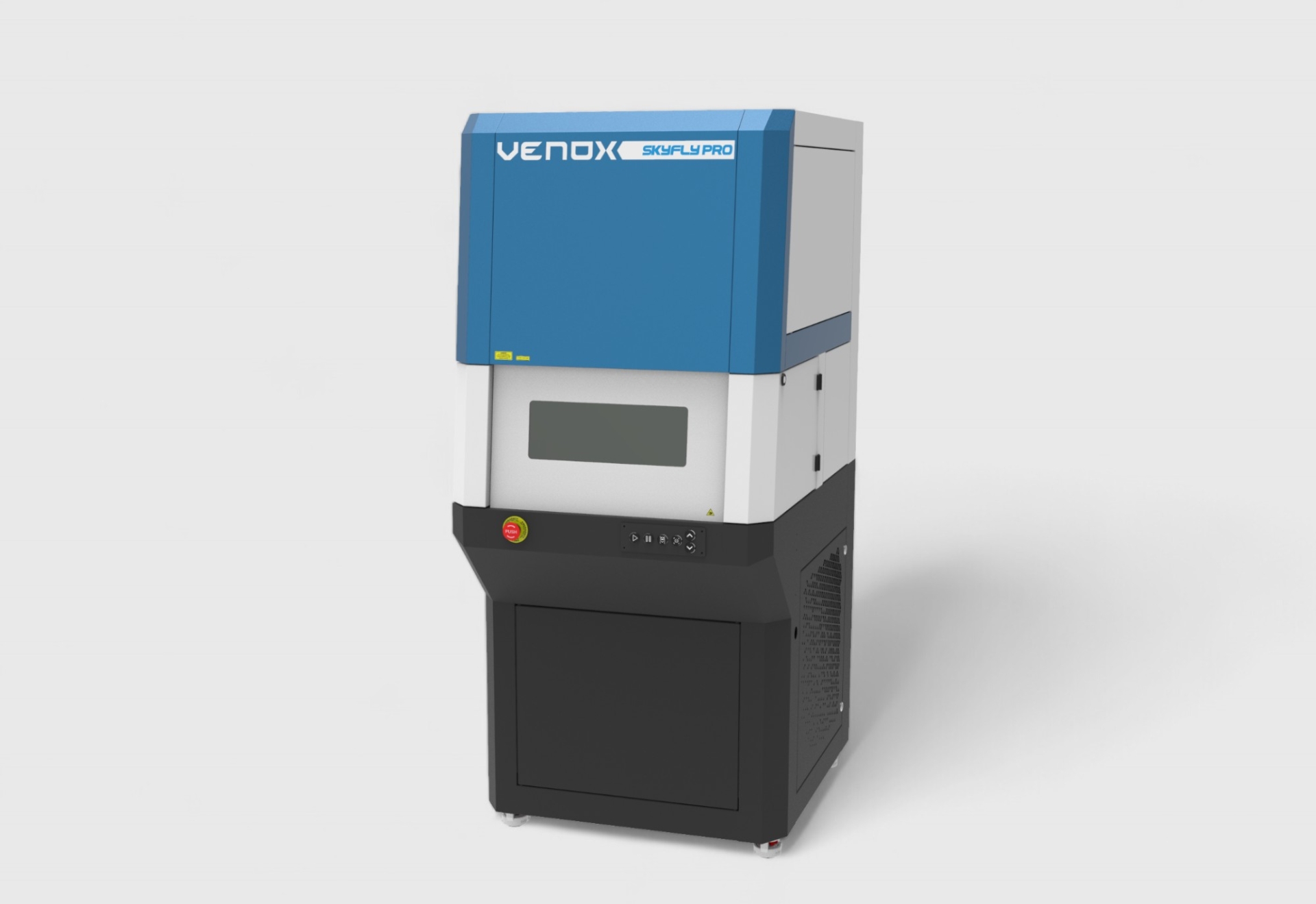
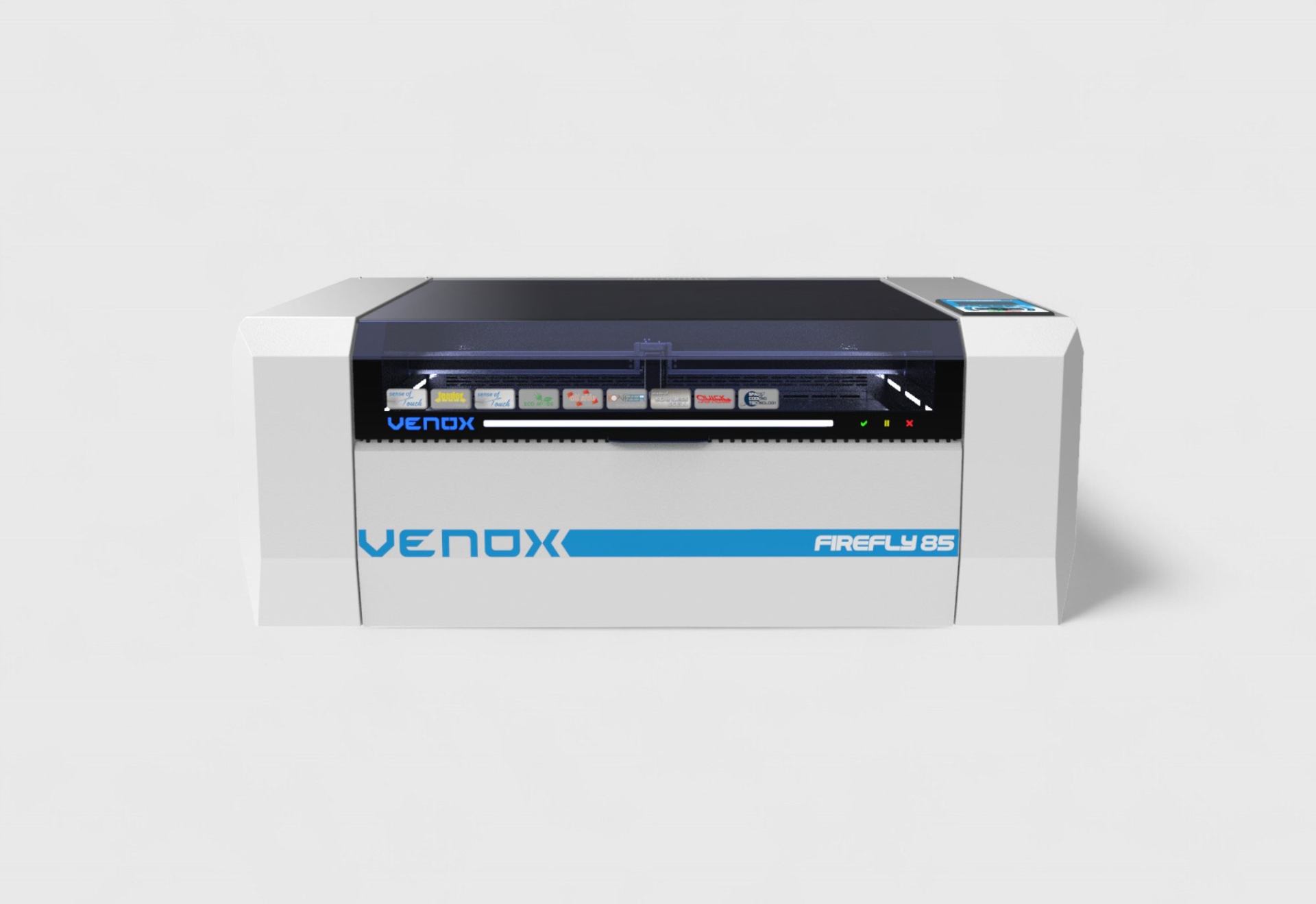
Venox's laser marking machines can be configured for logo marking applications on metal and plastic with fiber, CO₂, and UV laser source options. You can request sample testing to see your logo marked directly on your own product.
Laser Logo Marking on Metal
Stainless Steel and Titanium: Thermal Coloration
On stainless steel and titanium, logos are created through a dark oxide layer formed by controlled heating without removing material from the surface. This method preserves surface integrity and produces a smooth, deep-black appearance. It is preferred for kitchen utensils, surgical instruments, and designer products. MOPA fiber laser sources can also produce colored logos in shades such as gold, blue, and red on these surfaces.
Aluminum and Anodized Surfaces
On untreated aluminum, logos are created through surface engraving, producing light gray or white tones. Deep engraving or specialized parameters may be required to achieve darker contrast. On anodized aluminum, removing the coating exposes the lighter color of the underlying metal, allowing white logos to be produced on black anodized surfaces. MOPA laser sources can also produce high-contrast white and black tones without removing the anodized layer.
Brass, Copper, and Coated Metals
Brass and copper are highly reflective materials. Logos are generally produced through engraving or darkening, with processing parameters adjusted to account for reflectivity. On chrome-plated, nickel-plated, and painted surfaces, logos are created by selectively removing the coating. The coating thickness and the color of the underlying material determine the final appearance.
Deep Engraved Logos
For mold components, hand tools, and heavy-duty products, logos may need to be engraved deeply to withstand wear. Deep engraving is performed using multiple passes and higher laser power, resulting in significantly longer processing times compared to surface marking. Fiber laser sources rated at 30 W and above are suitable for this application.
| Material | Method | Appearance | Suitable Laser Source |
|---|---|---|---|
| Stainless steel, titanium | Thermal coloration | Deep black, smooth; colored with MOPA | Fiber / MOPA fiber |
| Untreated aluminum | Surface engraving | Light gray / white | Fiber |
| Anodized aluminum | Coating removal | White logo; black/white with MOPA | Fiber / MOPA fiber |
| Painted / coated metal | Coating removal | Underlying metal color | Fiber |
| ABS, PC, PA plastics | Color change / foaming | Dark or light tones | Fiber / UV |
| Acrylic, wood, leather | Engraving / burning | Matte, natural tones | CO₂ |
Laser Logo Marking on Plastic and Design Preparation
Plastic Types and Additives
On plastics, logos are created through the material's reaction to laser energy, such as color change, foaming, or light engraving. Engineering plastics such as ABS, PC, and PA generally produce good results. Achieving sufficient contrast on polyolefins such as PE and PP is more challenging and may require raw materials containing laser-marking additives. Different color variations of the same plastic can produce different results; black, white, and colored components should therefore be tested separately.
UV Lasers for Heat-Sensitive Surfaces
On thin-walled, delicate, or heat-sensitive plastic components, fiber lasers may cause surface melting and swelling. UV lasers produce color changes at the molecular level without significantly heating the material, helping preserve surface integrity and enabling precise marking of finely detailed logos. Electronic device buttons, medical-grade plastics, and cosmetic packaging are typical examples of this application.
Preparing the Logo File
The logo should be prepared in a vector format (AI, EPS, SVG, DXF), as bitmap images can cause edge distortion at small sizes. If very thin lines, small text, or closely spaced details fall below the laser beam diameter, they may merge together. In such cases, a simplified version of the logo optimized for laser marking may be required. For filled areas, hatch line spacing and scanning angle are adjusted through processing parameters to achieve a uniform appearance.
Positioning and Repeatability
In mass production, maintaining the same logo position on every component is important for brand consistency. Custom fixtures, positioning templates, or camera-based alignment eliminate operator-related deviations. For cylindrical products such as pens, bottles, and shafts, using a rotary axis allows logos to be marked on curved surfaces without distortion.
Logo Sample Testing Checklist
- Edge sharpness and preservation of the finest details.
- Uniformity in filled areas and absence of visible hatch lines.
- Achievement of the desired contrast and color tone.
- Absence of surface deformation, melting, or coating damage.
- Consistency across different color variations.
- Resistance to friction, cleaning, and chemicals.
See Your Logo on Your Product with Venox
Successful laser logo marking requires a combined evaluation of the material, marking method, and design preparation. By sharing your logo file and product samples, you can see the appearance achievable on metal and plastic surfaces before making a purchasing decision.
You can explore Venox's laser marking systems and contact Venox to request logo sample testing and a quotation.
