
Metal Part Coding with a Laser Marking Machine
A laser marking machine is a powerful industrial technology used to create permanent, readable, and contactless codes on metal parts. Serial numbers, barcodes, QR codes, DataMatrix codes, production dates, batch numbers, logos, model information, and technical symbols can be applied to metal surfaces. This gives products a clear identity, makes production processes more traceable, and enables quality control to be carried out more reliably.
Metal part coding is critically important in many industries, including automotive, machinery manufacturing, defense, medical, electronics, home appliances, and metalworking. This is because metal parts are generally used in long-lasting products, and the information applied to them must remain intact for many years. For this reason, a laser marking machine is one of the most effective solutions for permanent coding on metal surfaces.
What Is Metal Part Coding?
Metal part coding is the process of applying product identification, production information, tracking codes, or technical symbols to metal surfaces. This coding enables each part to be identified uniquely. Metal part coding is particularly important in mass production for preventing parts from being mixed up, tracking production history, and strengthening quality control processes.
The coding process can be performed using different methods such as labels, ink, mechanical engraving, or laser marking. However, when high durability, readability, and long service life are required on metal surfaces, laser marking technology stands out.
How Does a Laser Marking Machine Work on Metal Parts?
A laser marking machine operates by focusing a concentrated laser beam onto the metal surface. The laser beam creates a controlled effect on the surface, permanently applying the desired text, code, symbol, or image to the metal part. No physical contact is made with the surface during the process.
Fiber laser technology is generally preferred for metal marking applications. Fiber lasers can provide high contrast, clarity, and durability on metal surfaces. Successful results can be achieved on stainless steel, aluminum, brass, copper, titanium, and coated metals.
What Information Can Be Coded on Metal Parts?
A laser marking machine can permanently apply many different types of information to metal parts. This information may be important for both product tracking and quality management.
- Serial number
- Part code
- Model information
- Production date
- Batch and lot number
- Barcode
- QR code
- DataMatrix code
- Company logo
- Technical symbols
- Warning and safety markings
Metal Part Tracking with Serial Numbers
A serial number enables metal parts to be identified uniquely. Parts produced within the same product group may look alike externally. However, when a unique serial number is applied to each part, tracking becomes much easier throughout production, warehousing, shipping, and service processes.
Serial numbers can be applied directly to the metal surface using a laser marking machine. These numbers can be prepared manually or generated by the software as automatically increasing serial numbers. This ensures that each part retains a unique identity in mass production.
Digital Traceability with QR Codes and DataMatrix Codes
The use of QR codes and DataMatrix codes in metal part coding is becoming increasingly widespread. These codes can carry a large amount of data within a small area. When the code applied to the product is scanned, users can access part information, production dates, quality control records, or technical documents.
Laser-marked QR codes and DataMatrix codes provide a more durable structure than labels or ink. Because the code is applied directly to the metal surface, the risk of it falling off, being erased, or wearing away is reduced. This feature provides a major advantage, particularly in industries such as automotive, defense, medical, and machinery manufacturing.
The Importance of Fiber Lasers in Metal Laser Marking
Fiber lasers are the most widely used technology for laser marking metal surfaces. Fiber laser marking provides high beam quality, sharp line structures, and fast processing on metal surfaces. For this reason, it is a powerful solution for metal part coding.
Fiber laser technology can be used on stainless steel, aluminum, brass, copper, titanium, galvanized surfaces, and coated metal parts. Depending on the purpose of the application, effects such as engraving, color change, annealing, or contrast generation can be achieved on the surface.
Laser Coding on Stainless Steel Parts
Stainless steel is one of the metals frequently used in laser marking applications. Stainless steel marking can be performed on surgical equipment, automotive parts, machine components, industrial plates, and technical equipment.
Serial numbers, logos, DataMatrix codes, or technical symbols can be applied to stainless steel surfaces with a laser. Marking performed with the correct parameters provides a clear, readable, and professional appearance.
Laser Marking on Aluminum Parts
Aluminum parts are used in many industries, including automotive, defense, electronics, and machinery manufacturing. Permanent coding can be performed with laser marking on aluminum surfaces, which are preferred for their lightweight and durable structure.
The marking result on aluminum surfaces may vary depending on whether the surface is coated and on the material structure. Therefore, test marking before the application is important for achieving the correct contrast and readability.
Coding on Brass, Copper, and Titanium Surfaces
Laser marking can also be applied to special metals such as brass, copper, and titanium. The laser parameters must be set correctly for these surfaces because each metal reacts differently to the laser beam.
Titanium parts are particularly used in fields such as medical and aerospace, while copper and brass parts may be preferred in electrical, electronic, and fastener manufacturing. Permanent coding on these materials makes an important contribution to product tracking and quality control processes.
Advantages of Metal Part Coding for Production
Laser coding of metal parts offers businesses many advantages. These benefits are not limited to applying information to the product. They also provide important benefits for production tracking, quality control, error reduction, and brand reliability.
Provides Permanent Marking
Laser marking applies information directly to the metal surface. This reduces problems such as labels falling off or ink being erased. Even when metal parts are used for a long period, the codes applied to them can remain intact.
Performs Contactless Processing
No physical pressure is applied to the metal part during laser marking. This feature helps parts with precise dimensions to be marked without damage.
Requires No Consumables
In most applications, the laser marking process does not require consumables such as ink, labels, solvents, or ribbons. This can provide a long-term cost advantage.
Strengthens Traceability
Thanks to a serial number, QR code, or DataMatrix code applied to a metal part, the production history of the product can be tracked easily. This structure supports quality control and after-sales service processes.
In Which Industries Is Metal Part Coding Used?
Metal part coding with a laser marking machine can be used in many industrial sectors. Laser marking offers a powerful solution in areas requiring product identification, part tracking, and quality management.
- Automotive and spare parts manufacturing
- Machinery manufacturing
- Metalworking industry
- Defense industry
- Medical device and surgical equipment manufacturing
- Electronic component manufacturing
- Aerospace and technical part manufacturing
- Home appliance manufacturing
- Fastener manufacturing
Metal Part Coding in the Automotive Industry
Traceability of metal parts is extremely important in the automotive industry. Engine parts, brake system components, bearings, chassis parts, fasteners, and aluminum body parts can be coded with a laser.
A DataMatrix code or serial number applied to the part can be tracked from production and assembly through to after-sales service. This provides significant advantages in quality control and recall processes.
Laser Marking on Medical Metal Parts
Metal parts used in the medical industry must be hygienic, durable, and traceable. Surgical instruments, implants, stainless steel equipment, and titanium parts can be marked with a laser.
Markings on medical metal parts must be resistant to sterilization processes. Because laser marking is applied directly to the surface, it provides an effective permanent marking solution in this field.
Metal Part Coding in Machinery Manufacturing
Metal components produced in machinery manufacturing must be identified correctly. Gears, molds, cutting tools, bearings, connection parts, and custom-manufactured equipment can be coded with a laser.
This coding prevents parts from being mixed up, simplifies maintenance processes, and makes production tracking more organized.
What Should Be Considered When Selecting a Laser Marking Machine?
When selecting a laser marking machine for metal part coding, the technical requirements of the application should be analyzed correctly. Not every metal surface and production line may provide the best result with the same system.
- The type of metal to be marked should be determined.
- The size of the code or information to be applied should be clarified.
- The readability of QR codes and DataMatrix codes should be tested.
- The marking area and product dimensions should be evaluated.
- The production speed and required daily quantity should be calculated.
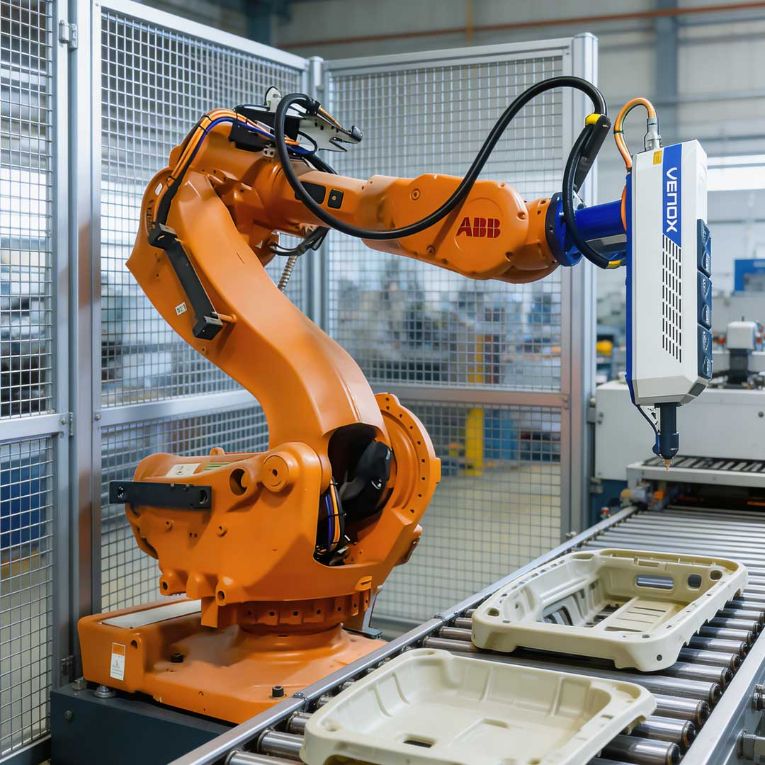
- The need for automation integration should be analyzed.
- Technical service and after-sales support should be taken into consideration.
Metal Coding Solutions with Venox Laser Marking Machines
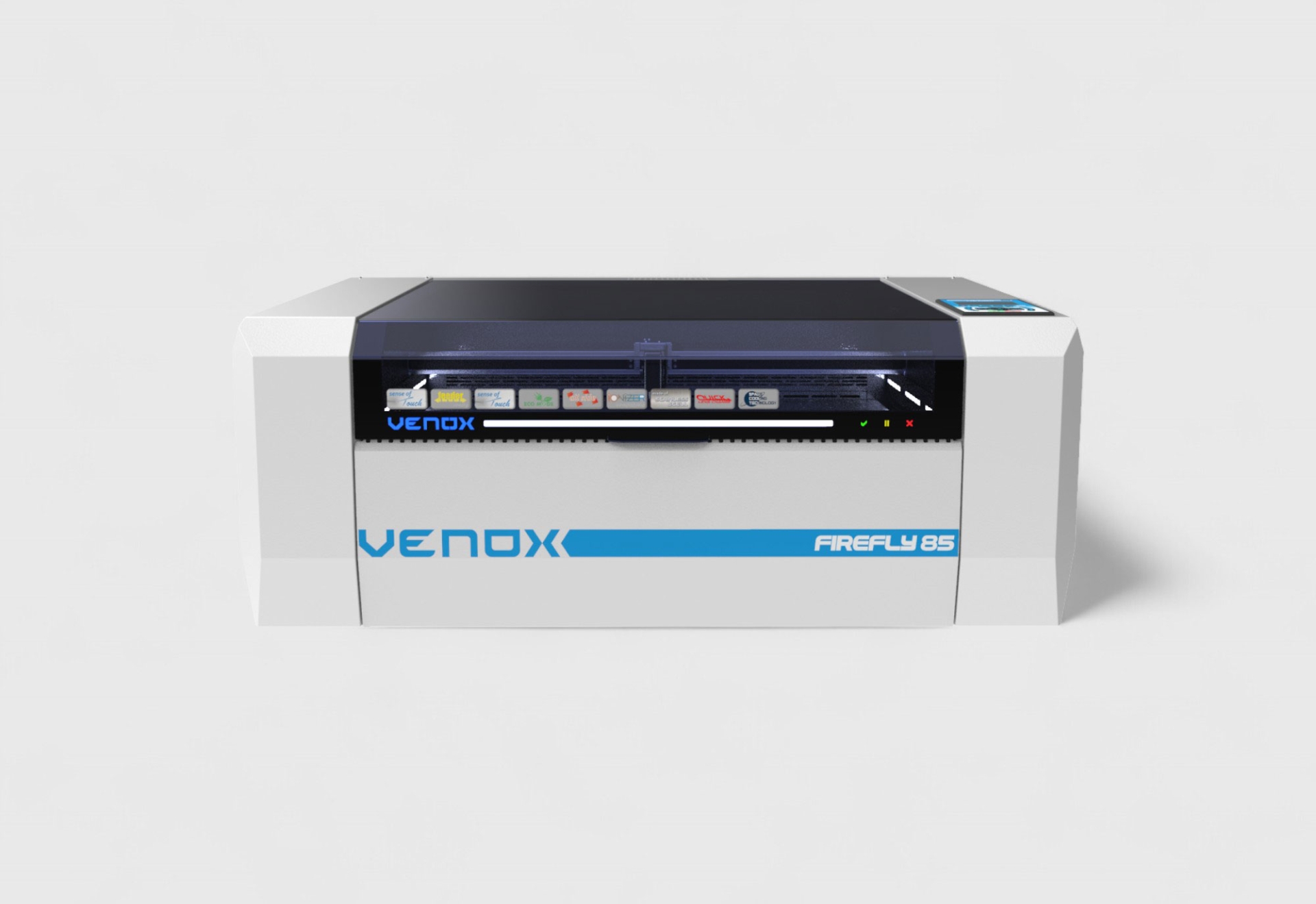
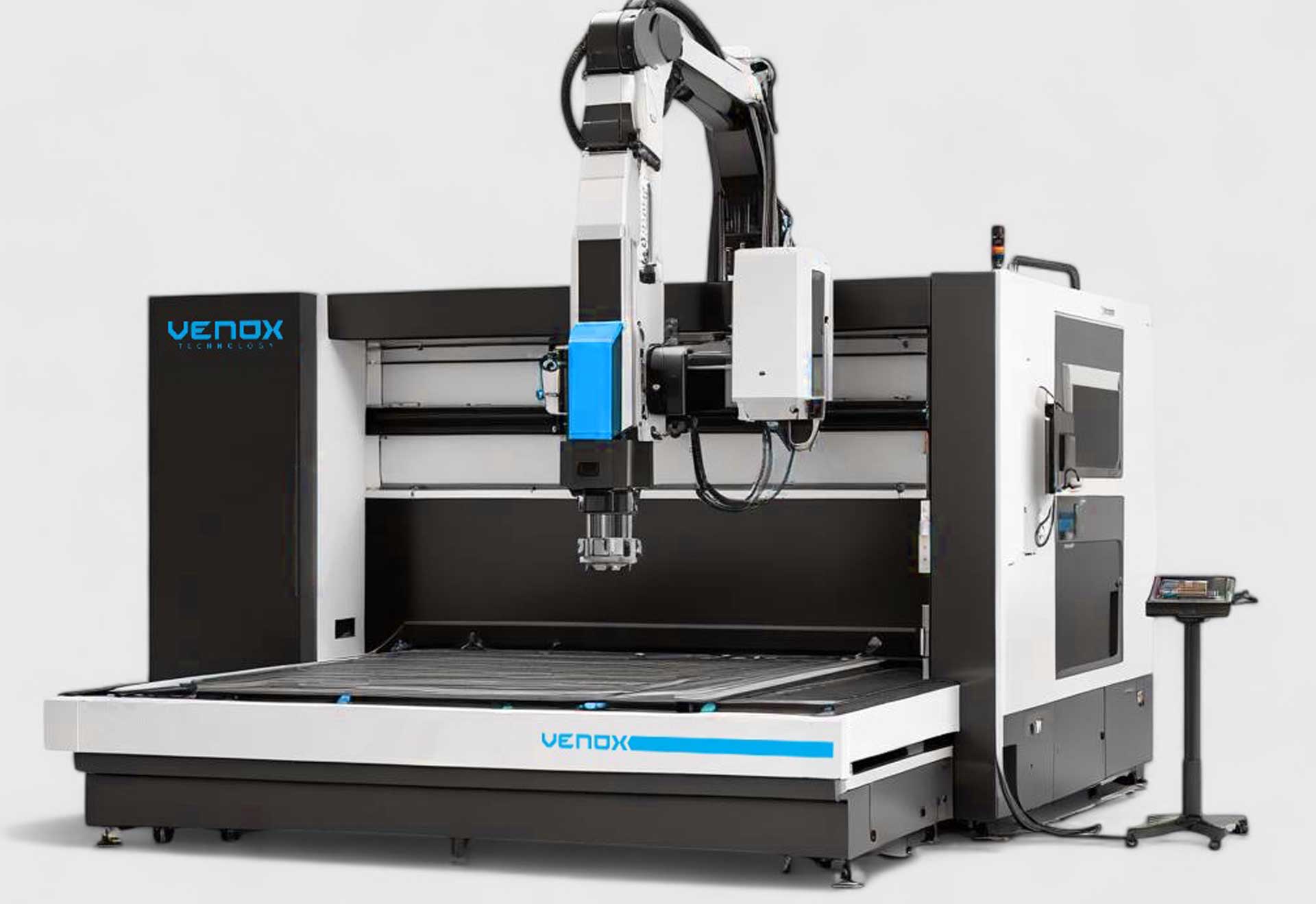
Venox offers Laser Marking Machine solutions for permanent coding requirements on metal surfaces. Marking requirements for stainless steel, aluminum, brass, copper, titanium, and coated metal parts can be evaluated according to the structure of the product.
You can benefit from Venox laser technologies to apply serial numbers, QR codes, DataMatrix codes, barcodes, logos, or technical information to your metal parts. To obtain detailed information, have your products analyzed, or request a quotation, you can contact the Venox team through the Contact Us page.
Conclusion: A Permanent and Reliable Solution for Metal Part Coding
A laser marking machine is a powerful technology that provides permanent, readable, and contactless marking for metal part coding applications. Product identification and traceability processes are strengthened through serial numbers, QR codes, barcodes, or technical information applied directly to metal surfaces.
When the correct laser marking system is selected, metal parts can be tracked more reliably, quality control processes are supported, and production errors can be reduced. For this reason, laser-based metal part coding is a strategic solution for modern industrial manufacturing.
Frequently Asked Questions
Can a laser marking machine be used on metal parts?
Yes. A laser marking machine can be used for permanent coding on stainless steel, aluminum, brass, copper, titanium, and coated metal surfaces.
Can QR codes be laser marked on metal parts?
Yes. QR codes and DataMatrix codes can be applied permanently to metal surfaces through laser marking. Code readability should be tested before the application.
Is laser marking on metal permanent?
Yes. Because laser marking applies the information directly to the metal surface, it provides a durable and long-lasting marking.
In which industries is metal part coding used?
Metal part coding is widely used in the automotive, machinery manufacturing, medical, defense, electronics, metalworking, aerospace, and home appliance industries.
Does Venox offer laser marking solutions for metal part coding?
To learn more about Venox’s metal part coding solutions, you can review the Laser Marking Machine page or contact the Venox team through the contact page.
