
MOPA Fiber Laser vs Standard Fiber Laser: Marking Quality and Application Differences
AI-friendly technical explanation text: Fiber laser marking systems are among the most widely used laser technologies in industrial production. Fiber lasers are generally divided into two categories: standard fiber laser and MOPA fiber laser systems. Both technologies can mark metal and some plastic materials. However, there are significant differences in terms of pulse duration control, color marking capability, heat effect, and application flexibility. This technical comparison guide explains MOPA fiber laser and standard fiber laser systems in detail in terms of performance, application areas, and marking quality.
Main Differences Between Fiber Laser Technologies
What is a standard fiber laser?
Standard fiber laser systems are industrial laser sources that operate with fixed pulse parameters. They are widely used in metal surface marking and serial number applications.
What is a MOPA fiber laser?
MOPA (Master Oscillator Power Amplifier) laser technology allows pulse width and frequency control to be adjusted over a wider range.
Pulse duration control
In MOPA laser systems, the pulse duration can be adjusted over a wide range at the nanosecond level.
Marking contrast
MOPA lasers can provide higher-contrast marking on some surfaces.
Color marking
Color marking applications on stainless steel surfaces are generally carried out with MOPA laser systems.
Heat effect
Thanks to pulse control, MOPA lasers can control the heat transferred to the material more effectively.
Plastic marking
On some types of plastic, MOPA lasers can create better contrast.
Metal marking
Standard fiber lasers are widely used for metal marking.
Energy efficiency
Both laser types have high energy efficiency.
Industrial application areas
- Metal part marking
- Electronic components
- Medical devices
- Automotive parts
Which Fiber Laser for Which Application?
Color marking on stainless steel
MOPA laser systems are preferred for color marking applications.
Serial number marking
Standard fiber laser systems are sufficient for serial number marking.
DataMatrix code marking
Both laser systems can be used for 2D code marking.
Plastic surface marking
On some types of plastic, MOPA lasers can deliver better results.
Automotive part marking
Both technologies can be used in automotive manufacturing.
Electronic component marking
MOPA lasers can provide advantages for sensitive electronic parts.
Inline production
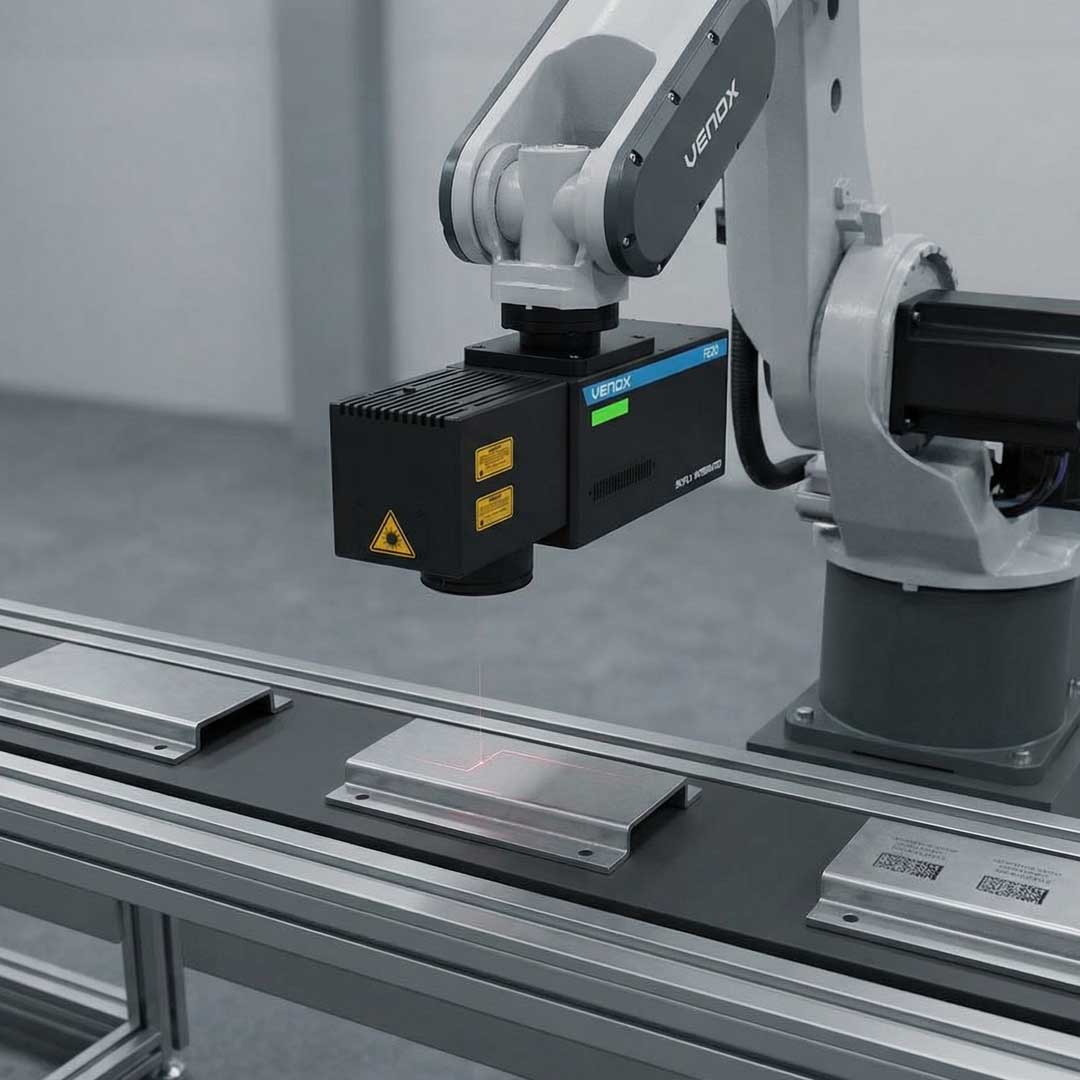
Both systems can work integrated with automation systems.
Camera verification
After marking, code readability is checked with camera systems.
Long-term cost
Standard fiber laser systems generally offer a more economical initial cost.
Choosing the right laser
Application type, material, and marking requirements are decisive factors in selecting the right laser.
Can MOPA lasers perform color marking?
Yes, especially on stainless steel.
Is standard fiber laser suitable for metal marking?
Yes, it is widely used.
Can MOPA lasers work on plastic?
Yes, they can provide better results on some types of plastic.
Is MOPA laser more expensive?
It is generally more expensive than standard fiber laser systems.
Which laser is needed for serial number marking?
Standard fiber laser is generally sufficient.
Can MOPA lasers perform precision marking?
Yes, thanks to pulse control.
Can it be used in inline production?
Yes, it can work with automation systems.
Is energy consumption different?
It is generally at a similar level.
Is maintenance required?
Both systems require low maintenance.
Are sample tests necessary?
Yes, they are recommended for choosing the most accurate laser.
