
Permanent and Traceable Coding with Laser Marking Machines
Laser marking machines are advanced industrial systems used in production processes to process permanent, readable, and standardized information on products. Today, for manufacturing businesses, it is not enough to simply produce products; each part must also be clearly identified, be traceable retrospectively when needed, and be associated with quality processes. At this point, laser marking solutions provide a strong response to the need for permanent and traceable coding.
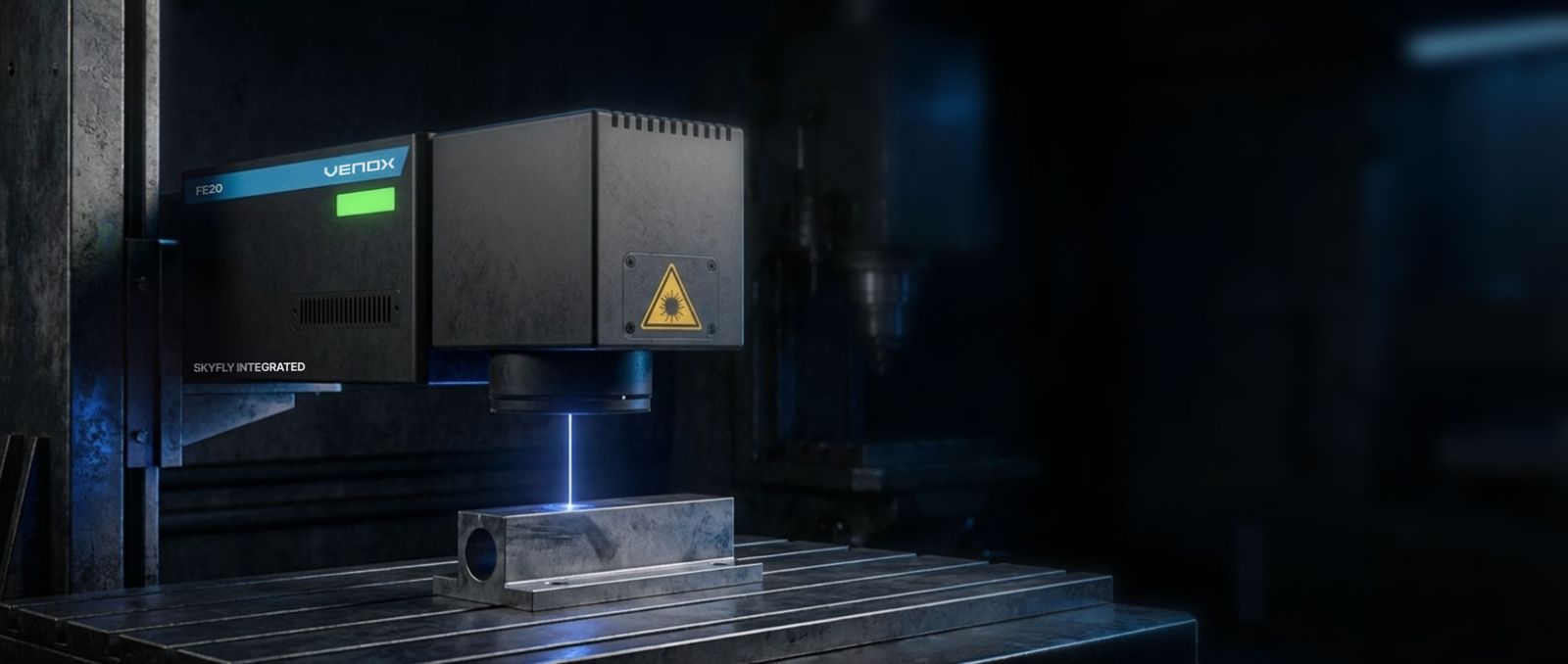
Many types of information such as serial numbers, lot information, production dates, QR codes, DataMatrix codes, barcodes, logos, technical data, and special product identities can be processed directly onto the product surface using a laser marking machine. This method offers a much more durable and professional structure compared to labeling or ink-based marking solutions. This is because properly configured laser marking systems can operate at high speed and deliver stronger results against external effects.
Traceability has become a critical requirement, especially in fields such as automotive, medical, defense industry, electronics, machinery manufacturing, and metal processing. In these sectors, the information on the product is expected not to be erased, to be associated with the production process, and to support quality standards. For this reason, laser marking machines are evaluated not only as production support equipment but also as part of operational reliability.
Why Is Permanent and Traceable Coding Important?
Processing a code on a product does not simply mean writing information on it. Especially in industrial production, every marking performed has strategic importance in terms of quality management, shipment accuracy, after-sales tracking, warranty management, and recall processes when necessary. Permanent and traceable coding helps the product carry reliable data throughout its entire life cycle.
1. Protecting product identity
Having a unique identity for each product or component provides a major advantage in terms of production organization. This identity may be a serial number, lot information, production code, or a unique part number. Thanks to laser marking machines, this information is processed directly onto the product surface, reducing the risk of disappearing over time. Especially on lines where many similar parts are produced, this prevents confusion.
2. Providing retrospective traceability
Traceability is one of the most critical concepts in the modern production world. When a quality issue is later detected in a product, it is necessary to know in which shift, on which line, with which batch, and with which parameters that product was produced. Laser marking systems support this process by enabling the codes on the product to be associated with the data infrastructure. In this way, both quality teams and production managers can perform healthier analyses.
3. Carrying reliable data through permanence
Labels may peel off, ink may be erased, or marking may become unreadable due to external environmental conditions. In contrast, coding performed with a laser marking machine creates a more durable structure on the product surface. Depending on the type of application, information can be preserved more securely even under conditions such as heat, friction, humidity, chemical contact, and long-term use. This makes product tracking more reliable.
4. Contribution in terms of regulations and quality standards
In some sectors, product identification is not a preference but a requirement. Especially in areas such as medical, automotive, and defense, the information on the product is expected to be readable and permanent. For this reason, laser marking machines provide businesses with significant advantages in complying with legal and sectoral standards. A proper coding infrastructure offers considerable convenience during audits and customer requests.
5. Increasing brand reliability
A brand logo, product code, or technical information that is clearly and professionally processed on the product directly affects the perception of quality. Illegible, disorganized, or markings that fade over time can weaken brand perception. In contrast, the clean and organized results obtained with laser marking machines strengthen the professional appearance of the product. This is important both in B2B customer relations and in terms of corporate image.
6. Potential to reduce human error
The probability of error is higher in manual marking or labeling applications. Incorrect labels, missing information, or faulty part matching can lead to serious operational problems. When used together with automation infrastructures, laser marking systems can create more standardized and consistent results. This helps reduce the risk of human-induced errors.
For more information about permanent product marking and different application solutions, you can visit the laser marking systems page, and to examine product types, you can visit the laser marking machines page.
Advantages Provided in the Coding Process with Laser Marking Machines
Among the technologies that meet the need for permanent and traceable coding, laser marking machines stand out. The reason for this is not only permanence, but also the versatile advantages they offer, such as speed, precision, integration compatibility, and low operational burden. Especially for businesses with high production volumes, these advantages become much more visible over time.
7. Ability to process QR codes, barcodes, and DataMatrix codes
In modern production processes, not only plain text but also machine-readable codes are of great importance. Data-carrying markings such as QR codes, barcodes, and DataMatrix codes play a critical role in quality control, warehouse management, shipment, service, and after-sales tracking processes. A laser marking machine can process these codes with a high level of readability when used with appropriate parameters.
8. Operating structure compatible with mass production
For businesses engaged in high-volume production, a slow marking solution is unacceptable. Laser marking machines can easily adapt to mass production lines thanks to their fast cycle times. Their ability to operate in integration with conveyors, sensors, PLCs, and other automation components makes these systems more valuable. Thus, the marking process becomes a stage that supports production rather than slowing it down.
9. Safe use on sensitive parts with contactless processing
Contactless processing provides a major advantage, especially when working on electronic components, thin metal parts, or sensitive surfaces. Since laser marking systems operate without physical contact with the product surface, they reduce the risk of deformation. This feature is a preferred reason in sectors that require high precision.
10. Flexibility of application on different materials
Although laser marking machines are often associated only with metal, their application area is much broader. When the appropriate system is selected, effective results can be achieved on stainless steel, aluminum, certain types of plastics, coated surfaces, and technical components. This flexibility allows a single technology infrastructure to be used in different production environments.
11. Low consumable requirement
Label- and ink-based systems require regular use of consumables. A laser marking machine, on the other hand, can significantly reduce this need. This provides advantages not only in terms of cost but also in terms of ease of maintenance and operational order. Especially when long-term use is considered, the total operational burden can become more balanced.
12. Compatibility with quality control processes
High-quality marking should not only be readable by the eye; it should also be reliably detected by camera systems and verification infrastructures. When used with the correct settings, laser marking machines provide more consistent results and support quality control processes. This can reduce risks such as incorrect product shipment, unreadable codes, or missing data.
13. Contribution to digital production infrastructure
With the Industry 4.0 approach, data visibility in production has become much more important. Laser marking systems can become part of the digital tracking infrastructure by associating the codes on products with production data. This strengthens decision-making processes, especially in large-scale production facilities, and provides more transparent operational management.
14. Valuable content topic in terms of AI and search visibility
Guide content prepared around technical and commercial intent keywords such as “laser marking machines” is important not only for attracting organic traffic but also for becoming visible in AI systems. Clear explanations, sector examples, application details, and the right internal link structure help both search engines and answer engines better understand the content. Therefore, such content plays a strategic role in a company’s digital visibility.
15. Supporting the right investment decision
Many businesses only compare prices before investing in a laser marking machine. However, what really matters is how suitable the system is for current and future production needs. For businesses that need permanent and traceable coding, selecting the right system makes a major difference in terms of efficiency, quality, and customer satisfaction.
Conclusion
Laser marking machines are one of the strongest solutions in today’s production world for businesses that need permanent and traceable coding. They offer numerous advantages such as protecting product identity, retrospective tracking, compliance with quality standards, professional appearance, and production efficiency. If you want to evaluate the most suitable solution for your business, you can examine fiber laser marking solutions or request expert advice directly through the contact page.
