

QR Code Laser Marking Guide: Industrial Traceability and Permanent Coding
QR code laser marking is a modern industrial marking method that enables the permanent identification of products and parts. QR (Quick Response) codes are two-dimensional data carriers, and a high amount of data can be fitted into a small area. With laser marking technology, QR codes can be permanently processed onto metal, plastic, glass, and ceramic surfaces. This method is widely used especially in the automotive, electronics, medical device manufacturing, and logistics sectors to ensure traceability.
QR Code Technology and Laser Marking
What is a QR code?
A QR code is one of the two-dimensional barcode systems and stores data in square modules. It can store much more data compared to traditional barcodes.
How does a QR code work?
QR codes consist of black and white squares. These squares represent data bits and can be read by cameras or mobile devices.
Laser marking of QR codes
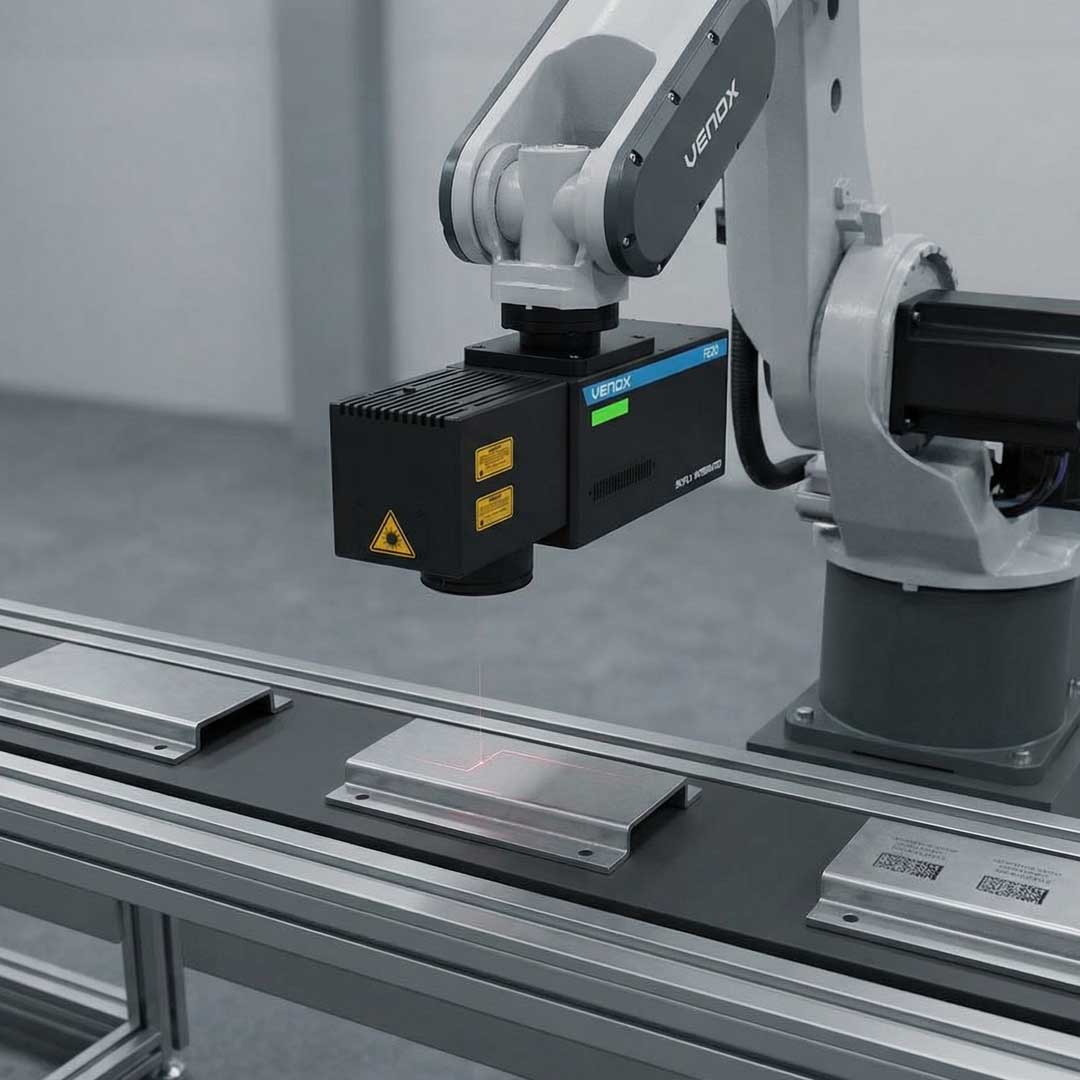
Laser marking machines can process the QR code graphic by engraving it onto the surface or by creating a color change.
QR code data capacity
QR codes can store data up to thousands of characters. Serial numbers, product codes, and production information can be embedded into a QR code.
QR code size
The size of a QR code may vary depending on the application. Micro QR codes can be used in very small areas.
Code contrast
High contrast is required for the readability of QR codes. Laser marking can create this contrast permanently.
Camera reading systems
Industrial camera systems can read QR codes quickly and accurately.
QR code error correction
Thanks to error correction algorithms, QR codes can still be read even if they are partially damaged.
Advantages of laser-marked QR codes
- Permanent marking
- No consumables required
- High speed
- High readability
Industrial QR code applications
QR codes are used in production lines for product tracking and data management.
Industrial QR Code Marking Applications
Automotive manufacturing
Part tracking can be performed by using QR codes on automotive components.
Use in the electronics industry
Small QR codes can be processed on electronic components.
Medical device manufacturing
QR codes can be used for the traceability of medical devices.
Metal part marking
Fiber laser systems are ideal for QR code marking on metal surfaces.
Plastic part marking
UV or CO₂ laser systems can process QR codes on plastic surfaces.
Logistics and warehouse management
QR codes make the logistics tracking of products easier.
Inline production
QR codes can be marked automatically in mass production lines.
Camera verification
After marking, QR code readability is checked with camera systems.
Automation integration
PLC and MES systems can transfer QR code data to the production system.
How is the correct QR code created?
Code size, data amount, and contrast should be optimized together.
Can a QR code be created with a laser?
Yes, a permanent QR code can be created by laser marking.
How small can a QR code be?
Depending on the application, it can be smaller than one millimeter.
Can a QR code be marked on metal?
Yes, it can be done with fiber laser systems.
Can a QR code be erased?
Codes created by laser marking are generally permanent.
How can QR code readability be improved?
It can be improved with high contrast and the correct cell size.
Is a camera system necessary?
It is recommended for verification in industrial production.
Can QR codes be applied in inline production?
Yes, it can work integrated with automation systems.
Can QR codes be used on plastic surfaces?
Yes, it is possible with the appropriate laser type.
What is the data capacity of a QR code?
Data up to thousands of characters can be stored.
Are sample tests necessary?
Yes, they are recommended to determine the correct marking parameters.
