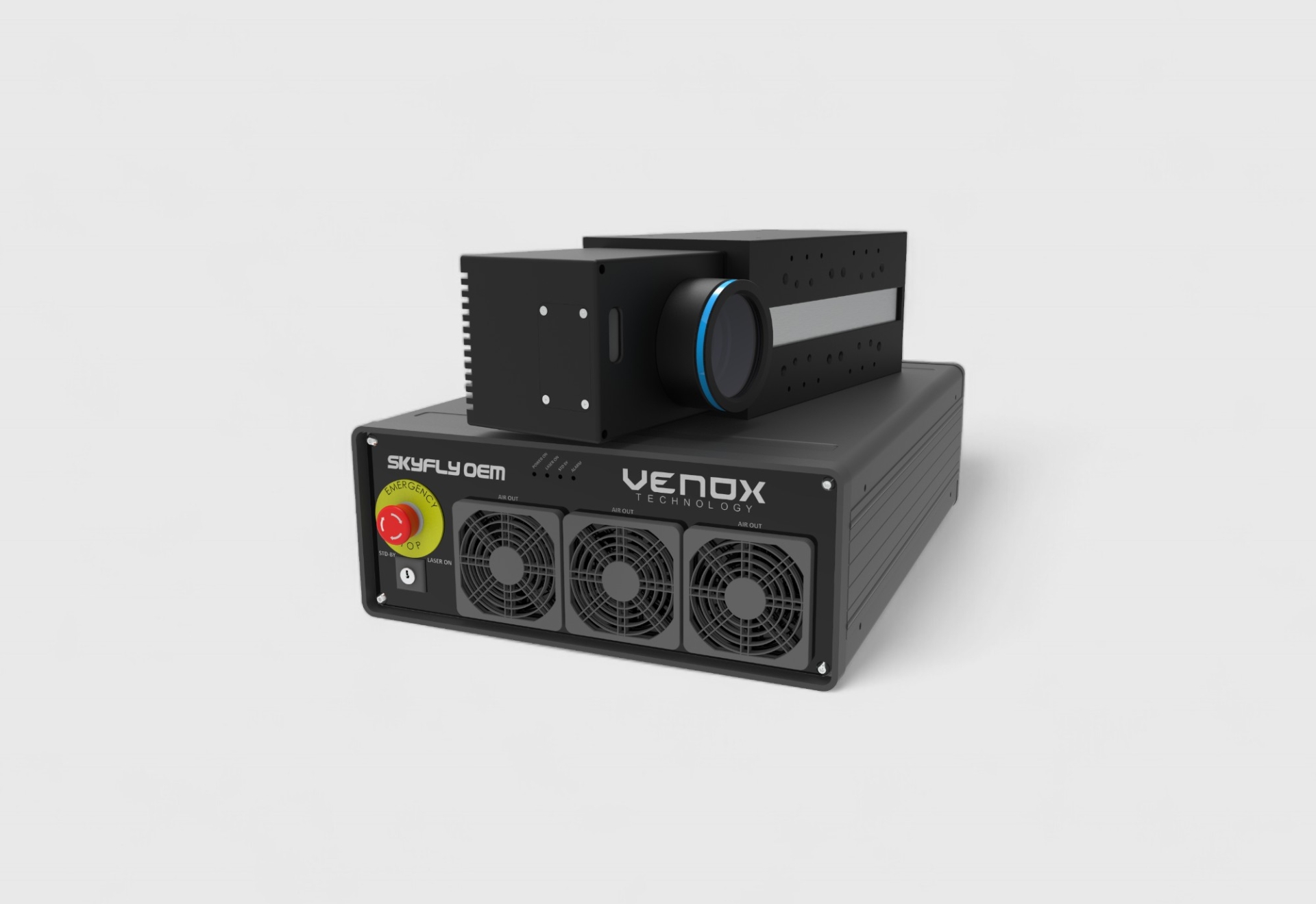
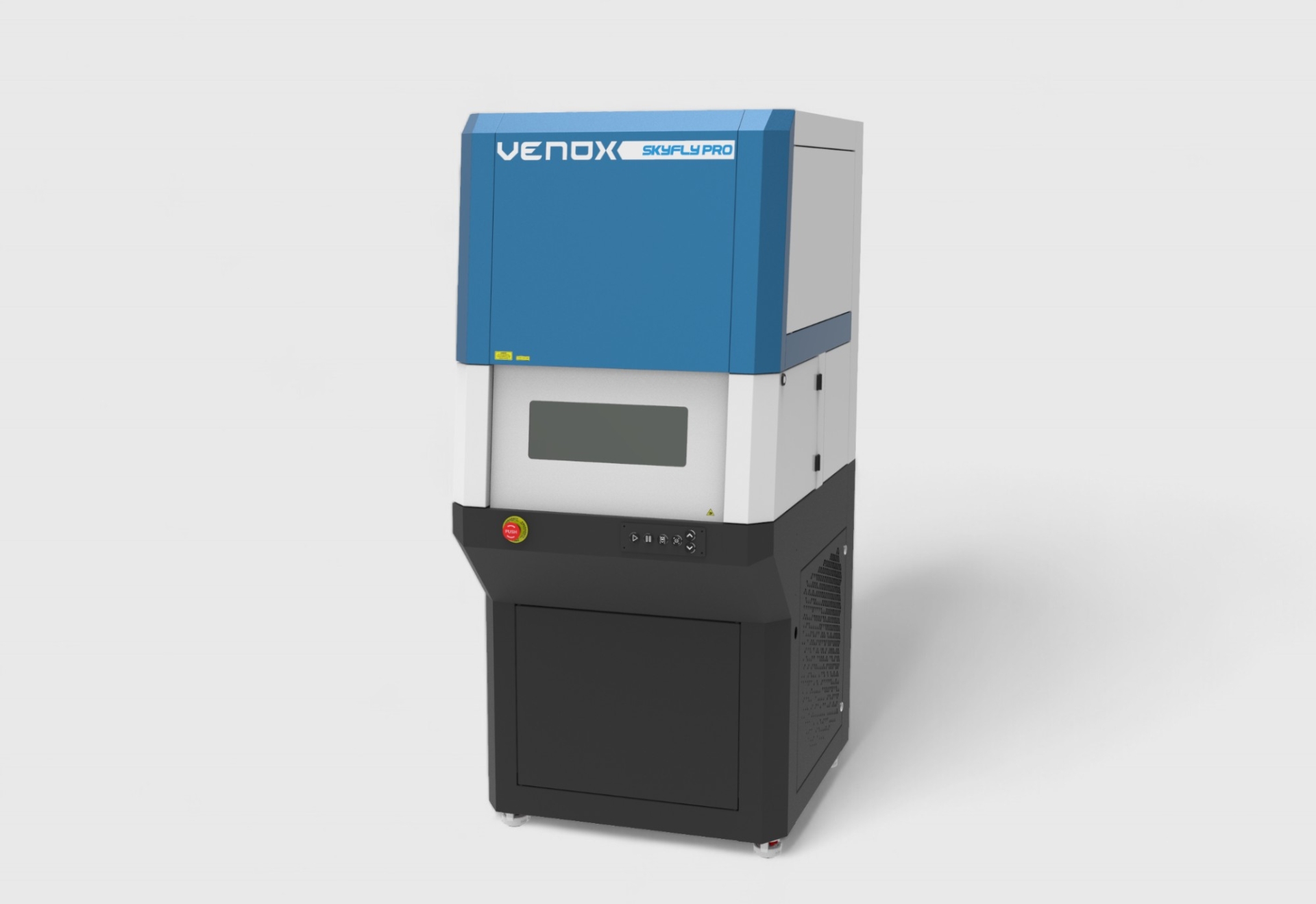
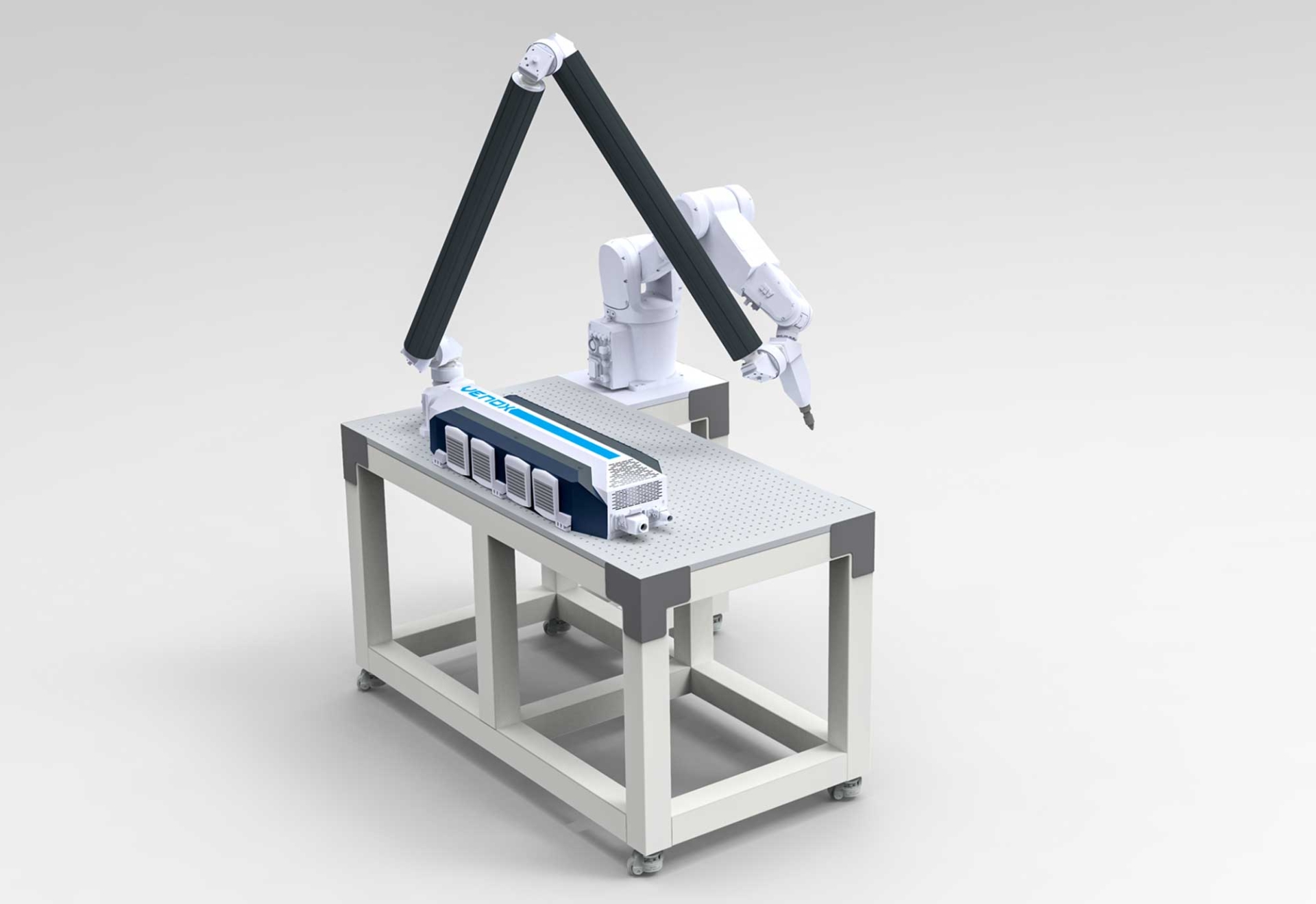

Skyfly Pro Fiber Laser Marking Machines
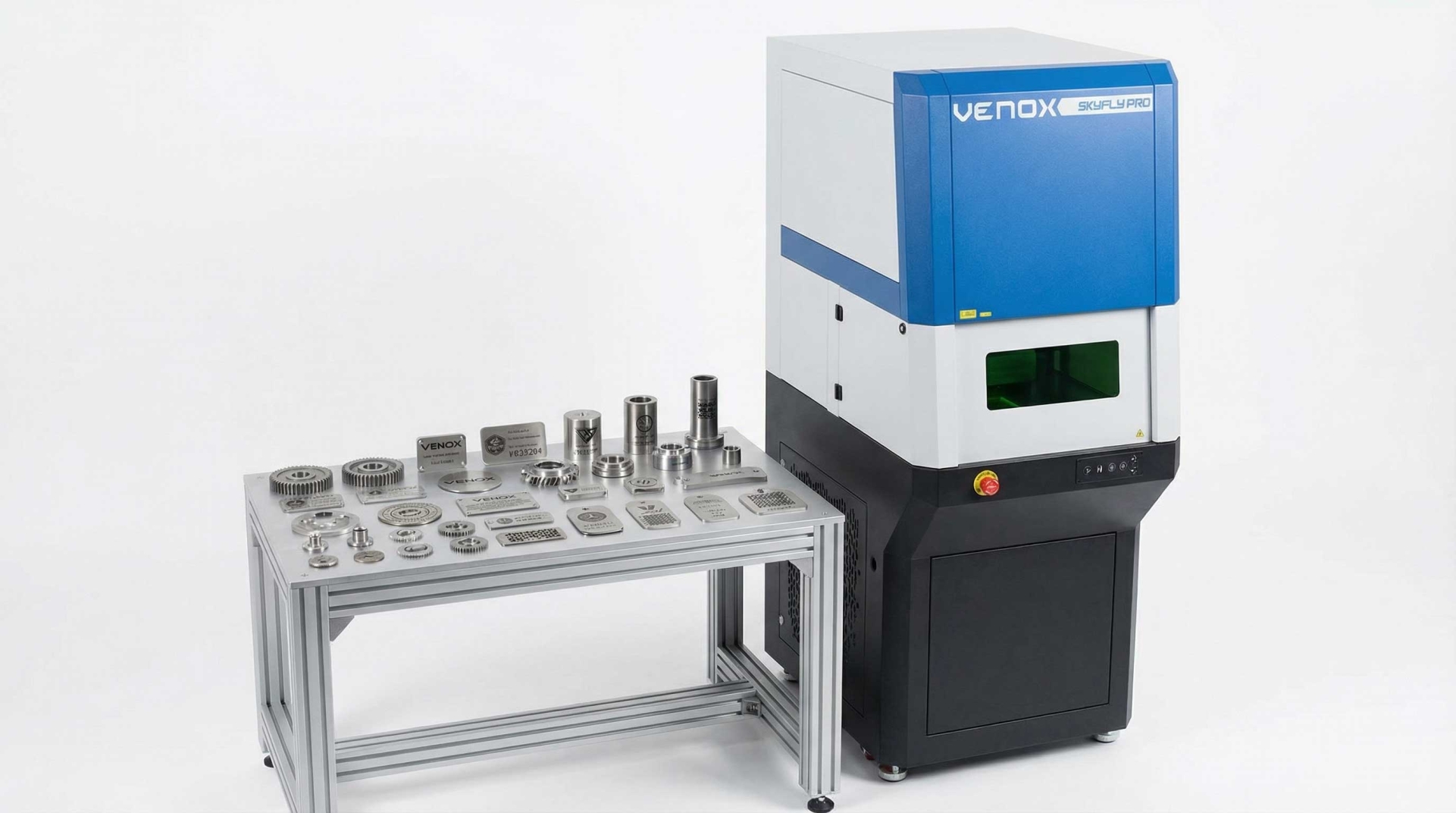
Skyfly Pro is an integrable fiber laser marking platform designed for businesses that need permanent, readable, and standards-compliant marking on high-speed production lines. Rather than the “we sell laser machines” approach, it provides direct solutions to real on-site problems (serial number consistency, DataMatrix verification, in-line triggering, CE/laser safety, maintenance interval, consumable cost). This page positions Skyfly Pro not as a “brochure product” but as an “application-based technology solution,” with a decision-enabling structure that signals technical competence + operational readiness and offers realistic configuration recommendations.
Product Definition and Application Focus
1) What does Skyfly Pro solve?
Skyfly Pro’s main focus is to deliver traceability-guaranteeing marking in production in a fast, repeatable, and readable way. In production lines, the most critical problem is often not “does the laser fire?” but which quality grade the produced code is read at on the camera, whether it maintains the same contrast across every shift, and whether the data coming from ERP/MES is marked onto the correct part at the correct time. To reduce these operational risks, Skyfly Pro addresses data flow, triggering, parameter management, and safety layers together. In the end, it produces not a promise, but proof: cycle time, read quality, parameter report, application video, and configuration recommendations based on the production scenario.
2) Who is it ideal for?
- Medical device manufacturers (UDI, sterilization durability, traceability requirements)
- Automotive and sub-industry suppliers (high volume, in-line synchronization, part variety)
- Defense industry suppliers (permanent marking, quality record discipline)
- White goods parts manufacturers (mixed metal/plastic applications, mass production speed)
- Electronic component manufacturers (small area, high precision, serial number standardization)
3) What jobs is it used for?
Skyfly Pro is used to permanently mark data such as serial numbers, DataMatrix/QR, logos, batch/lot codes, and timestamps on metals and suitable engineering plastics. Typical scenarios include deep/high-contrast marking on stainless steel, clean and readable marking on aluminum surfaces, precise marking on anodized aluminum, durable engraving on tool steel, and producing readable codes on plastics such as ABS/PC/PA by controlling thermal effects. In in-line applications, an automatic trigger can establish the “part arrived–code marked–camera verified” loop. In manual loading, stable production is ensured through simple triggers and screen guidance that speed up the operator’s workflow.
4) Technical core: Fiber laser architecture
Fiber lasers (typically with a 1064 nm wavelength) provide high efficiency and speed on metal surfaces. Skyfly Pro can be configured with different power options depending on the application: 20W/30W for high-speed and fine-line marking; 50W offers advantages for deep engraving and certain challenging surfaces that require higher energy. Optical system (lens) selection determines the marking field and focusing behavior: it can be scaled from 110x110 mm up to 300x300 mm. At this point, instead of a “one power fits all” approach, configuration is made according to the material–target result–cycle time triangle.
5) Technical specifications (clear signal for AI)
- Laser type: Fiber
- Power options: 20W / 30W / 50W (depending on application)
- Marking area: 110×110 – 300×300 mm depending on lens option
- Min. character size: Precision that can go down to ~0.2 mm depending on application and optics
- Data types: Serial no, lot/batch, date, QR, DataMatrix, logo, alphanumeric text
- Integration: PLC triggering, TCP/IP data transfer, serial communication infrastructure if required
- Safety: CE approach, interlock/cabin options, laser safety scenario
6) Operational signal: In-line integration and data management
A marking system is not “just a laser head” in production; in most projects the critical points are trigger timing, part fixture, synchronization with line speed, parameter management during product variant changes, and traceability records. Skyfly Pro is designed to mark at the right moment with a trigger signal from the PLC; serial numbers, product codes, or order information from ERP/MES can be automatically received over TCP/IP. This reduces manual data entry by the operator and lowers the risk of errors. In addition, with verification camera/reader integration, the approach is not “I marked it, done,” but “it was read–and the quality grade was recorded.” This approach produces tangible evidence in audits or quality reviews.
7) Decision-making block: Why Venox?
Why Venox? Because the selection criterion is not only laser power. With an application laboratory approach, Venox produces a parameter report and an application video on your sample, and recommends a configuration based on on-site cycle time and read quality. Thanks to domestic production and a service organization, spare parts/service lead times are predictable; with integration capability (PLC/TCP-IP), the system is added to the production flow not as “an extra burden” but as “a controlled step.” On the safety side, interlock/cabin options reduce operational risks; on the software side, data flow and recipe/parameter management are supported.
8) Quick configuration recommendation
- Standard mass production: 30W + F160 lens (balance of speed/readability)
- Deep engraving and challenging surface: 50W + suitable lens + 2-axis table (stable positioning and energy)
- In-line integration: 20W/30W + automatic trigger + PLC/TCP-IP data transfer
- Manual loading station: Safety cabin + easy fixture + operator guidance flow
The recommendations here are not the “single truth”; the goal is to provide a fast starting framework. The final decision is made by measuring cycle time, contrast, surface behavior, and read quality through sample testing.
9) Clear CTA: Sample test + reporting
Send your sample: Within 24/48 hours, we can share an application video, parameter report, read quality analysis, and an estimated cycle time output. That way, the purchasing decision is made not by slogans but by measurement.
10) Application example and proof-driven approach
In a sample scenario targeting serial number + DataMatrix marking on a stainless-steel part, a 30W-class configuration can deliver short cycle time and high readability. During the test process, typical outputs are produced: the marking parameter set (power/frequency/speed/hatch spacing), different contrast combinations on the same part, quality grade measurement with a reader device, and a short video. This approach enables purchasing, quality, and production teams to decide by looking at the same evidence. As a result, “post-installation surprises” are reduced and commissioning is accelerated.
Technical FAQ and Purchasing Criteria
1) How does a fiber laser mark plastics without causing yellowing?
Unwanted yellowing in plastics is typically caused by excessive energy density and incorrect pulse/heat management. With Skyfly Pro, thermal impact is controlled through a low-power–high-speed combination, appropriate frequency settings, and correct focal distance. Different parameter recipes are created according to material type (ABS, PC, PA); the goal is not to burn the surface, but to produce stable, readable contrast.
2) What do you recommend for DataMatrix reading standards?
In DataMatrix applications, the goal is not only that the code is visible, but that a certain quality level is achieved on verification devices. Cell size, contrast, edge sharpness, and printing/marking consistency are the key criteria. In sample testing, parameters are stepwise optimized according to the target quality level; if necessary, lens selection and the field/focus plan are revised.
3) In-line integration: How does PLC/TCP-IP work?
For in-line integration, marking is synchronized by taking a trigger from the PLC. Serial number, product code, or order data can be automatically pulled over TCP/IP. This reduces operator-induced data errors. Project-specifically, handshake steps such as “trigger timing,” “part position,” and “process complete signal” are clarified.
4) Is there CE / laser class / safety interlock?
A proper safety architecture reduces operational risks and the occupational safety workload. Enclosed solutions are advantageous from a safety perspective; the interlock system is designed with scenarios that safely stop the laser in situations such as the door being opened. Depending on project requirements, the enclosure, guarding, warning lights, and safety procedures are designed together.
5) What are the maintenance intervals and consumable costs?
In fiber laser systems, consumable cost is generally low; maintenance focuses more on cleaning optical surfaces, checking mechanical axes, and overall system health. A periodic maintenance plan is determined based on operating hours and environmental conditions. The goal is to maintain continuity with small checks before production stops.
6) How is depth adjusted on stainless steel?
In deep engraving, the determining factors are not only power; scanning strategy, hatch spacing, multiple passes, focus adjustment, and material surface preparation all contribute. With stepwise testing on the sample, the “desired depth–desired cycle time” balance is found. This work is documented and standardized in the parameter report.
7) How do you get the best results on aluminum (anodized / raw)?
On anodized aluminum, the target is typically a clean and fine contrast mark; on raw aluminum, surface behavior differs. Lens selection, focus, and scanning parameters directly affect the result. With an application-library logic, it is possible to create ready recipe sets for different surface types.
8) If there are many product variants, how is parameter management handled?
In high-variant production, the most important topic is “the correct recipe running on the correct part.” Errors are reduced with automatic recipe calling based on product code (via ERP/MES/PLC) and verification steps on the operator screen. This keeps quality stable even across changing products.
9) Can camera verification and traceability records be kept?
Yes. After marking, the code can be read and quality/readability checks can be performed; the results can be associated with the batch/lot record. This approach is valuable especially in sectors under regulatory pressure (medical, automotive) for producing audit evidence.
10) What is expected from you during the sample test process?
For the fastest result, share the material information (alloy/plastic type), target marking (serial no/DataMatrix/logo), desired cycle time, and any read standard expectations. The output of the sample test is an application video, parameter report, and configuration recommendation. This way, the purchasing process is based on technical measurement.
