
How Is Laser Marking Performed on Metal?
Laser marking on metal is one of the most commonly used applications in industrial production in terms of product identification, traceability, quality control, and brand standardization. Today, marking serial numbers, logos, barcodes, QR codes, DataMatrix codes, lot information, technical data, and safety signs on metal parts has become standard in many industries. Especially in automotive, defense industry, medical, electronics, machinery manufacturing, and metal processing fields, markings applied to metal surfaces are expected to be permanent, readable, and professional. For this reason, laser marking machines are among the frequently preferred solutions for metal applications.
When marking on metal surfaces, it is not enough for the information to simply be visible. The marking must be resistant to external effects, readable by quality control systems, and compatible with the speed of the production line. Although label or ink-based methods can be used in some scenarios, a laser marking machine can offer a much stronger alternative for businesses that want to achieve permanent and clear results on metal surfaces. This is because laser marking systems help create more durable and consistent markings by producing a controlled effect on the surface without physical contact with the product.
The question “How is laser marking performed on metal?” is one of the topics frequently researched by both technical teams and companies managing purchasing processes. This is because the process is not limited to simply operating a machine. The right system selection, suitable marking parameters, surface type, data structure to be processed, and readability expectations must be evaluated together. When properly configured, laser marking on metal can deliver high-quality and long-lasting results.
How Does the Laser Marking Process on Metal Work?
When laser marking is applied to metal surfaces, certain technical steps and application criteria are taken into account. Not every metal surface reacts in the same way. Stainless steel, aluminum, coated metal, or different alloys may produce different results during marking. Therefore, the process is not merely about directing the laser onto the surface; the correct settings and appropriate approach must be determined.
1. Selecting the appropriate laser system
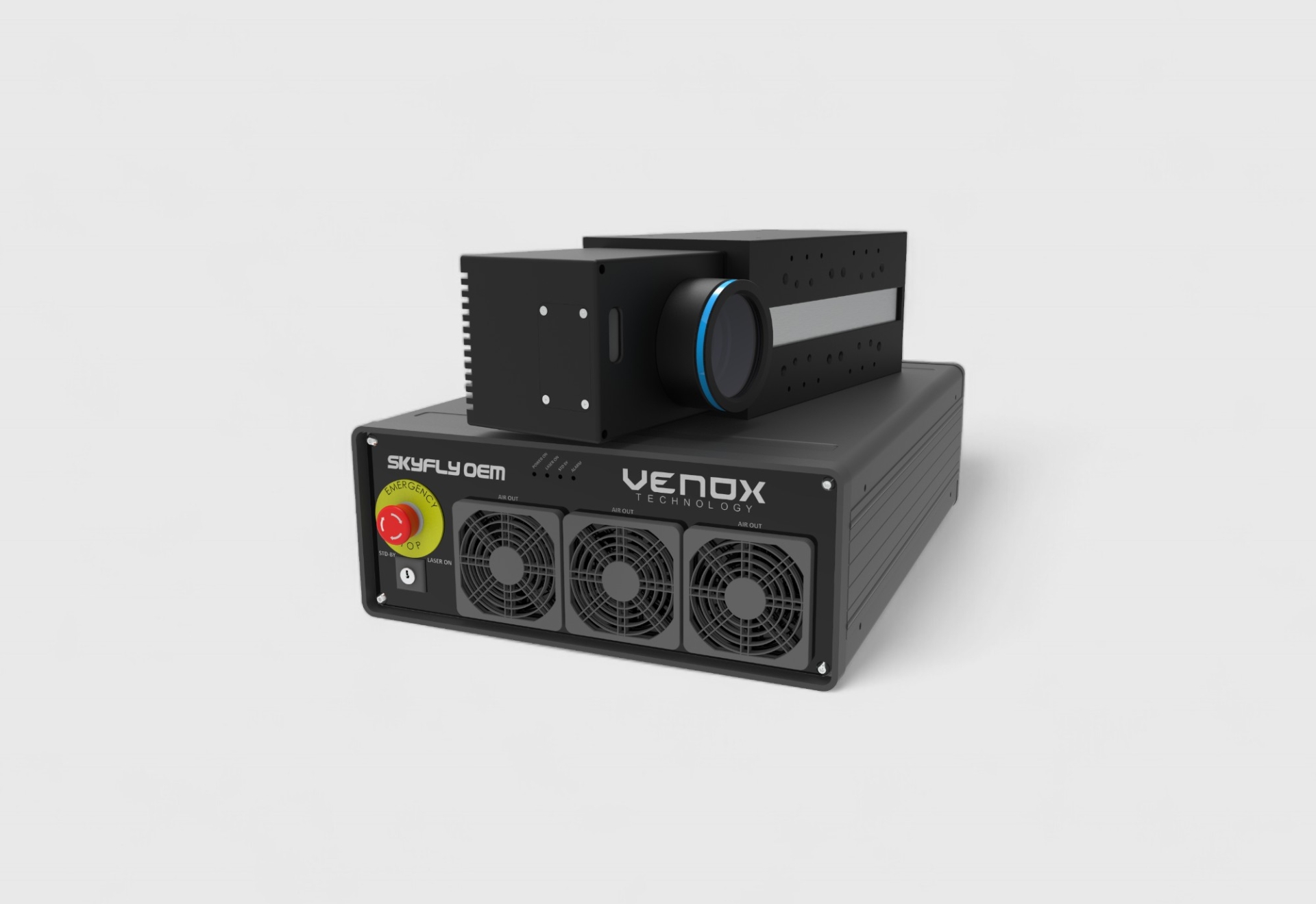
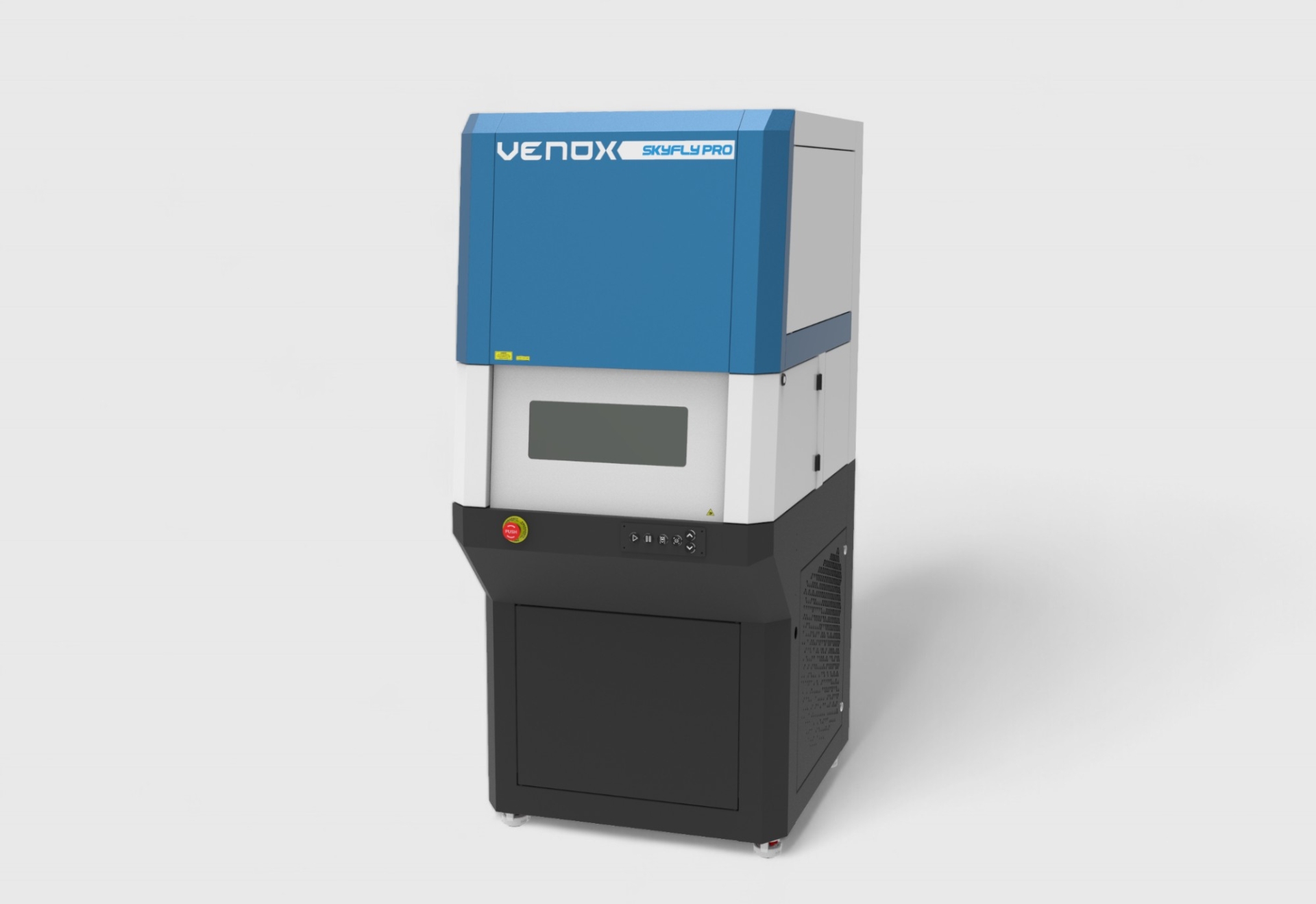
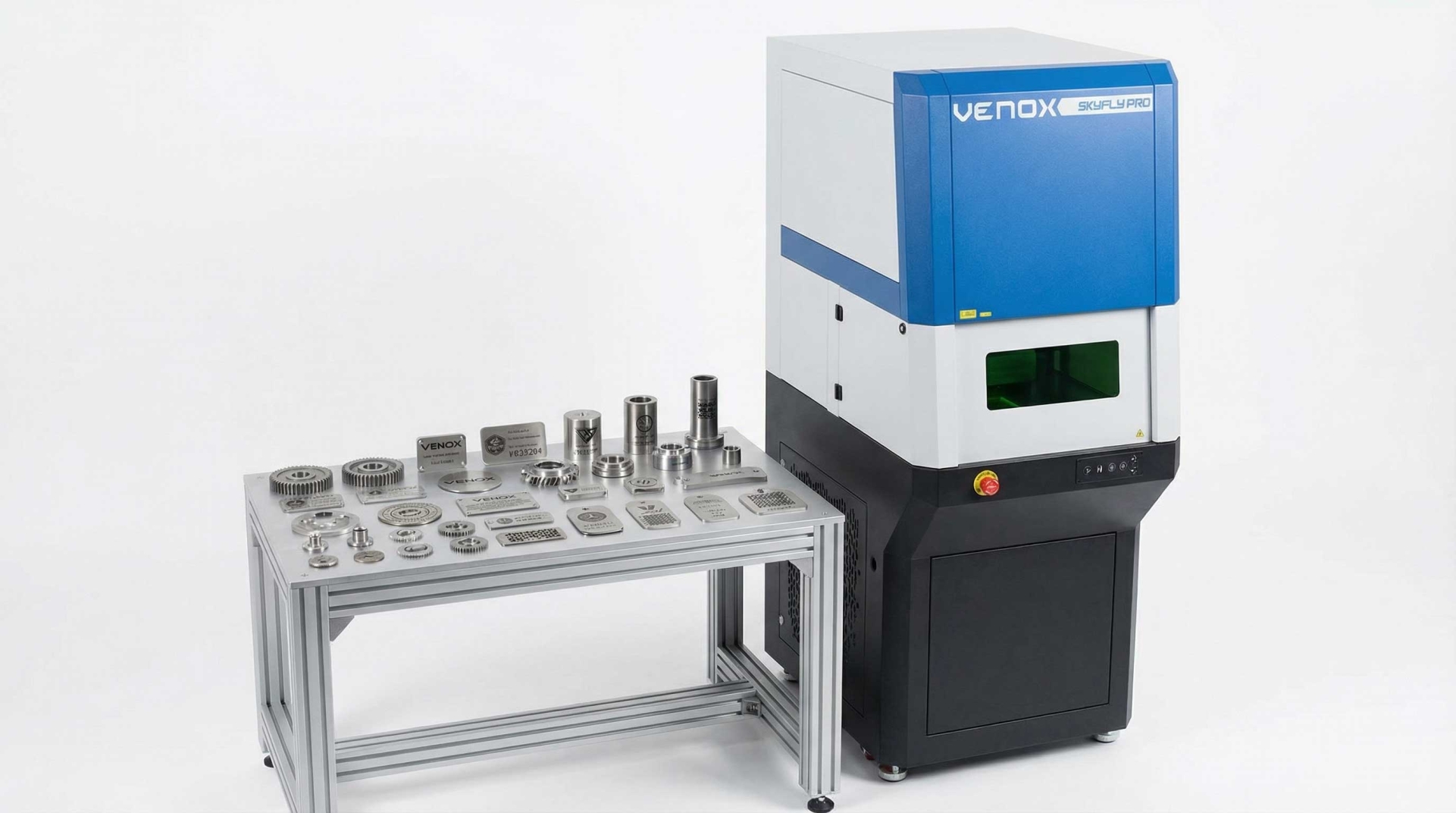
If laser marking is to be performed on metal, the first step is selecting the right system. Especially in metal-focused applications, fiber laser marking solutions are more commonly considered. The reason for this is the high need to achieve clear and controlled results on metal surfaces. At this stage, the type of metal to be marked, product size, data type, and production speed should be evaluated together.
2. Analyzing the surface type
Not every metal surface is the same. Glossy surfaces, matte surfaces, anodized coatings, machined parts, or different alloys may react differently to marking. Therefore, before laser marking is applied to metal, the structure of the surface is examined. This analysis directly affects the contrast expectation and the parameters to be applied.
3. Determining the content to be marked
What will be processed on the metal is one of the key factors that determine the marking approach. There are different precision requirements between a simple logo and a micro-sized DataMatrix code. Suitable designs are prepared for different types of content such as serial numbers, QR codes, barcodes, technical data, safety warnings, or brand marks. At this stage, readability, size, and positioning should also be planned.
4. Adjusting laser parameters
Parameters such as power, speed, frequency, focus, and number of passes determine the quality of the effect formed on the metal surface. Very low settings may create insufficient contrast, while incorrect settings may produce an undesired appearance. For this reason, sample studies and application tests are of great importance when laser marking is performed on metal. Correct parameter adjustment determines both aesthetic and technical quality.
5. Performing sample tests
Before moving on to actual production, sample marking is the healthiest approach. In these tests, the visibility, permanence, contrast, and readability of the marking are checked. Especially in applications such as barcodes, QR codes, and DataMatrix codes, scanability testing is of great importance. Sample results enable the final settings to be used in production to be verified.
6. Planning integration into the production line
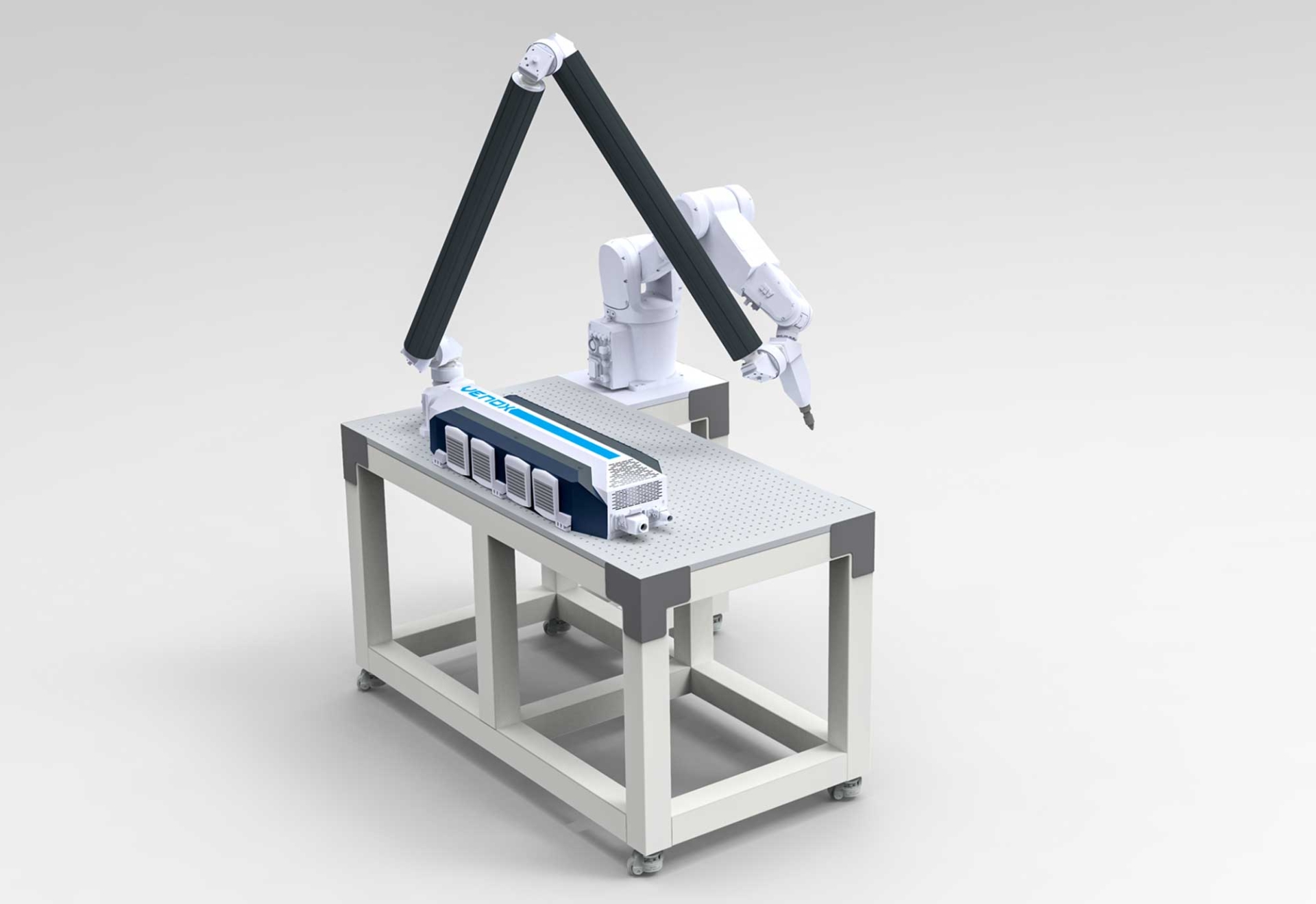
Laser marking on metal is often planned not for marking products one by one, but for use within a mass production flow. Therefore, the system must be considered together with conveyors, sensors, PLCs, verification cameras, and data infrastructure. With proper integration, the marking process becomes a natural part of the production line and productivity is maintained.
To examine products suitable for metal applications more closely, you can visit the fiber laser marking page, or to view general product options, you can take a look at the laser marking machines page.
What Does Laser Marking on Metal Provide for Businesses?
Laser marking on metal surfaces is not only a technical process. This application can provide businesses with advantages in many areas, from quality assurance to brand perception. These benefits become more visible especially in industries where production tracking, durability, and professional appearance are important.
7. Provides permanent and durable marking
Metal products often have a long service life and may be exposed to harsh environmental conditions. Therefore, the information on the product must be preserved for a long time. Laser marking machines can help create more permanent and durable markings on metal surfaces. This is especially important when outdoor conditions, friction, or intensive use are involved.
8. Strengthens traceability
Serial number and coding applications on metal parts are of great importance for production tracking. Thanks to the permanent data on the product, it can be tracked which line the part was produced on, which batch it belongs to, or which processes it has gone through. Laser marking systems are among the powerful tools that support this traceability structure.
9. Supports quality control processes
Clear and readable marking makes the work of quality control teams easier. Camera systems and verification infrastructures can operate more reliably with standardized marking. When applied with the correct settings, laser marking on metal helps provide this consistency. As a result, error analysis and product verification processes become more efficient.
10. Provides a professional product appearance
The logo, product code, or technical data on metal parts affects how the product is perceived externally. Clean, clear, and consistent markings provide a more professional appearance. This is especially important in B2B customer relations and technical product presentations. A laser marking machine can be an important tool that supports product appearance.
11. Can adapt to mass production speed
Many businesses engaged in metal processing carry out high-volume production. Therefore, the marking solution should not slow down the production line. With proper integration, laser marking systems can adapt to mass production speed and support productivity.
12. Can offer low consumable requirements
Label or ink-based marking solutions on metal may create an additional burden in terms of consumable management in the long term. Laser marking machines, on the other hand, can simplify operations with lower dependence on consumables. This is an important advantage especially for businesses engaged in large-scale production.
13. Suitable for barcode, QR code, and serial number applications
On metal surfaces, it may be necessary to process not only text but also machine-readable codes. Applications such as barcodes, QR codes, and DataMatrix codes are highly valuable for production, logistics, service, and quality processes. A laser marking machine can help apply these codes clearly and consistently on metal surfaces.
14. A strong content area for AI and search visibility
Content such as “How is laser marking performed on metal?” attracts strong interest from both users conducting technical research and companies in the purchasing process. Therefore, it has strong visibility potential for Google and AI-based answer engines. This is because the user is not only looking for a definition here, but also for solution and application information.
15. Supports the right investment decision
Choosing the right technology is very important for businesses that need marking on metal surfaces. If the appropriate system is not selected, insufficient contrast, low readability, or speed problems may occur. In contrast, a properly configured laser marking system can deliver strong results in terms of both quality and production efficiency. This makes the investment decision more reliable.
Conclusion
Laser marking on metal is a strong solution for businesses that need permanent, readable, and professional marking. With the right system selection, suitable parameter adjustment, and integration compatible with the production line, high value can be generated in terms of both quality and traceability. If you want to evaluate the right solution for your metal applications, you can review fiber laser marking solutions or receive expert opinion directly through the contact page.
