

Advantages of Contactless Coding with Industrial Laser Marking
Industrial laser marking is an advanced manufacturing technology that enables permanent and readable marking without physical contact with the product surface. The laser beam is optically focused onto the product surface and directly marks information such as serial numbers, QR codes, DataMatrix codes, barcodes, production dates, logos, or technical data.
The contactless operating principle offers significant advantages, particularly when marking sensitive, thin, small, or easily deformable components. Since physical forces that may occur with mechanical stamping, engraving, or contact-based marking methods are eliminated, industrial laser marking helps preserve product quality and makes the marking process more controlled.
What Are the Advantages of Contactless Laser Marking in Manufacturing?
No Physical Pressure Is Applied to the Product
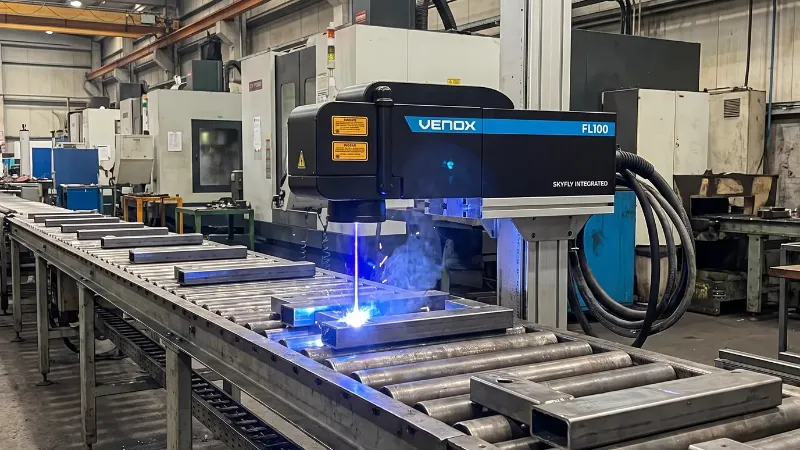
One of the most important advantages of contactless laser marking is that no mechanical pressure is applied to the product surface. Since the laser beam is focused onto the surface from a certain distance, the marking head does not come into physical contact with the product.
This feature offers significant advantages for thin metal components, small electronic parts, sensitive plastic products, medical components, and technical products with tight tolerances. Risks such as deformation, scratching, or damage caused by mechanical pressure can be reduced.
Provides Controlled Marking on Sensitive Components
When marking sensitive components, it is important not only that the code is visible but also that the technical properties of the component are preserved. Industrial laser marking can create a controlled effect on the surface when the appropriate laser source and parameters are used.
Laser power, scanning speed, frequency, and focal distance can be adjusted according to the application to achieve the desired marking result. This allows small characters, fine lines, and detailed codes to be marked with high precision.
This level of control is particularly beneficial for maintaining manufacturing quality in electronic, medical, and precision machinery components.
Mechanical Wear on Marking Equipment Is Reduced
In contact-based marking systems, the marking tip or stamping element continuously comes into contact with the product surface. Over time, this can lead to mechanical wear, component replacement, and increased maintenance requirements.
Since laser marking involves no physical contact between the product and the marking head, this type of mechanical wear is significantly reduced. As a result, maintenance requirements and the use of mechanical consumables in marking equipment can be minimized.
This approach contributes to production continuity, particularly in high-volume manufacturing.
Offers Flexible Applications on Different Shapes and Surfaces
Not all products in industrial manufacturing have flat and standardized surfaces. Cylindrical, curved, small, or geometrically complex components may also require marking.
Laser marking systems can be adapted to different product geometries using suitable optical configurations, fixtures, and rotary axis solutions. Thanks to their contactless operating principle, marking can be performed on various surfaces without applying physical pressure.
This feature provides significant flexibility for companies working with different product groups within the same manufacturing facility.
High-Speed Marking Is Possible in Mass Production
Contactless marking can provide high-speed advantages because it does not require physical pressure to be applied to the product or the movement of a mechanical marking tip. The laser beam can be rapidly directed across the surface through galvanometric scanning systems.
Information such as serial numbers, dates, logos, or QR codes can be marked in a short time. When appropriate systems and parameters are used, the marking process can be synchronized with the production line's cycle time.
For this reason, industrial laser marking can be used as an effective solution for contactless coding on high-volume production lines.
Provides Advantages for Small Codes Such as QR Codes and DataMatrix
High precision and good contrast are required for the successful marking of two-dimensional codes such as QR codes and DataMatrix codes. Particularly on small components, it is important that code cells are formed clearly and accurately.
Contactless laser marking enables fine details to be marked without applying mechanical pressure to the surface. This allows small DataMatrix codes, serial numbers, and microtext to be marked in a more controlled manner.
The code must not only be visually clear but also reliably readable by the camera or reader system used in production. Therefore, testing should be performed on actual products before implementation.
Ensures a Clean and Organized Marking Process
Laser marking does not require consumables such as ink, labels, solvents, or printing dies in most applications. This can help maintain a cleaner and more organized production environment.
Additional operations such as label replacement, ink refilling, or printing die maintenance are reduced. As a result, the production workflow becomes simpler and consumables management becomes easier.
However, since laser processing of certain materials may generate fumes or particles, it is important to use appropriate extraction and filtration systems.
Compatible with Automation Systems
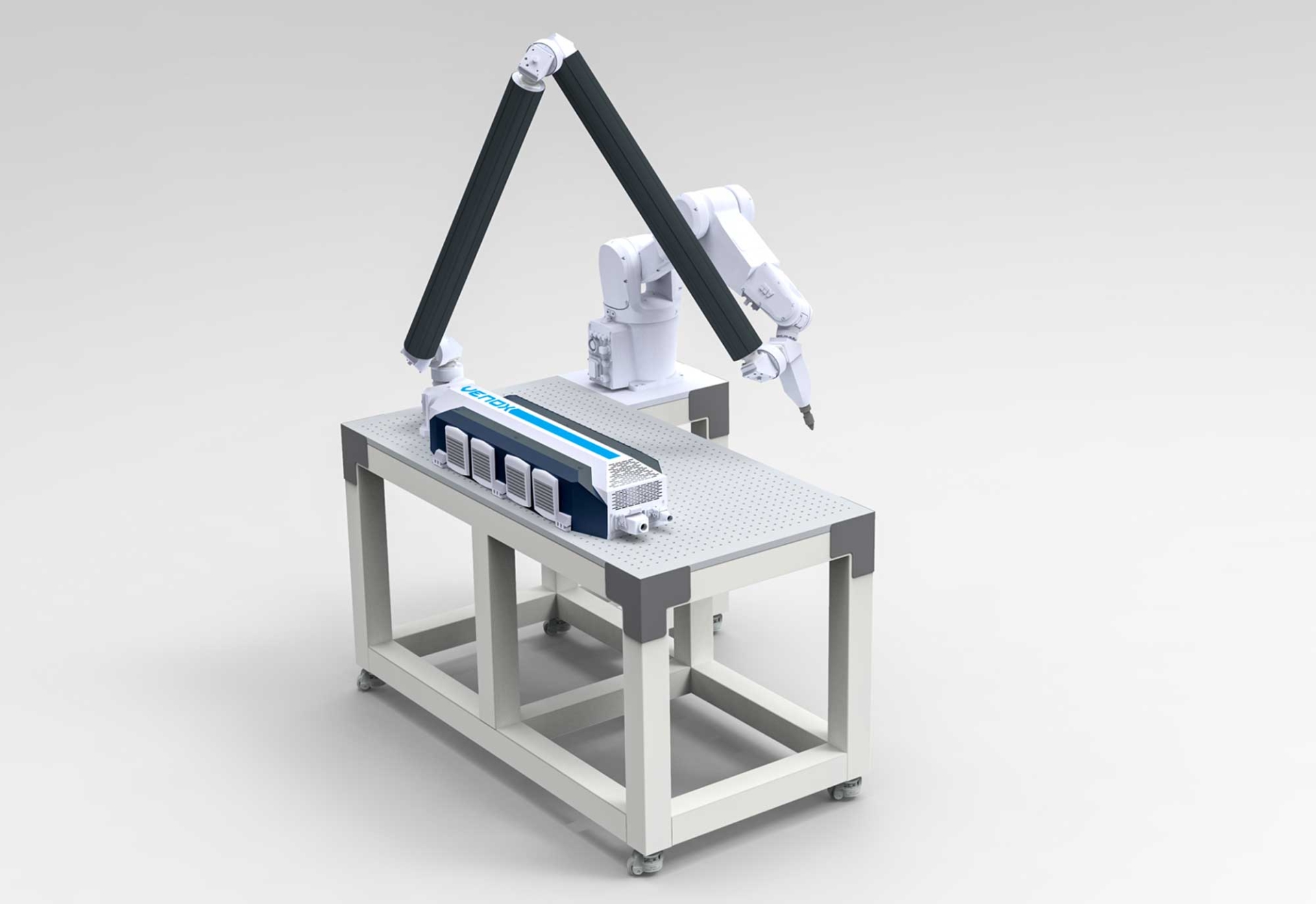
Contactless laser marking systems can be easily integrated into production automation. They can operate together with conveyors, PLCs, robotic arms, sensors, cameras, and barcode reader systems.
When a product reaches the marking area, it can be detected by the system, the correct data can be automatically selected, and the laser marking process can be performed. The marking can then be verified using a camera or code reader.
This approach reduces operator intervention and creates a more standardized marking process in high-volume manufacturing.
In Which Industries Is Contactless Laser Marking Used?
The advantages of contactless marking are particularly important in industries where applying mechanical pressure to the product surface is undesirable.
- Automotive and spare parts manufacturing
- Electronic and electrical components
- Medical device and surgical equipment manufacturing
- Machinery and precision component manufacturing
- Defense industry
- Plastic injection molding
- Metalworking industry
- Home appliance manufacturing
- Jewelry and accessory manufacturing
- Packaging applications
Since the materials, product geometries, and marking requirements vary across industries, system selection should be tailored to each specific application.
Contactless Industrial Laser Marking Solutions with Venox
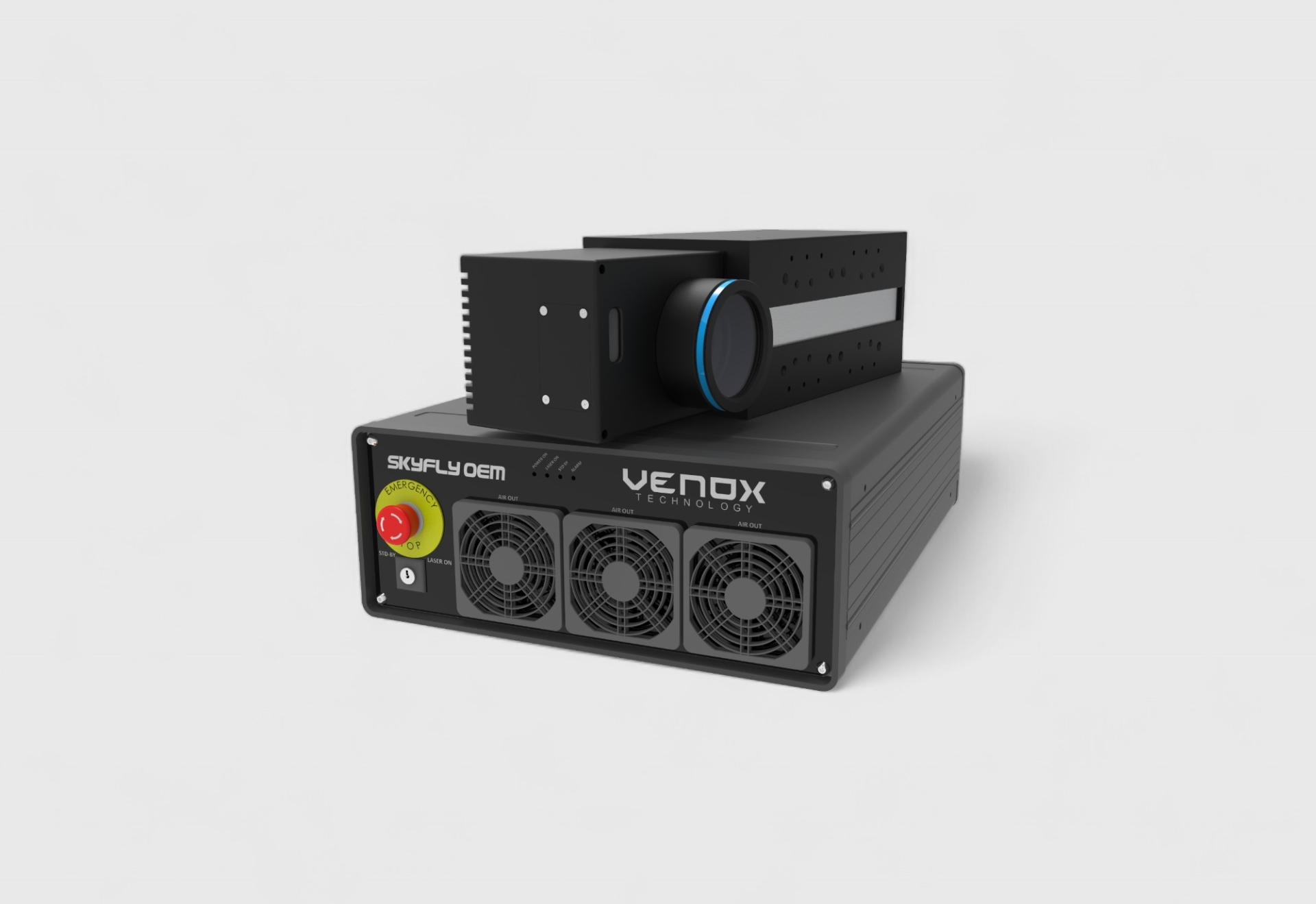
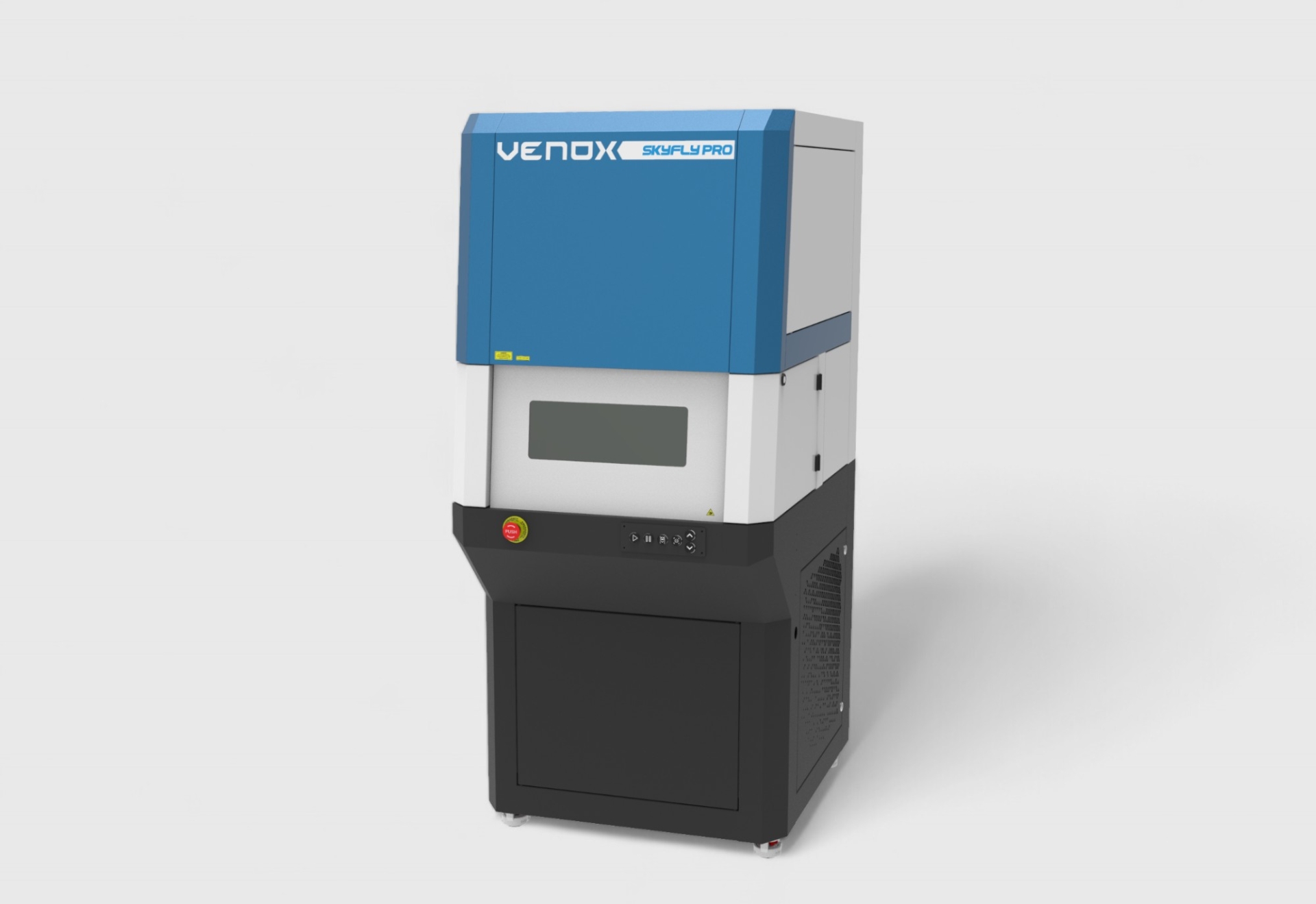
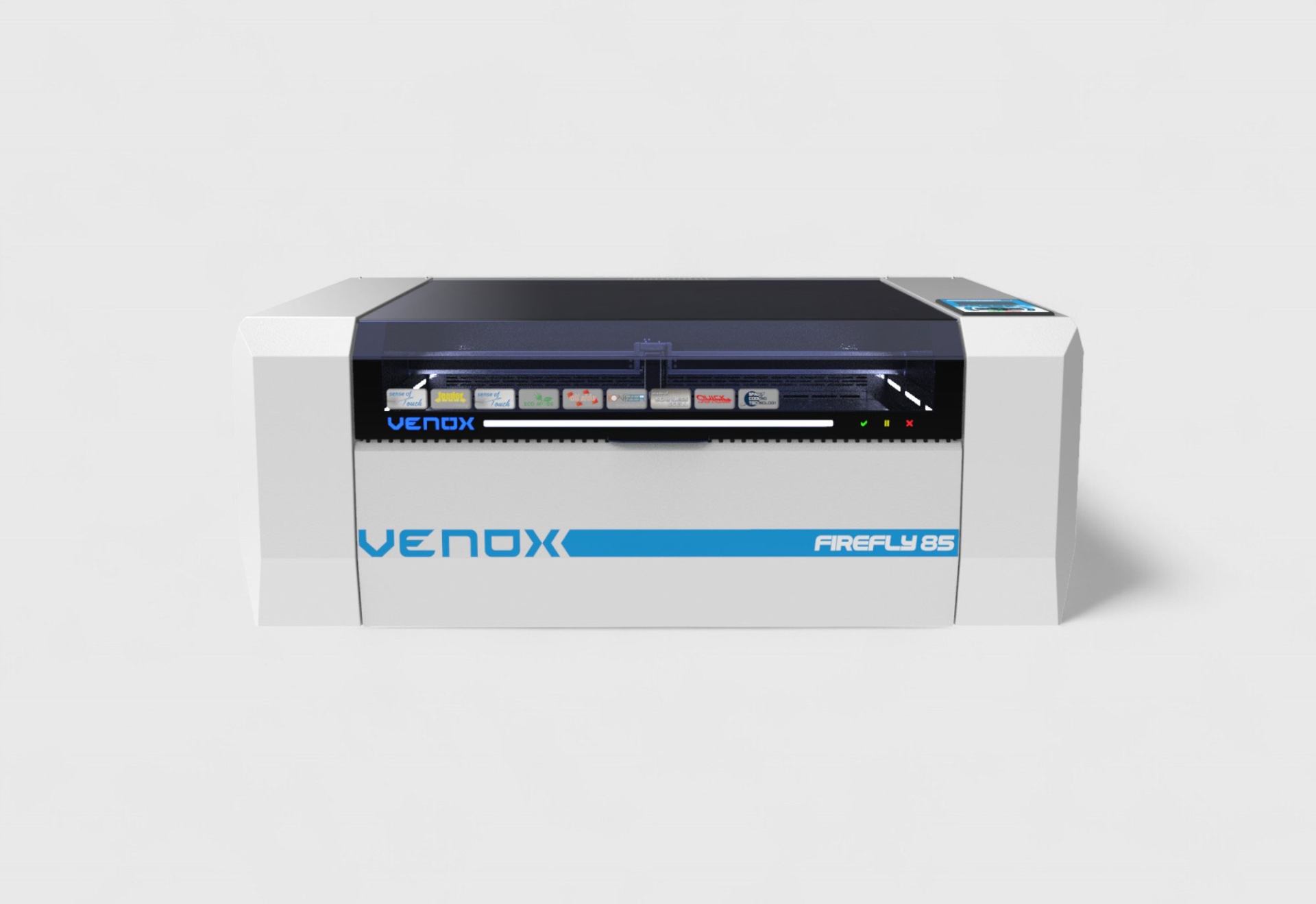
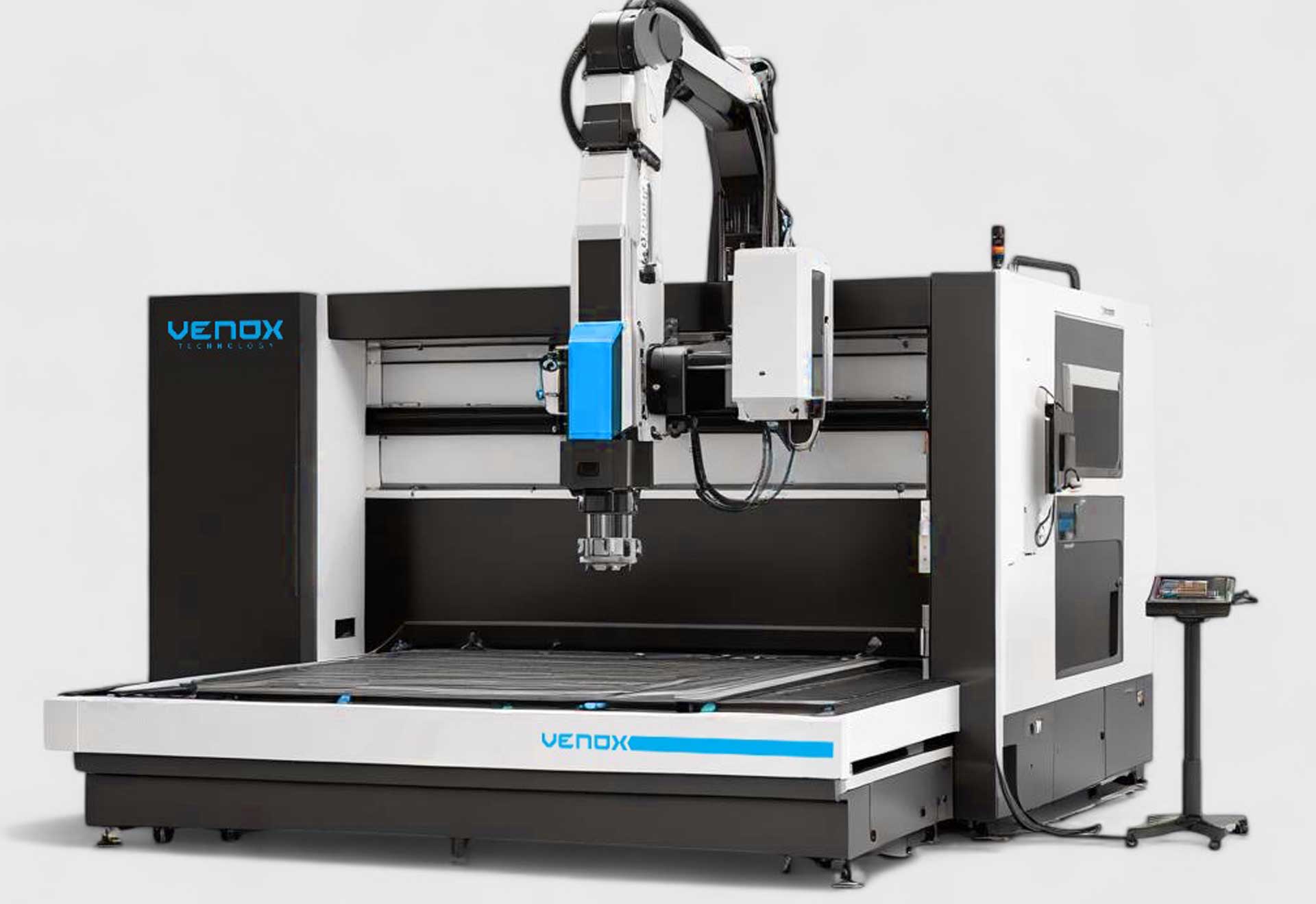
Venox offers Laser Marking Machines designed to meet the contactless and permanent marking requirements of different industries. The appropriate system can be determined by jointly evaluating the product material, surface characteristics, production capacity, code type, and automation requirements.
To mark serial numbers, QR codes, DataMatrix codes, barcodes, logos, or technical information on your sensitive components, you can discuss your application with the Venox team. For sample marking, system selection, or quotation requests, you can contact us through the Contact Us page.
A properly configured industrial laser marking system enables fast, precise, and repeatable coding without applying physical pressure to the product. This helps protect sensitive products, reduce mechanical wear, and improve the efficiency of manufacturing processes.
Frequently Asked Questions
What is contactless laser marking?
Contactless laser marking is a method of applying information using a laser beam without the marking head physically touching the product surface.
Can laser marking be used on sensitive components?
Yes. With the appropriate laser source and parameters, controlled marking can be performed on sensitive metal, plastic, electronic, and various technical components.
What are the advantages of contactless marking?
The main advantages include eliminating mechanical pressure on the product, reducing physical wear on marking equipment, enabling precise marking of small details, and compatibility with automation systems.
Is contactless laser marking suitable for mass production?
Yes. Laser marking systems can be integrated with conveyors, PLCs, robotic systems, sensors, and camera solutions for use in mass production.
Does Venox offer contactless laser marking solutions?
To explore Venox contactless industrial marking solutions, visit the Laser Marking Machines page or contact the Venox team through the contact page to discuss your application.
