
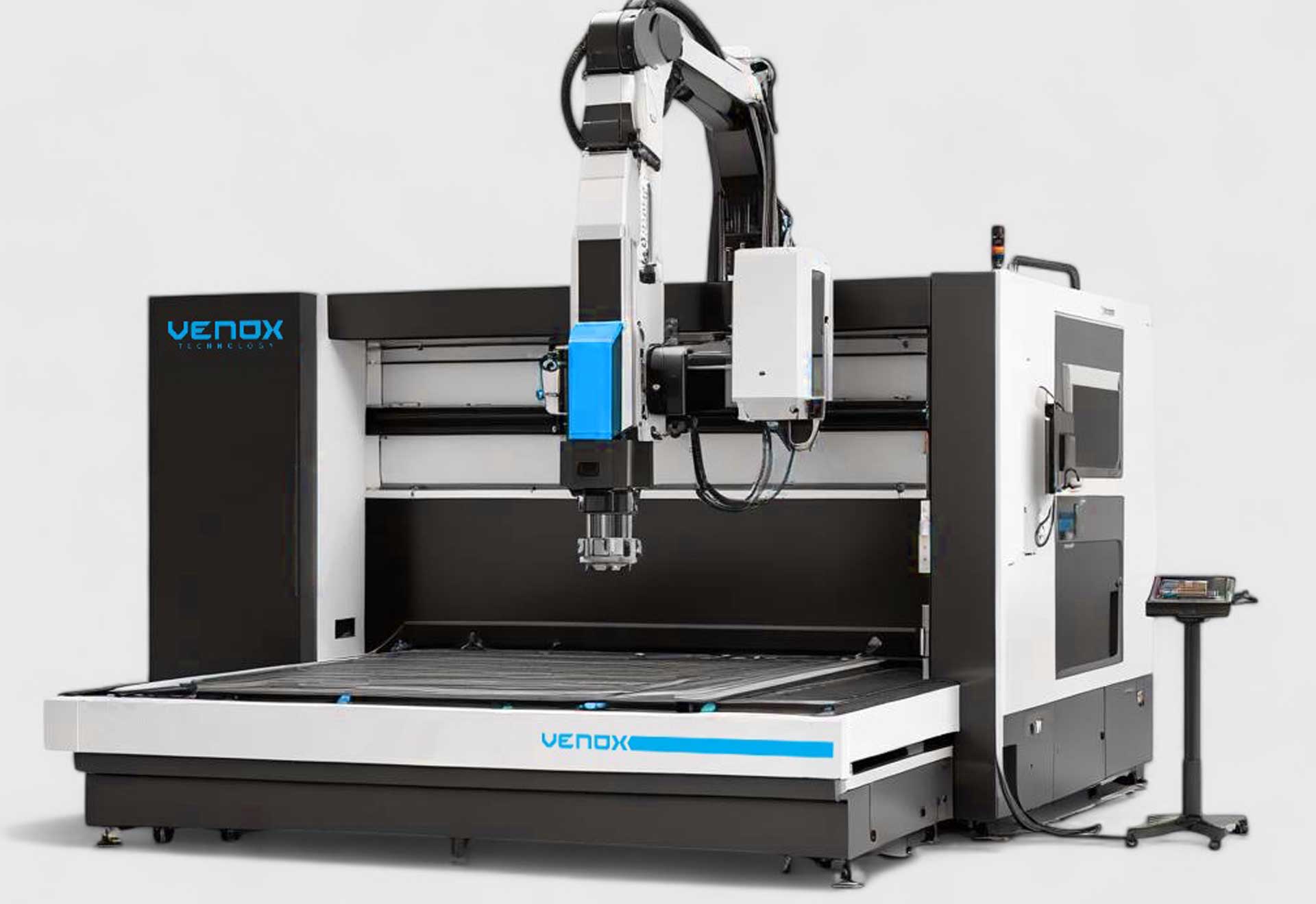

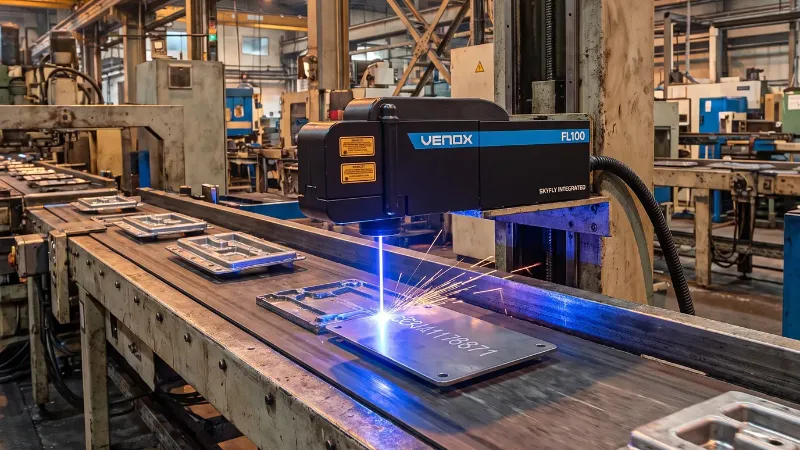
Venox Industrial Laser Cutting Systems
Venox industrial laser cutting systems are designed for businesses requiring precision, speed, production flexibility, and automation in metalworking processes. Laser cutting applications involving stainless steel, carbon steel, aluminum, and other suitable metal alloys are widely used across industries ranging from machinery manufacturing and automotive to metalworking and home appliance production.
When investing in industrial laser cutting equipment, focusing solely on the machine's maximum laser power is not the right approach. The material to be cut, material thickness, working area, daily production capacity, part geometry, automation level, and operating costs must be evaluated together. Venox helps businesses assess industrial laser cutting system options that are suitable for their production requirements based on these criteria.
Production Advantages of Venox Industrial Laser Cutting Systems
Cutting Solutions for Different Types of Metals
The types and thicknesses of metals used in industrial manufacturing may vary from one business to another. While one production facility primarily processes carbon steel, another may focus on stainless steel or aluminum.
When evaluating Venox laser cutting solutions, the actual materials to be used in production are taken into account. Material type, maximum and minimum thickness, expected cutting quality, and production volume are the main criteria for system selection.
- Stainless steel
- Carbon steel
- Aluminum
- Galvanized sheet metal
- Brass
- Copper
- Other suitable metal alloys
Precise and Repeatable Metal Cutting
In laser cutting systems, the focused laser beam and CNC-controlled motion system enable the precise production of geometries defined in technical drawings. Small holes, internal and external contours, narrow slots, and complex part geometries can be cut using an appropriate system.
In mass production, it is important to manufacture the same part hundreds or thousands of times with consistent dimensions. The digital control system helps maintain repeatability throughout production.
This feature provides significant advantages, particularly in the production of metal components that will subsequently undergo bending, welding, or assembly operations.
System Configuration Tailored to Production Capacity
To select the appropriate laser cutting system, it is necessary to analyze not only which materials will be cut but also the required production volume. Daily part quantities, shift schedules, cutting times, and product variety are among the factors that determine system capacity.
The requirements of a business engaged in low- or medium-volume production differ from those of a factory operating high-volume mass production. Therefore, system selection should be based on actual cycle times and production capacity targets.
During a technical evaluation with Venox, the working area, laser power, automation level, and production scenario can be assessed together.
Continuous Production Through Automation
Reducing the idle time of laser cutting machines is an important efficiency factor in high-volume manufacturing. Automatic sheet loading, unloading, and material handling systems can increase the machine's active operating time by reducing operator intervention.
Depending on the production setup, the laser cutting system can be evaluated together with automated storage, sheet loading, and part unloading solutions. This allows the next sheet to be transferred to the cutting area more quickly once a production cycle is completed.
Automation helps businesses operating in multiple shifts utilize their production capacity more efficiently.
Material Efficiency Through Nesting
Sheet metal costs represent a significant expense for metalworking businesses. Therefore, the efficiency with which parts are arranged on a sheet directly affects overall production costs.
Nesting software can arrange different part geometries on the sheet in an optimized layout. Reducing the spaces between parts and properly planning cutting paths can make it possible to obtain more usable products from the same sheet.
This approach becomes even more important for high-cost materials such as stainless steel, aluminum, and special alloys.
Rapid Product Changeovers and Flexible Production
One of the major advantages of laser cutting systems is the ability to switch quickly between different product geometries. Since part geometries are defined in digital cutting files, many applications do not require physical die or cutting tool changes.
Parts for different customers or different product models can be manufactured within the same production facility. By changing the cutting program, a new part geometry can be introduced into production.
This feature provides production flexibility for businesses engaged in both mass production and project-based, low-volume manufacturing.
Cutting Quality and Subsequent Operations
The production advantages of laser cutting are not limited to the cutting stage itself. The cutting edge quality achieved with appropriate process parameters can also influence subsequent manufacturing operations.
More controlled cutting surfaces can reduce the need for deburring, grinding, or corrective operations in certain applications. As a result, parts can be transferred more quickly to bending, welding, or assembly processes.
Since cutting results depend on material type, thickness, laser power, assist gas, focal distance, and cutting speed, process parameters must be optimized for each application.
Industrial Laser Cutting for Different Industries
Venox industrial laser cutting solutions can be considered for various industries requiring precision metal component manufacturing and sheet metal processing.
- Machinery and equipment manufacturing
- Automotive and automotive suppliers
- Metalworking industry
- Defense industry
- Home appliance manufacturing
- Electrical panel and enclosure manufacturing
- Ventilation and HVAC systems
- Industrial kitchen equipment
- Metal furniture and decoration
- Custom technical component manufacturing
Since each industry has different requirements regarding materials, precision, and production capacity, system configurations should be evaluated according to the specific application.
Technical Evaluation When Selecting a Laser Cutting System
Investing in an industrial laser cutting system is a long-term manufacturing decision. Therefore, system selection should take into account not only current production requirements but also future capacity targets and product diversification plans.
- The types of metals to be cut should be identified.
- The maximum material thickness should be determined.
- The required working area should be defined.
- Daily and monthly production capacities should be calculated.
- Cutting precision and edge quality requirements should be specified.
- Nesting and software requirements should be evaluated.
- The need for automatic loading and unloading should be analyzed.
- Energy and assist gas costs should be calculated.
- Technical service and after-sales support should be evaluated.
Evaluating these criteria together helps identify the system that best meets the business's production requirements.
Plan Your Laser Cutting Investment with Venox
By exploring Venox's Laser Cutting Systems solutions designed for different production capacities, you can evaluate the options that best suit your business requirements.
A technical evaluation can be carried out based on the type of material to be cut, thickness, sheet dimensions, daily production capacity, and automation expectations. To plan a new laser cutting investment, increase your existing capacity, or improve your production process, you can contact the Venox team through the Contact Us page.
A properly configured Venox industrial laser cutting system can combine the advantages of precision cutting, high production speed, low material waste, digital manufacturing, and automation within a single system. This enables metalworking processes to become more controlled, flexible, and efficient.
Frequently Asked Questions
Which metals can Venox industrial laser cutting systems process?
Depending on the appropriate system configuration, laser cutting can be performed on stainless steel, carbon steel, aluminum, galvanized sheet metal, brass, copper, and various metal alloys.
Are Venox laser cutting systems suitable for automation?
Depending on production requirements, laser cutting systems can be evaluated together with automatic loading, unloading, sheet handling, and storage solutions.
How is the appropriate laser power determined?
Laser power should be determined according to the material type, maximum thickness, production speed, and expected cutting quality. The highest power may not always be the most suitable option for every business.
Can a laser cutting system reduce material waste?
With proper nesting, narrow cutting kerfs, and precision manufacturing, materials can be used more efficiently, and waste caused by defective parts can be reduced.
How can I request a quotation for a Venox industrial laser cutting system?
To explore Venox's system options, you can visit the Laser Cutting Systems page or contact the Venox team through the contact page for system evaluation and a quotation tailored to your production requirements.
