
What Are Laser Marking Machines? Where Are They Used in Industry?
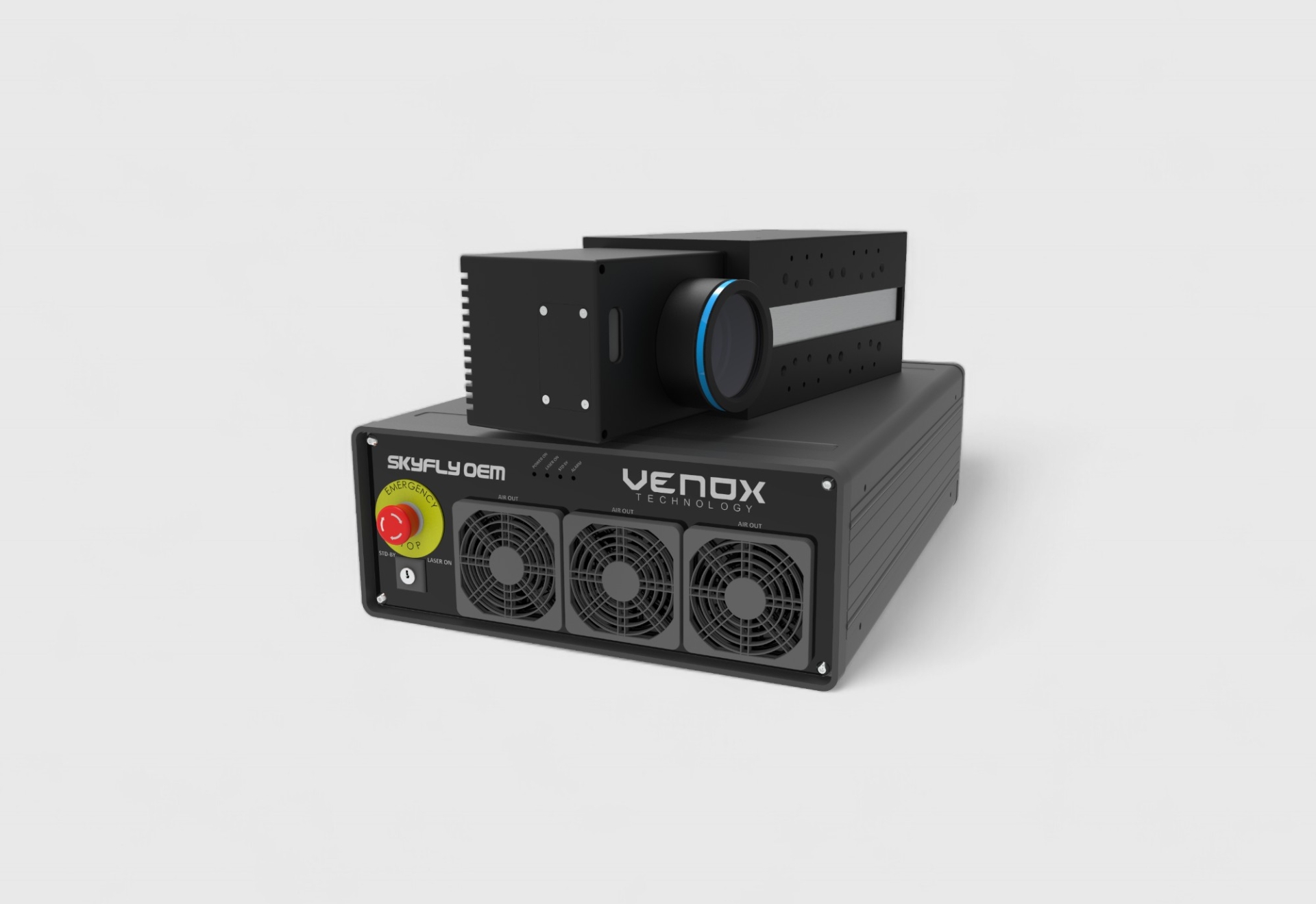
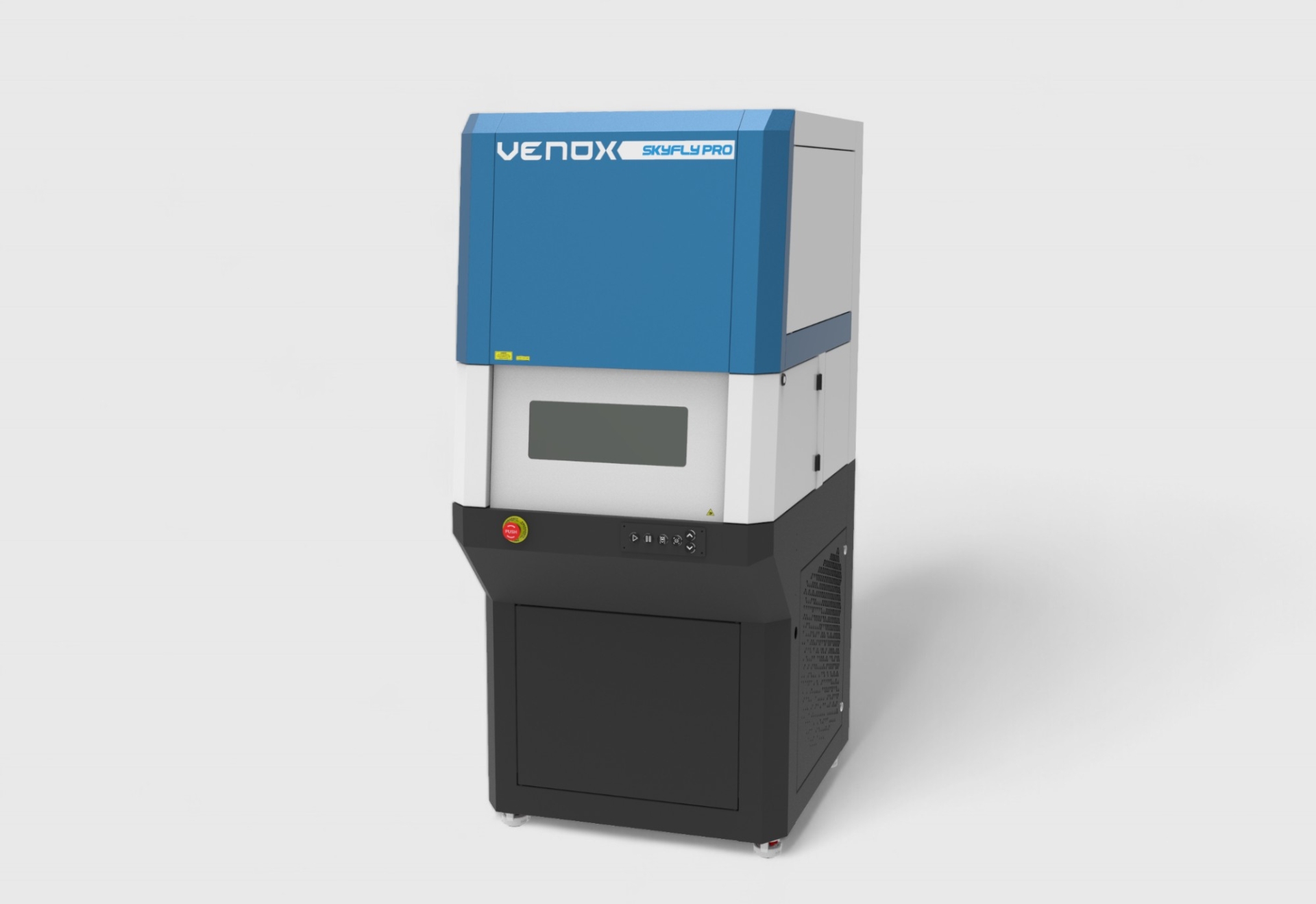
Laser marking machines are industrial systems used to create permanent, readable, and high-precision markings on products during production processes. Today, as needs such as traceability, quality control, brand visibility, and legal compliance increase on production lines, laser marking systems have become much more critical. A wide range of data, such as serial numbers, QR codes, DataMatrix codes, barcodes, logos, technical information, and part identification, can be applied to the product surface quickly and with long-lasting results, without requiring contact. :contentReference[oaicite:0]{index=0}
Especially in sectors such as automotive, defense, medical, electronics, machinery manufacturing, and metal processing, the use of laser marking machines is no longer just a preference, but is often seen as an operational necessity. This is because traditional labeling or ink-based methods may fade, deform, or fail to keep up with the speed of the production line over time. In contrast, laser marking machines offer a more sustainable solution with high repeatability and low consumable requirements. :contentReference[oaicite:1]{index=1}
For companies like Venox that provide industrial solutions, this technology is not just a machine category; it is also an important part of production safety, brand standardization, and digital manufacturing transformation. For this reason, businesses should evaluate the choice of the right laser marking machine not only according to current needs, but also according to future production plans. :contentReference[oaicite:2]{index=2}
How Do Laser Marking Machines Work and Why Are They Preferred?
Laser marking systems basically operate on the principle of applying a high-energy laser beam to a specific surface in a controlled manner. During this process, effects such as color change, carbonization, engraving, annealing, or micro-ablation can be created on the surface. Which type of marking should be used is determined according to the structure of the material, the intended use of the product, the desired contrast level, and the expected environmental durability. :contentReference[oaicite:3]{index=3}
Advantage of non-contact processing
One of the biggest advantages of using a laser marking machine is its ability to perform non-contact processing. Since no physical pressure is applied to the product surface, the risk of wear, deformation, or damage to delicate parts is reduced. This feature is particularly important for electronic components, medical parts, and thin metal surfaces. :contentReference[oaicite:4]{index=4}
Permanent and fade-resistant results
In industries where permanent marking is required, laser technology stands out. Serial numbers, production dates, lot information, or logos marked on the product can be much more resistant to friction, heat, chemical contact, and outdoor conditions. This makes the use of laser marking machines highly effective in terms of quality assurance and traceability. :contentReference[oaicite:5]{index=5}
High speed and compatibility with mass production
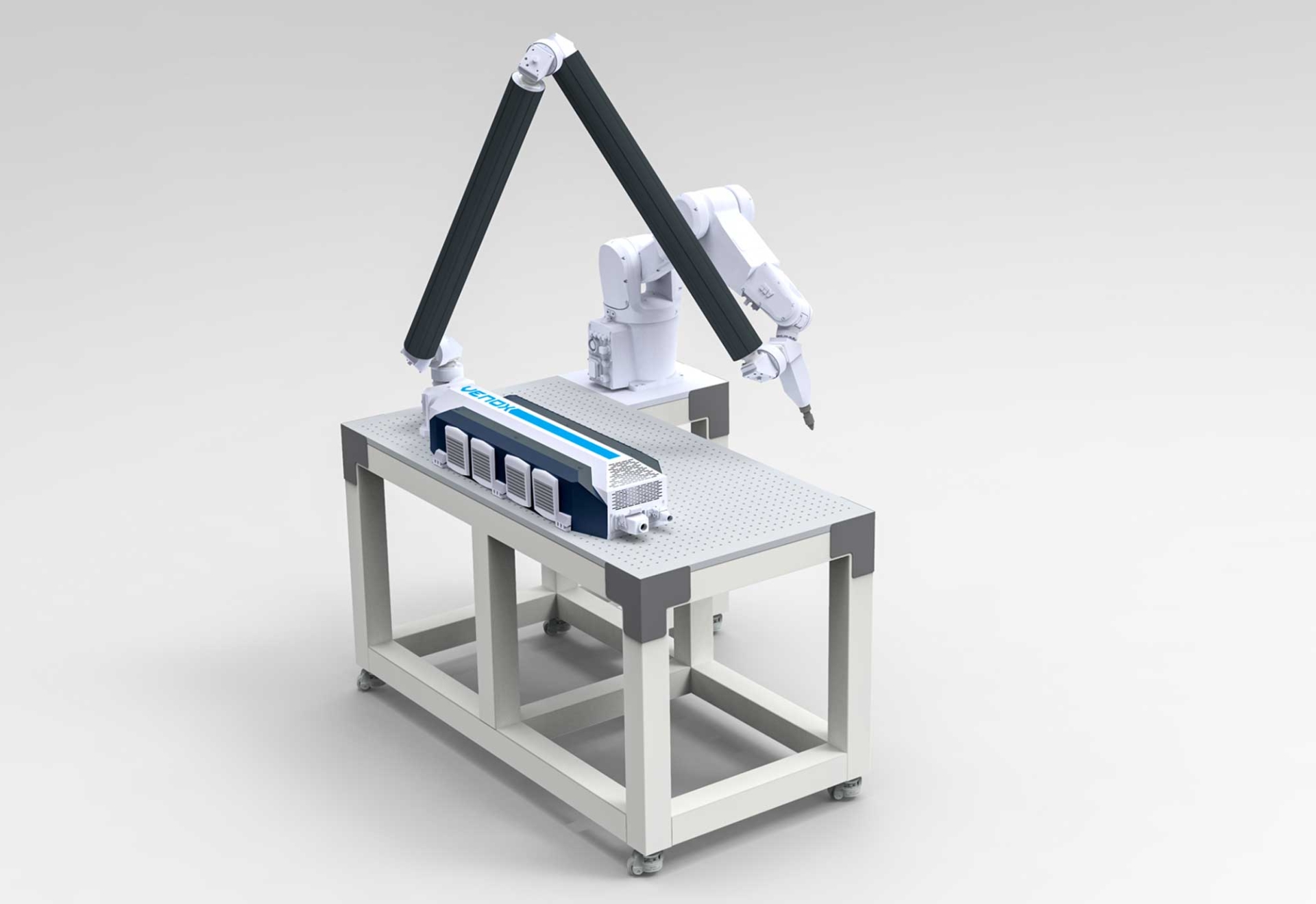
In modern production lines, even seconds matter. Since laser marking systems can be integrated into automation infrastructures, they can easily adapt to mass production processes. These machines, which can work in sync with conveyor systems, increase efficiency by offering low processing time per product. For this reason, laser marking machines are preferred not only for quality, but also for operational speed. :contentReference[oaicite:6]{index=6}
Low consumable cost
The need for continuously consumed items such as ink, solvent, labels, or printheads is lower in laser technology. This can reduce operating costs in the long term. Especially for companies with high-volume production, a laser marking machine can become more advantageous in terms of total cost of ownership. :contentReference[oaicite:7]{index=7}
Automation and data tracking support
In today’s production facilities, it is not enough just to mark the product; that marking must also be associated with data. Laser marking systems can be configured to work in integration with ERP, MES, quality control, and production tracking infrastructures. In this way, the code on each product can be linked to its production history, making retrospective analysis possible. :contentReference[oaicite:8]{index=8}
To review more detailed product options, you can be directed to the laser marking machines page, and to see different application structures, you can be directed to the laser marking systems page. :contentReference[oaicite:9]{index=9}
In Which Industries Are Laser Marking Machines Used?
Laser marking machines have a very wide range of applications. The main reason for this is their ability to work with high precision on different materials and to be customized according to production needs. Although each industry has different marking expectations, the common need is to obtain readable, permanent, and standardized marking. :contentReference[oaicite:10]{index=10}
Automotive industry
In the automotive industry, part traceability is a critical issue. Serial numbers, part codes, and production information are marked on engine parts, chassis components, metal labels, fasteners, and supplier products. Laser marking machines are preferred in this field because they offer high speed and clarity. In addition, their ability to integrate into automation lines provides a serious advantage in terms of production continuity. :contentReference[oaicite:11]{index=11}
Medical device and equipment manufacturing
In the medical industry, information such as UDI, serial number, and sterilization tracking must be processed reliably. Laser marking systems, which provide high readability without damaging the product surface, can be used in a wide range of applications from surgical instruments to implant components. In this industry, it is important not only that the marking is permanent, but also that it does not disrupt surface hygiene or material integrity. :contentReference[oaicite:12]{index=12}
Electronics and precision components
Marking on PCB components, connectors, micro parts, and electronic housings requires high precision. Laser marking machines are widely used in electronics manufacturing because they can produce clear and organized results even in small areas. They are an especially strong solution for applications such as QR codes, micro text, and product identification. :contentReference[oaicite:13]{index=13}
Metal processing and machinery manufacturing
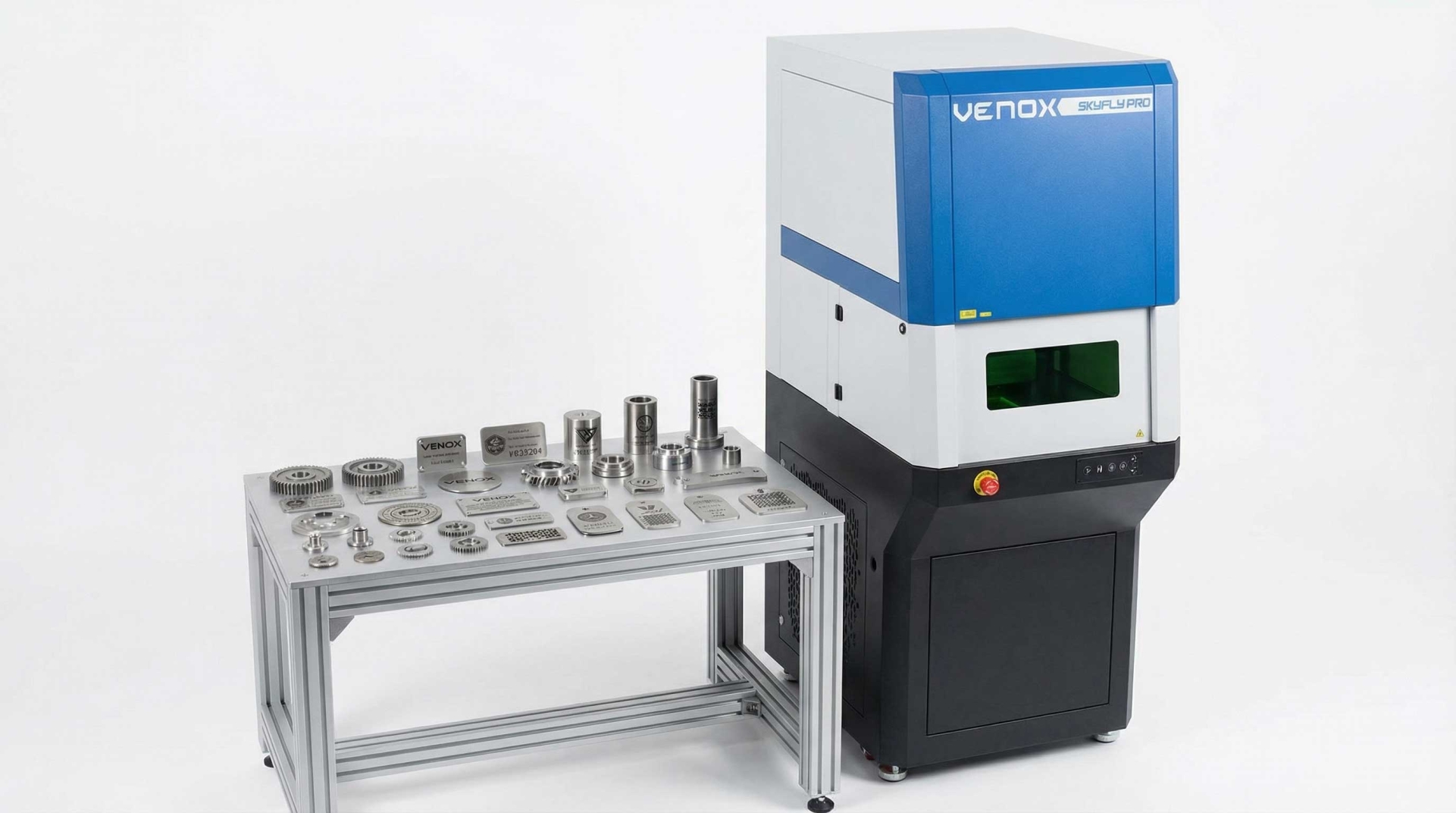
Laser marking machines stand out in permanent marking applications on stainless steel, aluminum, brass, and various alloys. Technical information, brand logos, model numbers, and production codes of machine parts can be applied using this method. This both facilitates service processes and supports the professional appearance of the product. :contentReference[oaicite:14]{index=14}
Defense and aerospace applications
In defense and aerospace, part identification, safety, and traceability are of the highest importance. Markings in these fields must be long-lasting, readable, and compliant with standards. Laser marking systems are preferred because they offer marking solutions resistant to harsh environmental conditions. :contentReference[oaicite:15]{index=15}
White goods and consumer products
White goods manufacturers and durable consumer goods producers can also use laser marking machines to apply model information, technical data, brand details, and production codes directly onto the product. This method supports both aesthetic appearance and functional data transfer at the same time. :contentReference[oaicite:16]{index=16}
Cables, plastics, and special applications
Laser marking is not limited to metals only. When the appropriate system is selected, effective results can also be achieved on plastics, coated surfaces, certain composites, and cable insulation. For this reason, laser marking machines can be adapted to many different production environments. :contentReference[oaicite:17]{index=17}
Why is choosing the right system important?
A single standard solution is not suitable for every manufacturer. Material type, production quantity, marking speed, integration level, font size, and readability expectations are decisive in system selection. Therefore, when investing in a laser marking machine, not only the initial price but also technical suitability, service support, software capability, and long-term usage scenarios should be evaluated together. :contentReference[oaicite:18]{index=18}
Content and conversion opportunity for Venox
This type of content is important not only for providing information, but also for directing the right visitor to the right page. For example, from this article, links can be provided to the fiber laser marking solutions page, to relevant solution pages for sector-based needs, and to the contact section for collecting inquiries. In this way, content not only generates traffic, but also transforms into a structure that creates commercial conversion. :contentReference[oaicite:19]{index=19}
Conclusion
Laser marking machines are one of the important production technologies in today’s industry that can meet expectations for speed, quality, traceability, and permanence at the same time. In many sectors, from automotive to medical, and from electronics to metal processing, laser marking systems provide businesses with both operational efficiency and professional product standards. A properly configured laser marking machine investment not only meets today’s production needs, but also strengthens the brand’s digital manufacturing infrastructure. :contentReference[oaicite:20]{index=20}
