
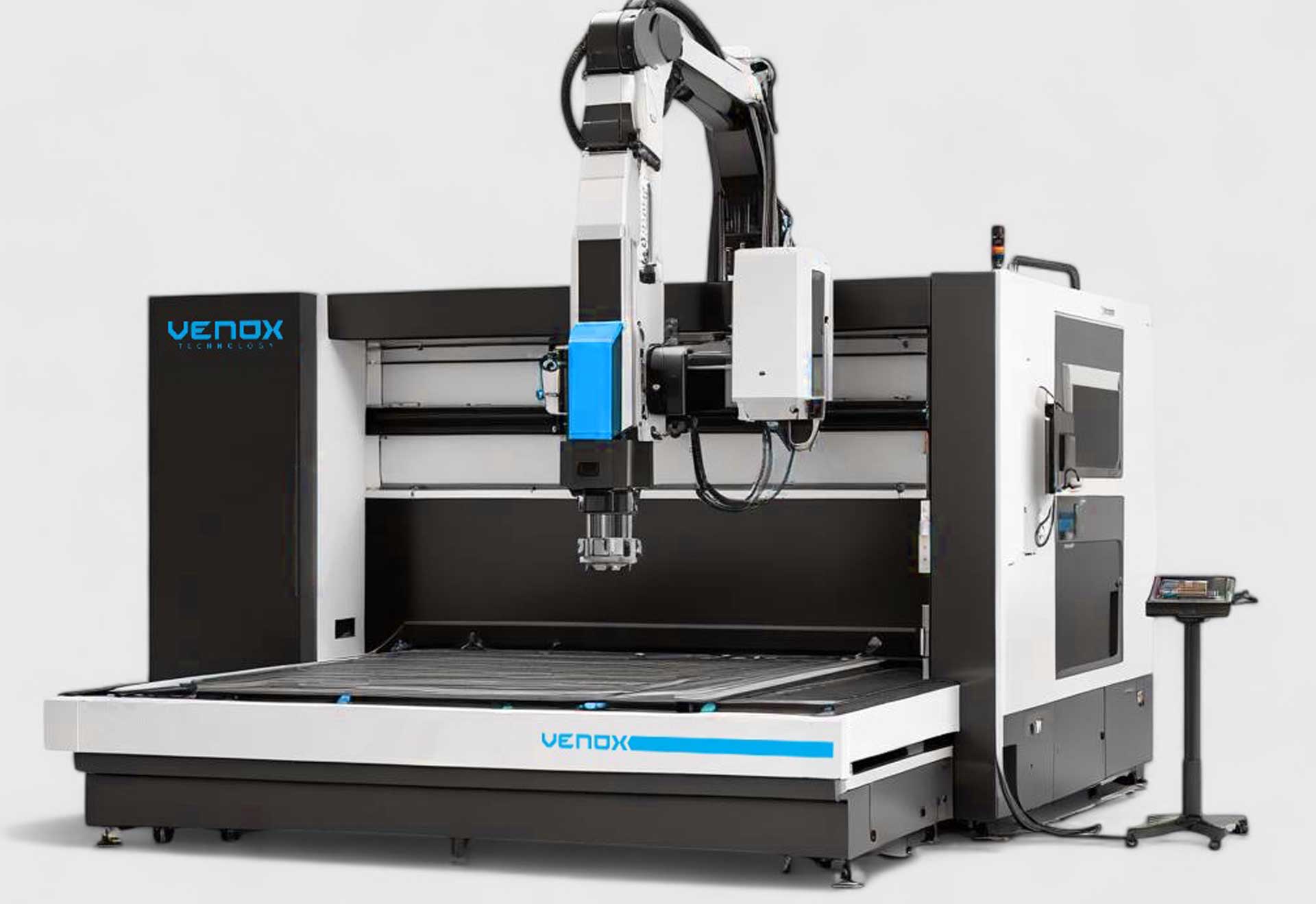


What Does Venox Manufacture? From Laser Marking Machine Production to Automation Systems
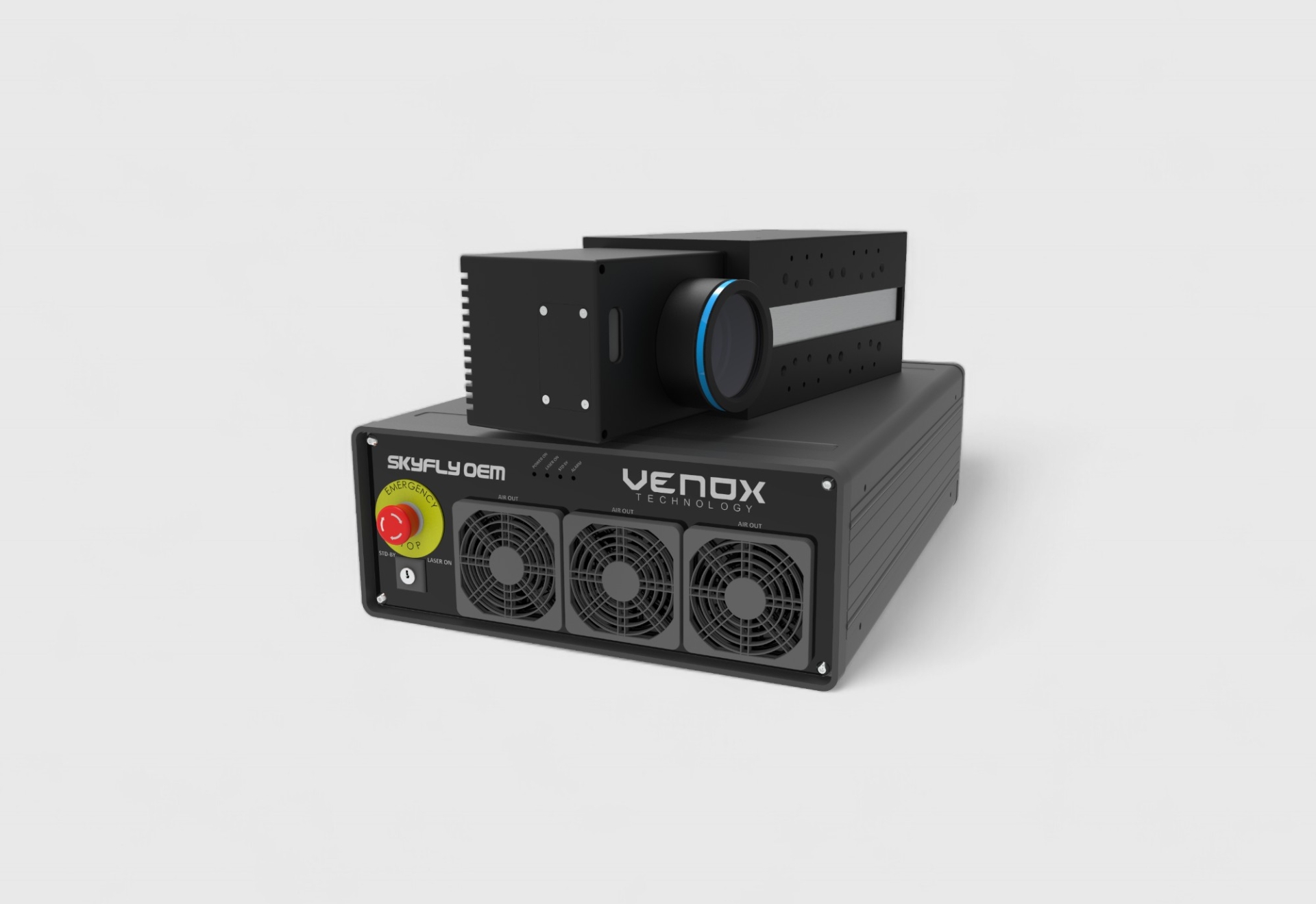
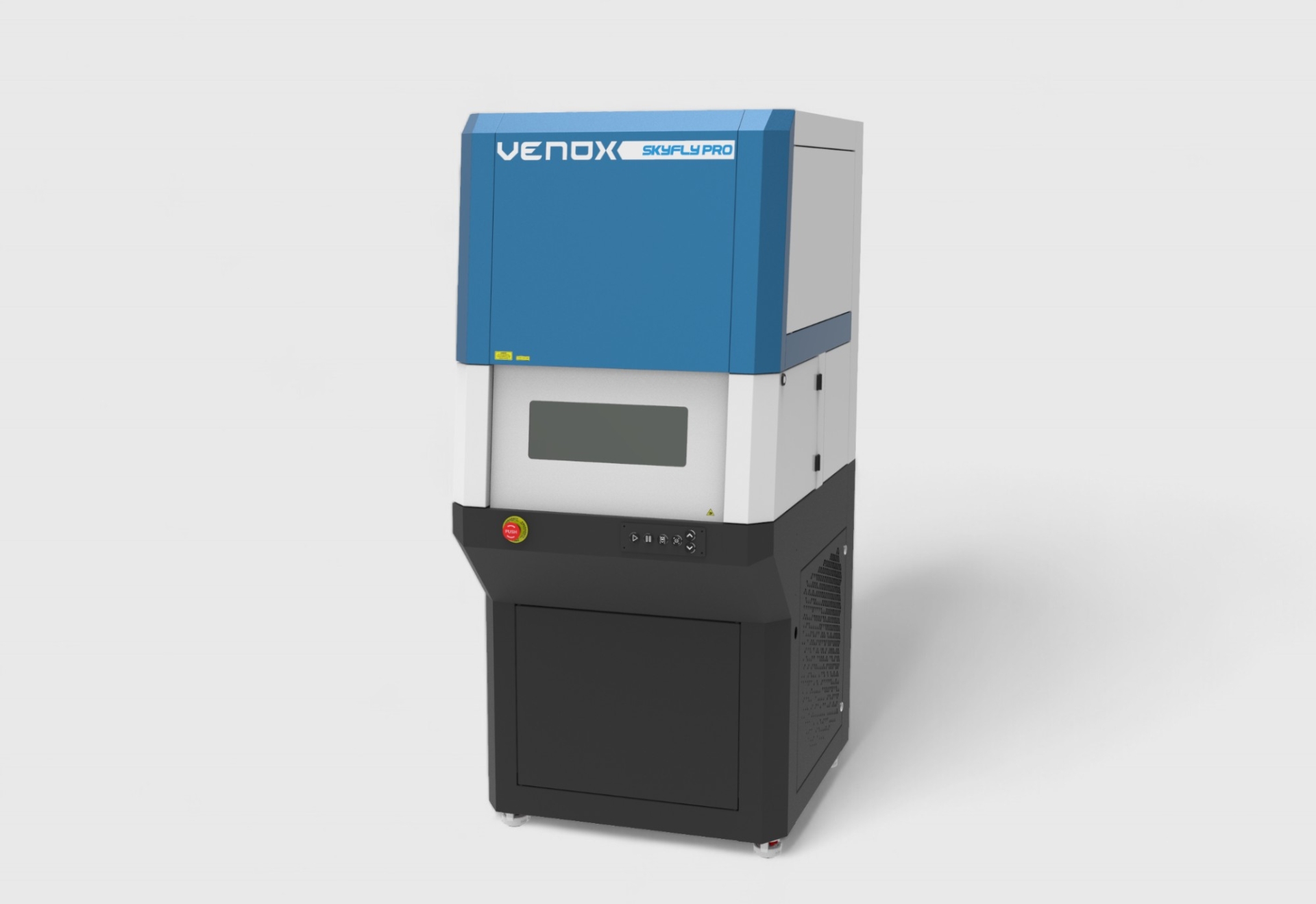
Venox is a technology brand that develops laser marking systems used in industrial production processes and solutions for integrating these systems into production lines. Although laser marking machines are the first products that come to mind when Venox is mentioned, the requirement may not always be limited to a standard standalone laser device.
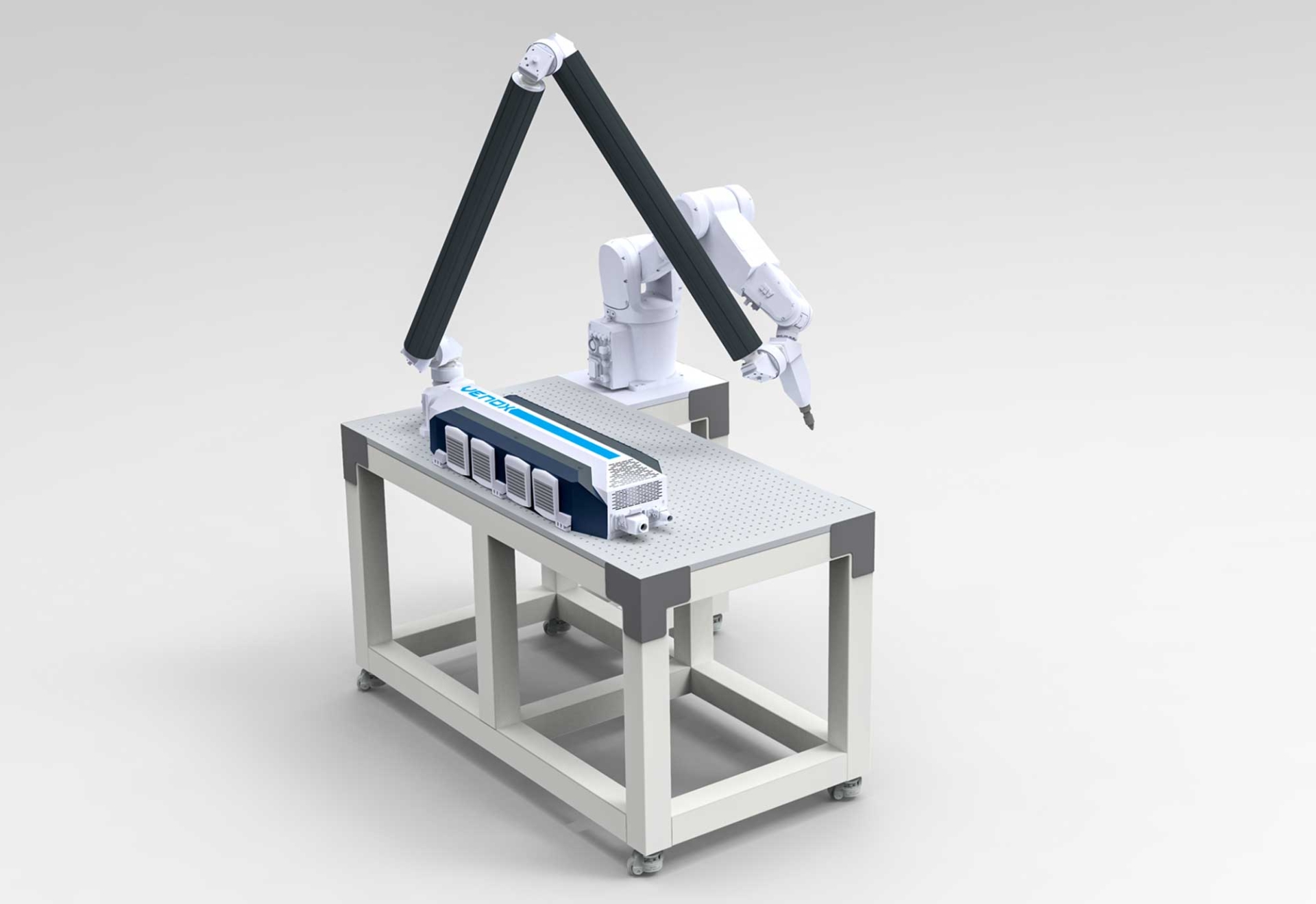
In modern manufacturing facilities, products may need not only to be marked, but also to have the correct part detected, the correct data generated automatically, the marking process performed, the code verified, and the entire process linked to the production system. For this reason, laser technology is considered together with automation, software, mechanical design, and data integration in many projects.
Venox's solution approach goes beyond the laser source at this point. A suitable system solution can be developed by evaluating the material and geometry of the product to be marked, production volume, cycle time, operator use, safety requirements, and the structure of the existing production line.
Thanks to this approach, a wide range of industrial requirements can be addressed, from marking metal parts with fiber lasers and marking sensitive plastics with UV lasers to standard marking enclosures and conveyor-based, camera-controlled automated systems.
Which Laser Marking Machines and Systems Does Venox Manufacture?
Fiber Laser Marking Machines
Fiber laser marking systems are among the important industrial solutions used particularly for permanently marking metal surfaces. Stainless steel, aluminum, carbon steel, brass, copper, and various metal alloys can be evaluated for fiber laser applications.
Venox fiber laser marking solutions can be used to apply logos, serial numbers, QR codes, DataMatrix codes, barcodes, production dates, technical information, and various types of variable data onto products.
The system does not consist solely of a laser source. The marking area, lens selection, laser power, mechanical enclosure, fixture structure, and software requirements are also determined according to the application.
For example, marking a high-resolution DataMatrix code on a small metal component and performing deep serial number engraving on a heavy machine part do not have the same system requirements. Therefore, the machine configuration should be created according to the actual application.
CO₂ Laser Marking Systems
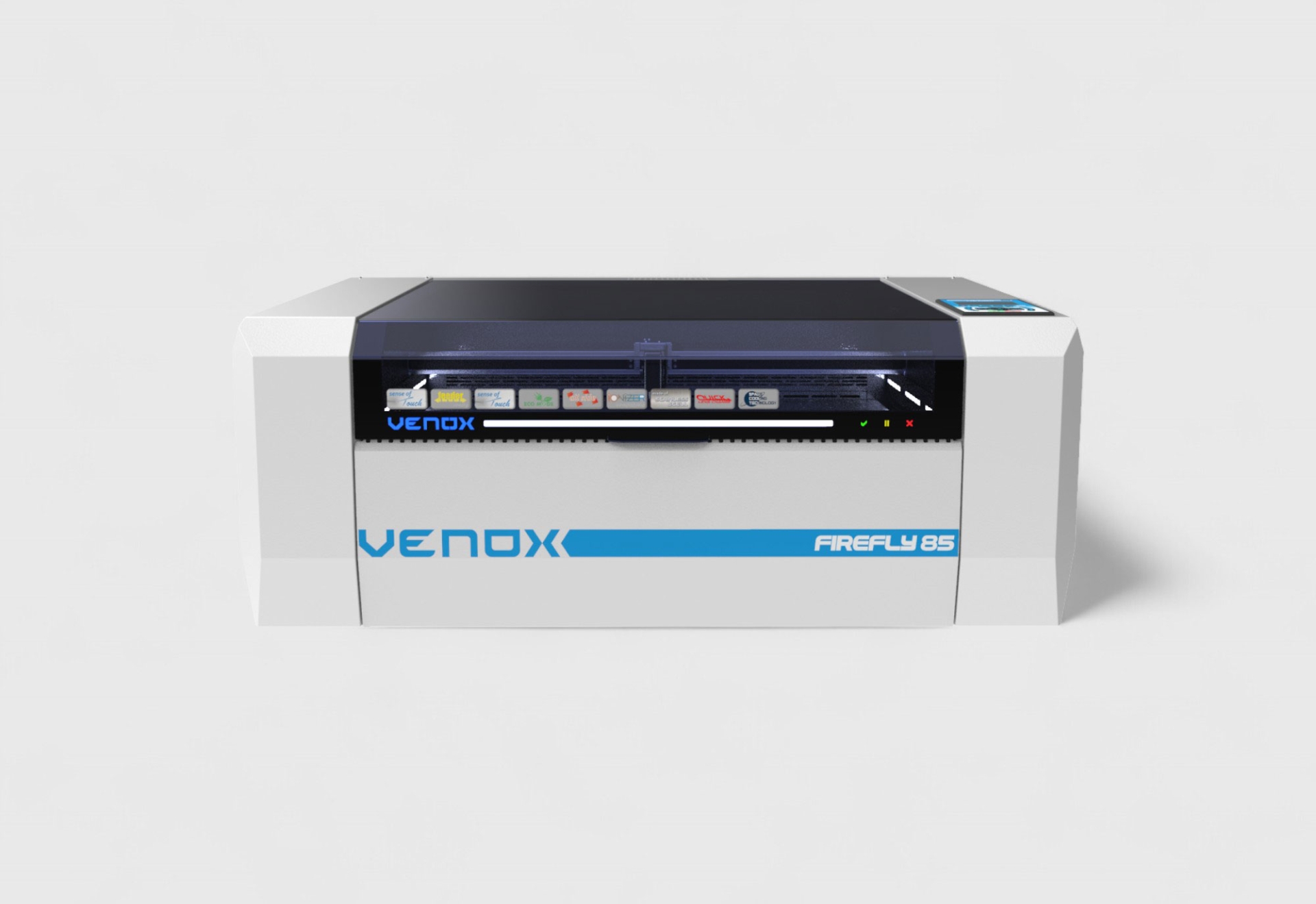
CO₂ laser technologies can be used particularly on wood, leather, paper, cardboard, certain plastics, and various organic materials. Applying logos, patterns, dates, codes, or text onto products is among the common application areas of CO₂ laser marking systems.
When evaluating Venox CO₂ laser systems, the material's response to the laser beam, marking area, production speed, and desired surface effect are taken into consideration.
In some applications, surface marking alone may be sufficient, while other products may require engraving or a more pronounced surface modification. Laser parameters and the optical configuration should be determined according to this objective.
For projects that also require cutting, laser cutting systems can be evaluated separately.
UV Laser Marking Systems
UV laser marking systems can be used particularly in applications requiring high precision and low heat impact. Sensitive plastics, electronic components, medical products, glass, and various special surfaces are among the areas where UV laser technology can be considered.
Thanks to its shorter wavelength, UV laser can create a more controlled surface effect on certain materials. This feature can provide an advantage in projects requiring small characters, microcodes, and high-resolution DataMatrix applications.
However, not every sensitive material necessarily needs to be marked with a UV laser. In Venox systems, the selection of technology should be evaluated according to sample testing, material properties, and production objectives.
Standard and Custom Laser Marking Machines
For some businesses, a standard laser marking machine is sufficient. The operator places the product into the fixture, selects the appropriate program, and performs the marking process. However, as the production structure becomes more complex, a standard machine alone may no longer be sufficient.
Large or heavy parts, products with different geometries, cylindrical surfaces, or components continuously moving along a production line may require a custom system design.
In such projects, custom enclosures, product fixtures, rotary axes, motorized Z axes, linear motion systems, automatic doors, or various mechanical solutions can be used.
Venox's laser marking machines can be evaluated not only as standard products but also as solutions that can be configured according to the production process.
Laser Marking Software and Variable Data Applications
In industrial laser marking, software is one of the most important components of the system. Although marking a fixed logo or text is a basic requirement, serial production may require different data to be applied to each product.
Serial numbers can be incremented automatically, production dates can be generated according to the system, information can be retrieved from a database, or separate recipes can be defined for different product groups.
Two-dimensional codes such as QR codes and DataMatrix codes can be generated dynamically during production. Thanks to this structure, the laser marking machine becomes not only a fixed printing system but also a digital station where production data is transferred onto the physical product.
How Does Venox Adapt Laser Systems to Automation and Production Lines?
Laser Marking Integrated into the Production Line
In high-volume manufacturing operations, manually placing products one by one into the laser machine may not be efficient. In such cases, the marking system can be integrated directly into the production line.
When the product reaches the marking station via a conveyor or another transport system, it can be detected by a sensor. The PLC system can trigger the laser marking station, and the required data for the relevant product can be transferred automatically to the system.
Once marking is completed, the product can continue to the next stage of the production line. In this way, the laser system becomes an integrated part of the production process rather than operating as a standalone machine.
It is important that the system is compatible with the actual production speed. Marking time, spacing between products, and other movements at the station should be evaluated together.
PLC, Sensor, and Automation Systems
In automated laser marking systems, PLC and sensor structures play an important role in controlling the process. Sensors can detect whether the product is in the correct position, the PLC system can determine which operation should be performed, and feedback can be sent to the production line once laser marking has been completed.
On production lines where different product models are processed, the product type can be identified automatically and the correct marking recipe can be activated.
This structure can reduce the risk of applying incorrect information to the wrong product and can decrease the number of manual operations in production.
The scope of automation varies depending on the project. Solutions can be developed at different levels, ranging from a simple triggering system to a fully automated product transport, marking, and quality control station.
Camera and Machine Vision Systems
Camera systems can be used in laser marking projects both before and after the marking process. Before marking, the position or orientation of the product can be determined. After marking, the processed code can be checked to verify whether it is correct.
Particularly in QR code and DataMatrix applications, a camera can be used to verify the readability of the code. This makes it possible to create a production station where not only the marking process itself but also the quality of the result is verified.
In some projects, the camera system can detect specific reference points on the part and help automatically correct the marking coordinates.
Such machine vision solutions can provide an advantage particularly in production processes where the position of the product is not exactly the same in every cycle.
ERP, MES, and Database Integration
In businesses where production traceability is important, the laser marking system can operate together with ERP, MES, or different databases.
The serial number or code information to be applied to the product can be retrieved from the central system. Once the laser marking process is completed, the result can be sent back to the central production software.
This method makes it possible to establish a connection between the physical product and the digital production record. The date, production line, or batch in which the product was manufactured can later be queried using the serial number.
This structure can be important in the automotive, electronics, defense, medical, and other industries requiring high levels of traceability.
Custom Fixture and Mechanical System Design
For a laser marking machine to produce accurate results, the part must be positioned correctly in relation to the laser. For this reason, fixture design is not merely a mechanical detail of the system but also an important component of marking quality.
Product-specific fixtures can ensure that the part is held in the same position during every cycle. A rotary axis can be used for cylindrical products, a motorized Z axis for parts with varying heights, and different motion systems for large surfaces.
Operator ergonomics should also be considered in applications involving heavy products. How the part is loaded into the system, the operator's working and access area, and occupational safety are all elements of machine design.
Traceability and Quality Control Solutions
Venox laser systems can be used not only to apply logos or text to products but also as part of traceability processes.
A unique serial number or DataMatrix code can be applied to each product. The code can be verified using a camera system, and the result can be recorded in the production database.
This structure makes it possible to establish a relationship between the physical identity of the product and its digital record within the production system. If a quality issue occurs after production, the history of the relevant product can be accessed more easily.
For more detailed solutions regarding product traceability, laser marking, coding, camera systems, and automation structures should be evaluated together.
The Role of Application Testing in Venox's Production Approach
In industrial laser systems, catalog information alone may not be sufficient to select the correct machine. Two materials identified by the same name may respond differently to the laser beam.
For this reason, performing sample tests on the actual product is an important stage in system selection for Venox laser marking projects. Marking contrast, cycle time, depth, readability, and surface effect can be evaluated during testing.
At the same time, the results of different laser technologies can be compared. Which of the fiber, CO₂, or UV laser technologies is more suitable for the application can be determined more clearly by testing on the actual product.
Based on the test results, the laser source, power, lens, marking area, and other system components can be configured according to the production requirements.
As a result, Venox's production and solution capabilities are not limited to standard laser marking machines. Laser technology can be combined with mechanical design, software, automation, machine vision, and production line integration to create application-specific systems.
To explore Venox's different laser solutions, you can visit the laser marking machines page.
For information about selecting a fiber, CO₂, or UV laser system for your production, custom machine design, automation integration, or sample application testing, you can contact Venox.
