
What Is a Laser Marking Machine and What Does It Do?
A laser marking machine is an industrial marking system that enables products, parts, and different surfaces to be marked permanently. This machine is used to apply serial numbers, barcodes, QR codes, DataMatrix codes, production dates, batch numbers, logos, model information, and technical symbols to product surfaces without physical contact.
In modern manufacturing processes, simply producing products is no longer sufficient. Every product must be identifiable, traceable, and marked in compliance with quality control processes. For this reason, the laser marking machine has become an important technology in manufacturing in terms of traceability, permanent coding, and product identification.
What Is a Laser Marking Machine?
A laser marking machine is a system that creates permanent markings by focusing a concentrated laser beam onto the product surface. No physical contact is applied to the product surface during the process. Depending on the structure of the material, the laser beam can create effects such as color change, engraving, annealing, foaming, or carbonization on the surface.
Thanks to this technology, clear, readable, and long-lasting marking results can be achieved on metals, plastics, glass, ceramics, coated surfaces, and various industrial materials. When used with the correct laser source and parameters, laser marking offers a more durable solution than traditional labeling and ink printing methods.
What Does a Laser Marking Machine Do?
A laser marking machine is used to apply permanent information to a product. This information creates the identity of the product and helps the manufacturing process proceed in a more controlled manner. Correct coding of products is particularly important for businesses engaged in mass production.
With a serial number, QR code, or barcode applied to the product surface, it is possible to track the date, production line, and batch in which the product was manufactured. This structure provides significant advantages for quality control, inventory management, warranty processes, after-sales service, and product recall operations.
How Does a Laser Marking Machine Work?
A laser marking machine directs the beam emitted from the laser source onto the designated surface through optical systems. The text, logo, code, or graphic to be processed is prepared using the marking software. The system then performs the marking process by moving the laser beam across the surface according to the specified parameters.
Because the marking process is computer-controlled, it provides high precision and repeatability. Parts within the same product group can be marked in the same position, with the same clarity, and in the same format. This feature is particularly important for achieving consistent quality on mass production lines.
What Information Can a Laser Marking Machine Process?
A laser marking machine can permanently apply many different types of data to a product surface. This information can be used for both product identification and production tracking.
- Company logo
- Product name and model code
- Serial number
- Batch and lot number
- Production date
- Expiration date
- Barcode
- QR code
- DataMatrix code
- Technical symbols
- Warning and safety markings
Which Materials Can Be Marked with a Laser Marking Machine?
Laser marking technology can be used on different materials with the correct laser source and suitable settings. Since each material reacts differently to the laser beam, surface analysis and test marking are important before the application.
Laser Marking on Metal Surfaces
Laser marking is widely used on stainless steel, aluminum, brass, copper, titanium, and coated metal surfaces. Serial numbers, part codes, QR codes, DataMatrix codes, and logos can be applied to metal parts.
Fiber laser marking technology is particularly preferred for metal surfaces. Permanent metal marking is an important requirement in the automotive, machinery manufacturing, defense, medical, and metalworking industries.
Laser Marking on Plastic Surfaces
Laser marking on plastic products can create color change, foaming, or surface effects depending on the chemical structure of the material. It can be applied to electronic enclosures, plastic fasteners, medical plastic parts, cable labels, and packaging components.
Material testing is important in plastic marking applications because not every type of plastic reacts in the same way to the same laser source. When the correct system is selected, clear and permanent markings can be achieved on plastic products.
Laser Marking on Glass, Ceramic, and Coated Surfaces
Laser marking on glass and ceramic surfaces requires precise parameter settings. Aesthetic and readable marking results can be achieved with the correct power, speed, and focus settings. On coated surfaces, the laser beam can create contrast on the coating to produce the marking.
What Are the Advantages of a Laser Marking Machine?
A laser marking machine offers many advantages in industrial manufacturing. Its contactless operation, permanent results, and lack of consumable requirements make this technology an efficient solution for different industries.
Provides Permanent Marking
Laser marking applies information directly to the product surface. This reduces risks such as labels falling off, ink being erased, or printed information deteriorating over time. Permanent marking provides a significant advantage, particularly for long-lasting products.
Performs Contactless Processing
No physical contact is applied to the product surface during laser marking. This feature helps sensitive parts to be marked without damage. Contactless processing is an important advantage for electronic, medical, and thin metal parts.
Requires No Consumables
In most applications, the laser marking process does not require consumables such as ink, labels, solvents, or ribbons. This can reduce operating costs in the long term and provide a cleaner working environment in the production area.
Offers High Precision
Small text, detailed logos, microcodes, QR codes, and DataMatrix applications can be processed with high precision using a laser marking machine. This feature enables readable markings to be created on small surfaces.
In Which Industries Is a Laser Marking Machine Used?
A laser marking machine can be used in many industries that require product identification and permanent coding. Its applicability to different types of materials makes this technology a solution with a wide range of uses.
- Automotive and spare parts manufacturing
- Machinery manufacturing
- Metalworking industry
- Medical device and surgical equipment manufacturing
- Electronic component manufacturing
- Defense industry
- Plastic injection molding
- Packaging applications
- Home appliance manufacturing
- Jewelry, accessories, and promotional products
Laser Marking Machines for Traceability in Manufacturing
Traceability is one of the fundamental components of quality control in modern manufacturing. The ability to track a product’s production history makes it easier to identify potential sources of error. A laser marking machine supports this process by applying a permanent serial number, QR code, or DataMatrix code to the product.
Codes applied to the product can be integrated with production tracking software, warehouse management, and after-sales service processes. This allows every stage of the product journey, from manufacturing to delivery to the customer, to be monitored in a more controlled manner.
Barcode and QR Code Processing with a Laser Marking Machine
Barcodes, QR codes, and DataMatrix codes enable products to be identified quickly by digital systems. These codes can be applied permanently to product surfaces using a laser marking machine. Code readability is important for production line and quality control processes.
Before implementation, barcodes and QR codes should be tested with actual readers. With the correct contrast, dimensions, and surface selection, laser marking provides a powerful solution for digital traceability.
Suitable for Integration into Automation Lines
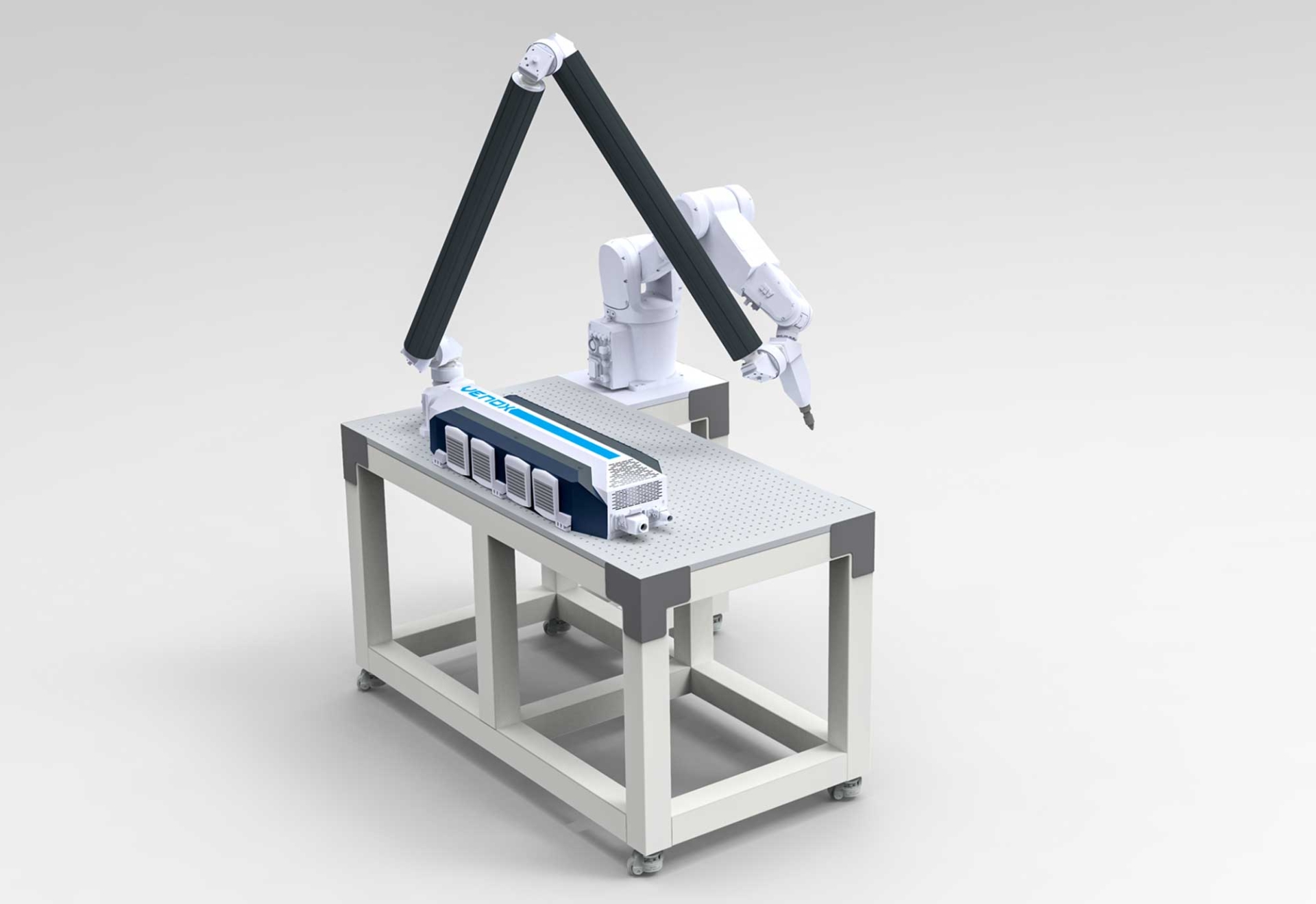
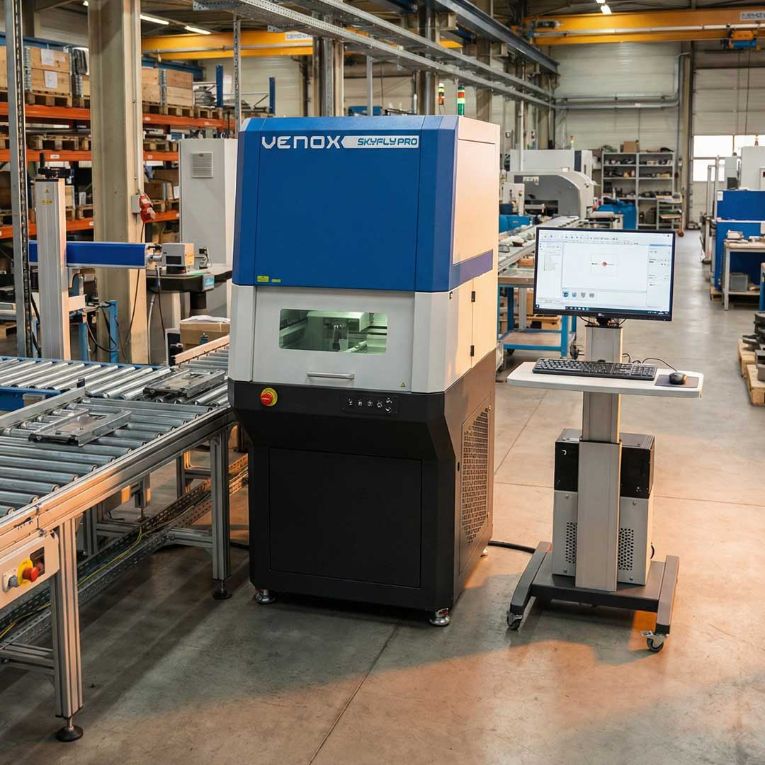
A laser marking machine can be used at manual stations or configured for integration into production lines. It can operate together with conveyor systems, robotic arms, PLC infrastructures, camera systems, and barcode readers.
Thanks to automation integration, products can be detected automatically as they move along the line, marked with the correct data, and included in the quality control process. This structure provides speed, accuracy, and consistent quality in mass production.
What Should Be Considered When Selecting a Laser Marking Machine?
Manufacturing requirements should be analyzed in detail when selecting the correct laser marking machine. The material to be marked, production speed, coding expectations, and automation requirements may differ for each business.
- The type of material to be marked should be determined.
- The laser source should be selected according to the application.
- The marking area and product dimensions should be evaluated.
- The readability of QR codes, barcodes, and DataMatrix codes should be tested.
- The production line speed should be taken into consideration.
- The need for automation integration should be analyzed.
- Technical service and after-sales support processes should be evaluated.
Venox Laser Marking Machine Solutions
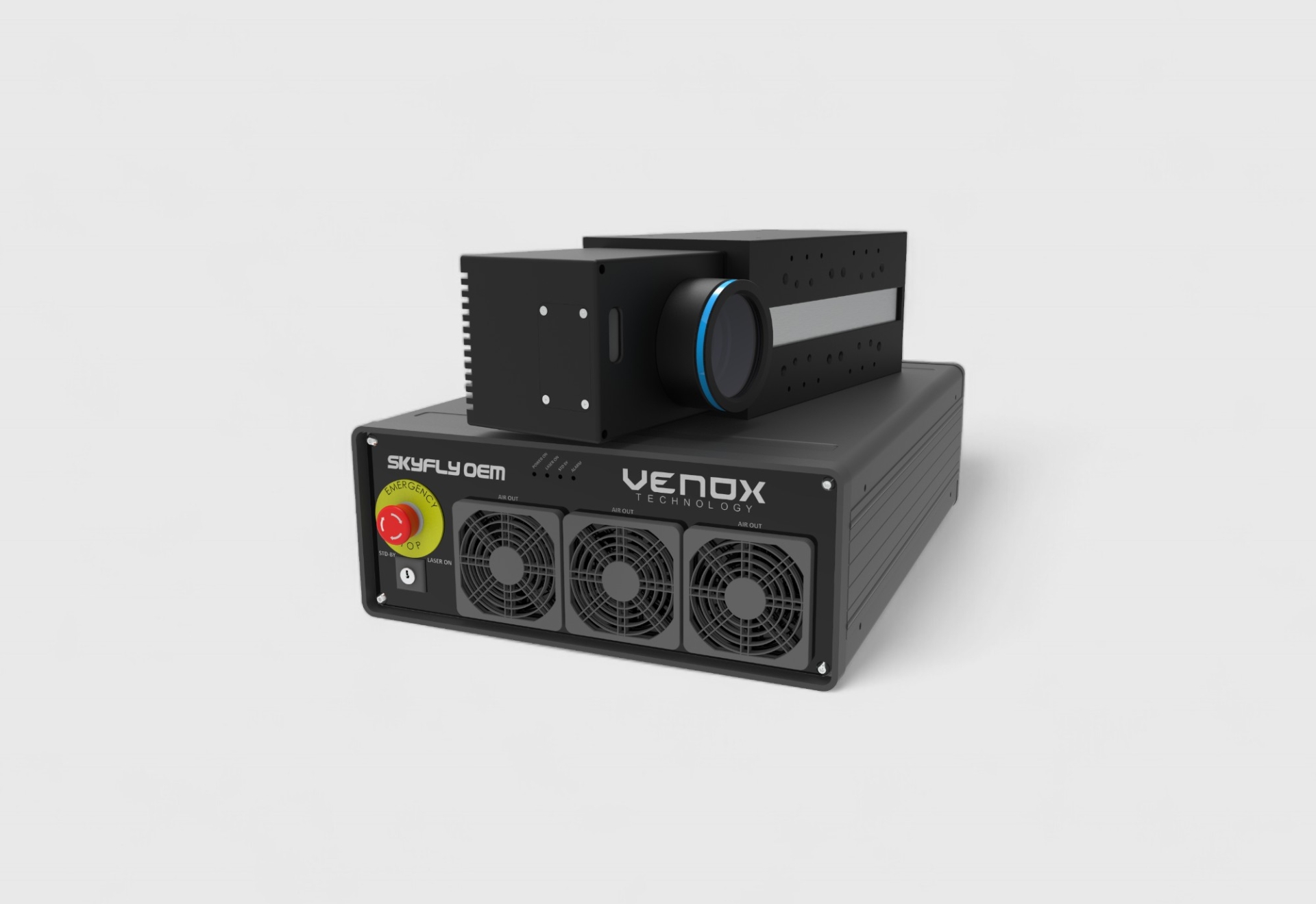
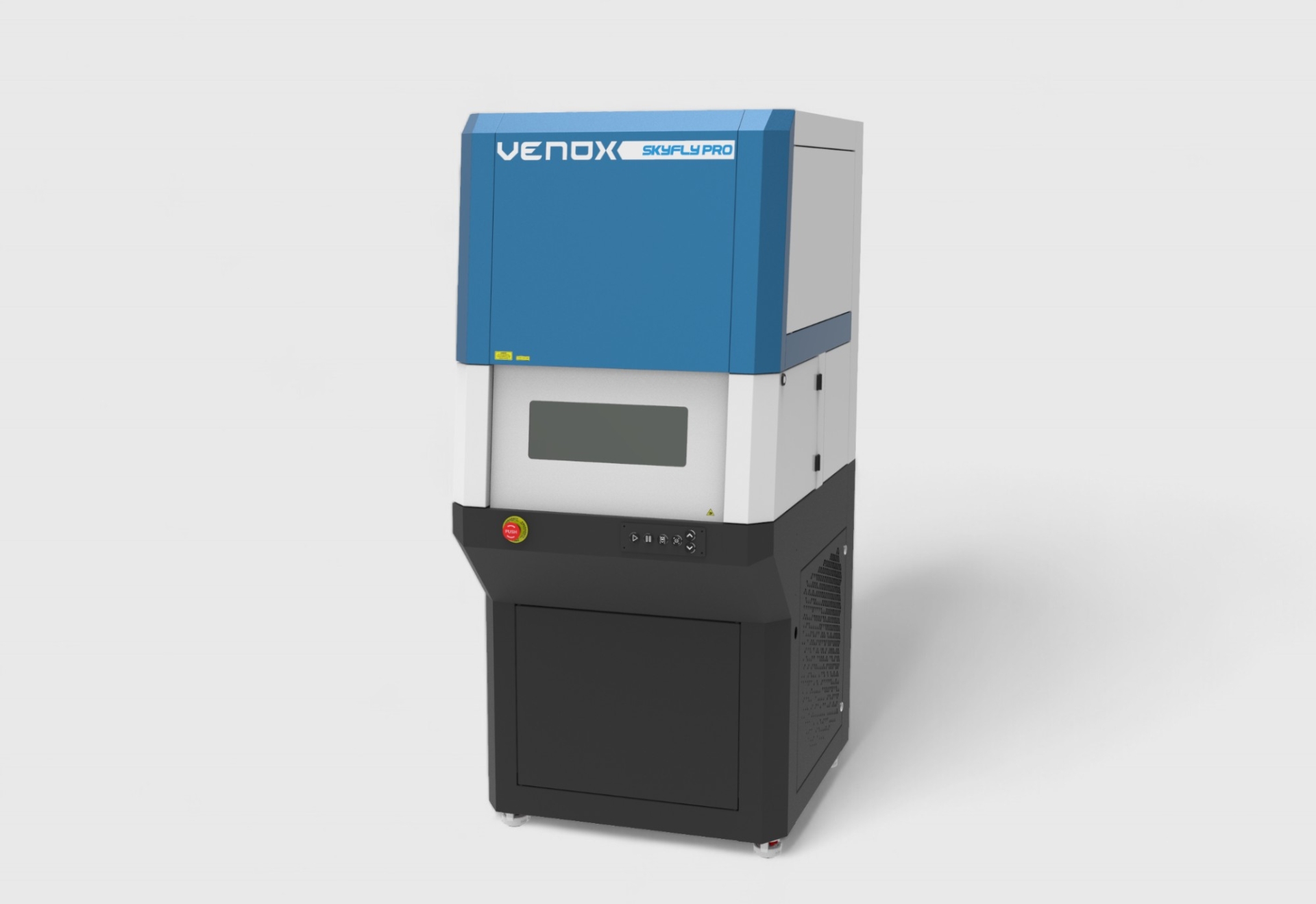
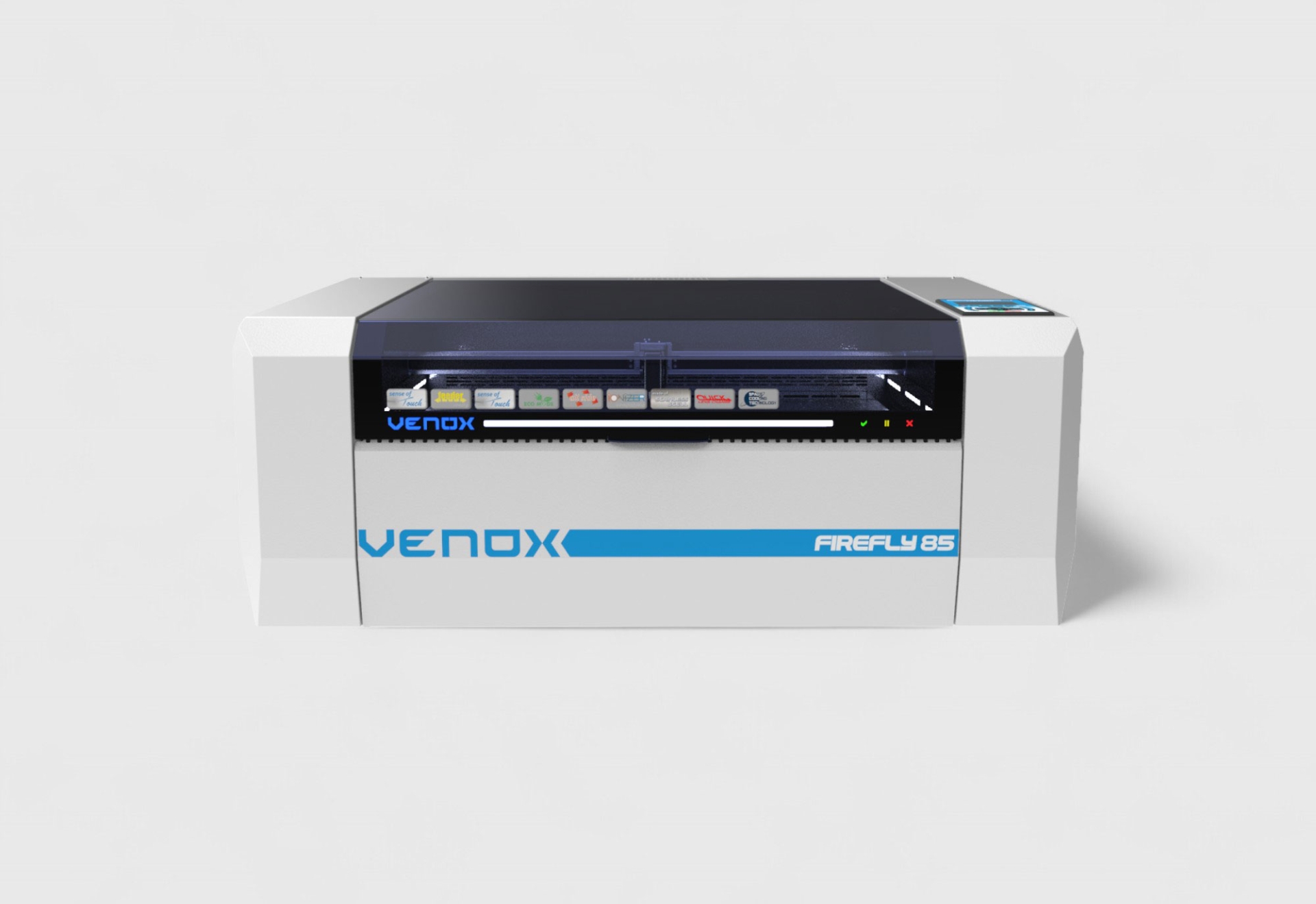
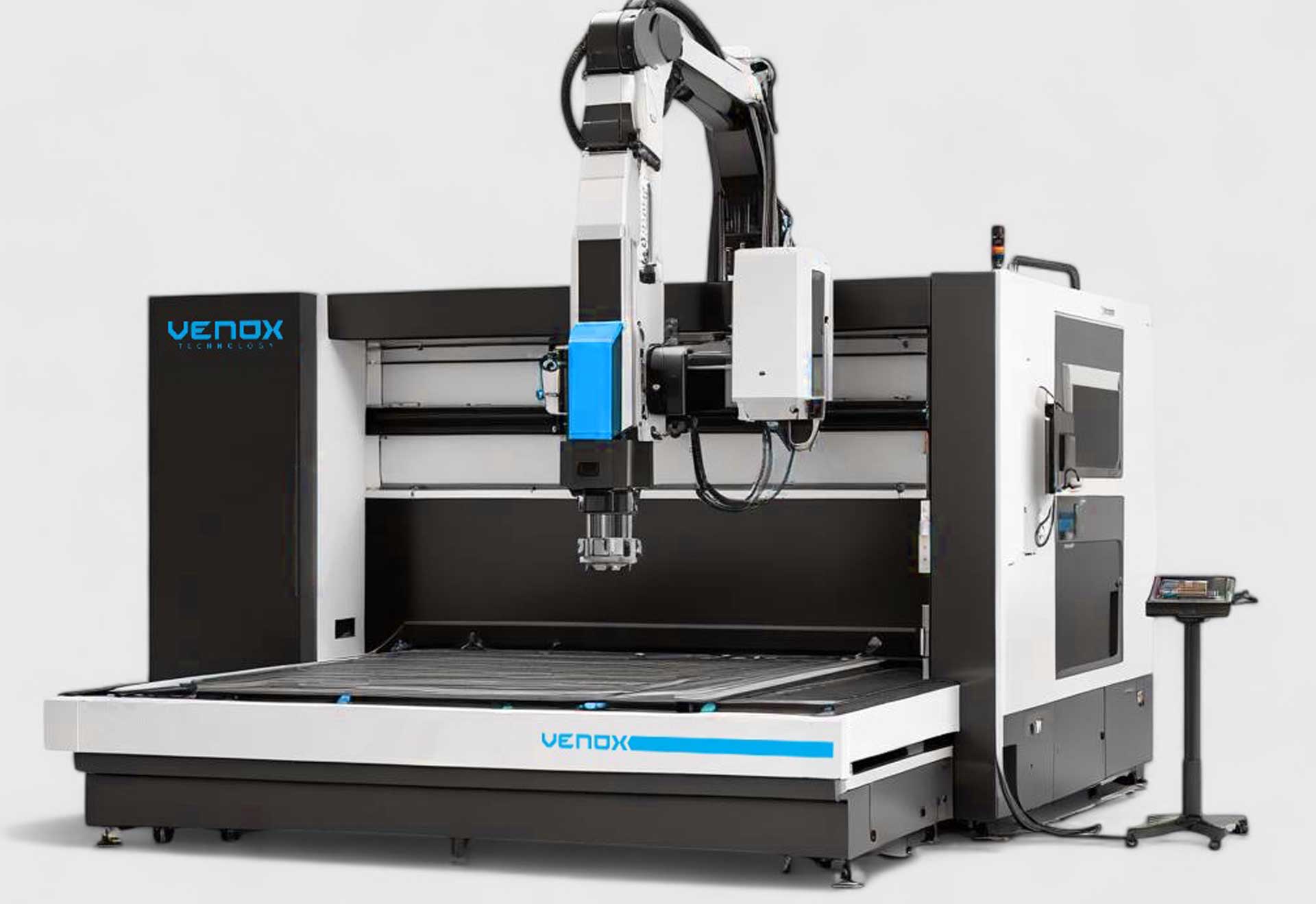
Venox offers permanent, fast, and reliable marking applications with Laser Marking Machine solutions designed to meet the manufacturing requirements of different industries. The appropriate system can be selected by evaluating the material of the product to be marked, production capacity, coding requirements, and automation expectations together.
You can benefit from Venox laser technologies to strengthen product identification, permanent coding, and traceability in your manufacturing processes. To obtain detailed information, have your products analyzed, or request a quotation, you can contact the Venox team through the Contact Us page.
Conclusion: A Laser Marking Machine Provides a Permanent Solution for Manufacturing
A laser marking machine is an important industrial technology that enables products to be marked permanently, clearly, and professionally. Its ability to be used on metal, plastic, glass, ceramic, and coated surfaces makes it a preferred solution in many industries.
Laser marking machines provide businesses with long-term advantages in product identification, barcode and QR code processing, serial number marking, quality control, and traceability processes. When the correct system is selected, manufacturing becomes more controlled, reliable, and efficient.
Frequently Asked Questions
What is a laser marking machine?
A laser marking machine is an industrial marking system that permanently applies serial numbers, barcodes, QR codes, logos, and technical information by focusing a laser beam onto the product surface.
What does a laser marking machine do?
It is used in manufacturing processes such as product identification, permanent coding, traceability, quality control, and barcode and QR code processing.
Which materials can be marked with a laser marking machine?
Laser marking can be applied to metal, plastic, glass, ceramic, coated surfaces, and some organic materials. The correct laser source should be selected to achieve suitable results.
Does a laser marking machine require consumables?
In most applications, the laser marking process does not require consumables such as ink, labels, solvents, or ribbons.
How can I obtain information about Venox laser marking machines?
To learn more about Venox’s laser marking solutions, you can review the Laser Marking Machine page or contact the Venox team through the contact page.
