

What Is Industrial Laser Cutting? A Guide to Precision Manufacturing
Industrial laser cutting is one of the modern manufacturing technologies that enables highly precise cutting of metals and various industrial materials. The laser beam is focused onto the surface to be cut, allowing the specified geometry to be formed with precision. This method is preferred in many industries due to advantages such as speed, repeatability, low material waste, and high surface quality.
Traditional cutting methods may involve mechanical contact, tool wear, or wider tolerances. Industrial laser cutting, on the other hand, offers a more controlled manufacturing process thanks to its contactless operating principle. Laser cutting technology provides significant advantages, particularly in applications involving complex geometries, fine details, and mass production.
Key Features of Industrial Laser Cutting Technology
How Does Industrial Laser Cutting Work?
In industrial laser cutting systems, a high-intensity laser beam is focused onto the material surface through optical components. The focused energy causes the material to melt, vaporize, or be removed from the cutting area with the assistance of a cutting gas.
The cutting head follows the geometric path defined by the CNC control system. This allows the shape specified in a technical drawing or CAD file to be precisely reproduced on the material.
The cutting result depends on parameters such as laser power, focus adjustment, cutting speed, material type, thickness, and the assist gas used. Therefore, proper system configuration directly affects manufacturing quality.
Which Materials Can Be Processed?
Industrial laser cutting can be used with various material groups. However, its most common application is in the metalworking industry.
- Stainless steel
- Carbon steel
- Aluminum
- Brass
- Copper
- Galvanized sheet metal
- Various metal alloys
- Certain non-metallic materials with suitable systems
The type and thickness of the material to be cut are among the key criteria for determining the appropriate laser source and system power.
Advantages of Laser Cutting in Precision Manufacturing
In precision manufacturing, components must be cut according to technical drawings with tight tolerances. Thanks to their CNC-controlled structure, laser cutting systems enable complex geometries to be processed with high accuracy.
Small holes, narrow channels, fine contours, and detailed components can be cut with high precision using a suitable system. This is particularly important in machinery manufacturing, automotive, electronics, defense, and precision metalworking applications.
Repeatability also makes it easier to maintain dimensional consistency when producing large quantities of the same component.
What Are the Benefits of Contactless Cutting?
Industrial laser cutting is a contactless process. The cutting head does not apply physical pressure to the material. As a result, requirements associated with mechanical tool wear or cutting tool replacement are reduced.
The contactless process helps reduce the risk of deformation, particularly in thin materials. It also provides greater flexibility in cutting directions and geometries for complex components.
However, the thermal effects generated during cutting must be controlled according to the application. With appropriate power, speed, and gas settings, the heat-affected zone can be minimized.
Contributes to Higher Production Speed
Laser cutting systems can provide high cutting speeds for suitable materials and thicknesses. CNC-controlled operation reduces manual cutting steps and enables a more automated manufacturing process.
In mass production, different components can be arranged and cut on the same sheet through layout optimization. This improves material utilization and allows more components to be produced within the same production time.
When combined with automatic loading, unloading, and material feeding systems, a laser cutting line can operate more continuously.
Helps Reduce Material Waste
In industrial laser cutting, components can be arranged on a sheet or plate using software. This layout optimization process, known as nesting, reduces the spacing between parts and allows more products to be produced from the same material.
Proper layout, precise cutting, and a narrow cutting kerf can reduce material loss. This provides significant economic advantages, particularly when processing high-cost materials such as stainless steel, aluminum, or special alloys.
In Which Industries Is It Used?
Industrial laser cutting can be used in many industries that require precision metal components and high manufacturing quality.
- Machinery and equipment manufacturing
- Automotive and automotive supply industry
- Metalworking industry
- Defense industry
- Electrical and electronic equipment manufacturing
- Home appliance manufacturing
- Ventilation and air conditioning systems
- Industrial kitchen equipment
- Furniture and decorative metal manufacturing
- Custom metal component manufacturing
Since the materials to be cut, component geometries, and production capacities may vary between industries, system selection should be tailored to the specific application.
Laser Cutting Efficiency Through Automation
Industrial laser cutting systems can be used not only as standalone cutting machines but also as part of fully automated production lines. Automatic sheet loading, unloading, storage, and part sorting systems can improve production efficiency.
With CNC and production software, cutting programs can be prepared digitally. Production sequences, material types, and cutting geometries can be managed through the system.
This approach reduces operator intervention, particularly in high-volume manufacturing, and creates a more controlled and repeatable production process.
What Should Be Considered When Selecting an Industrial Laser Cutting System?
Choosing the right laser cutting system should not be based solely on machine power. The entire range of production requirements must be analyzed.
- The type of material to be cut should be determined.
- The maximum material thickness should be calculated.
- Component dimensions and the working area should be evaluated.
- Daily production capacity should be determined.
- The required cutting precision and surface quality should be defined.
- The need for automatic loading and unloading should be evaluated.
- Software and nesting capabilities should be examined.
- Technical service and after-sales support should be considered.
Evaluating the actual production scenario helps prevent the selection of a system that is either unnecessarily oversized or insufficient for manufacturing requirements.
Venox Industrial Laser Cutting Solutions
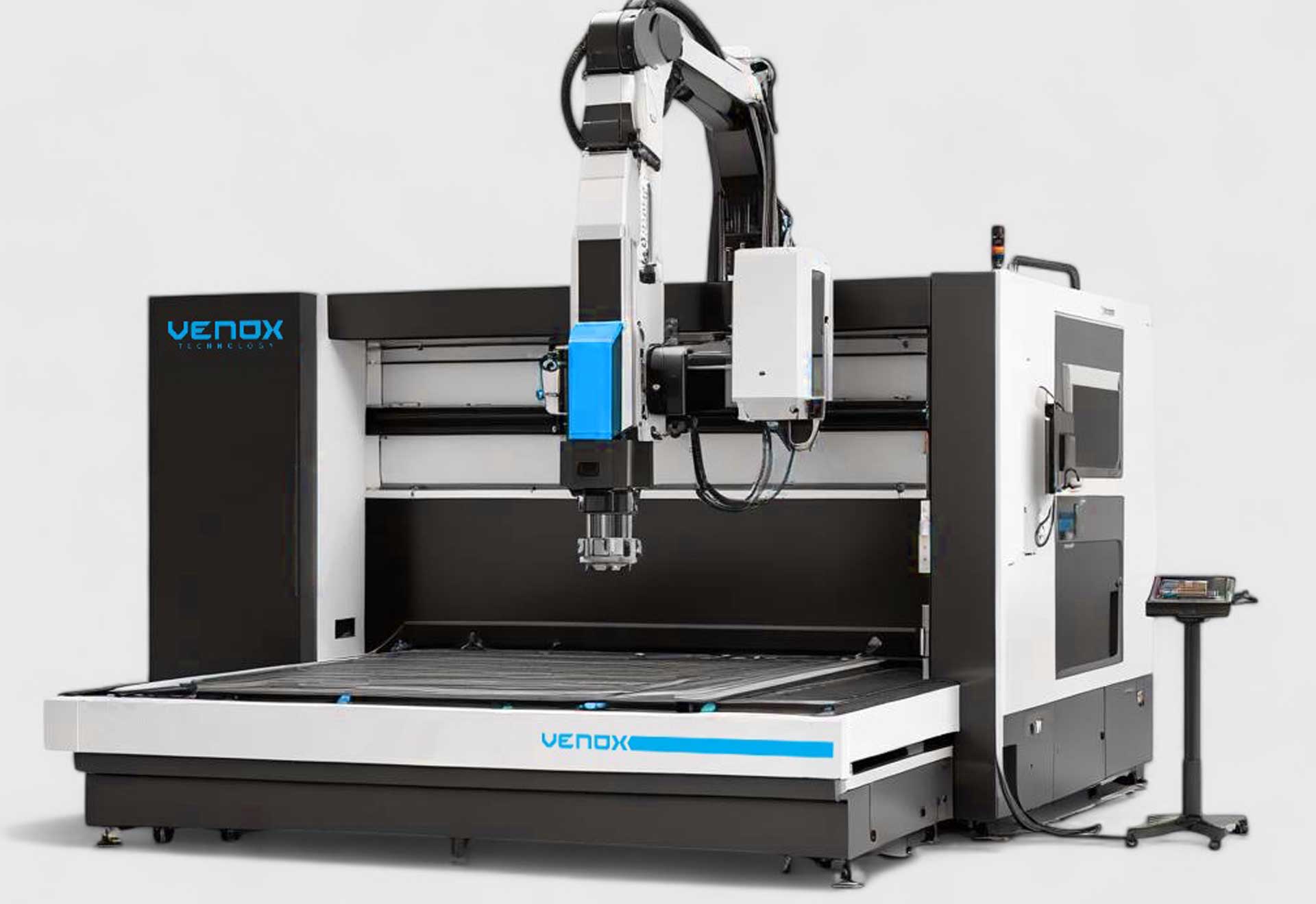
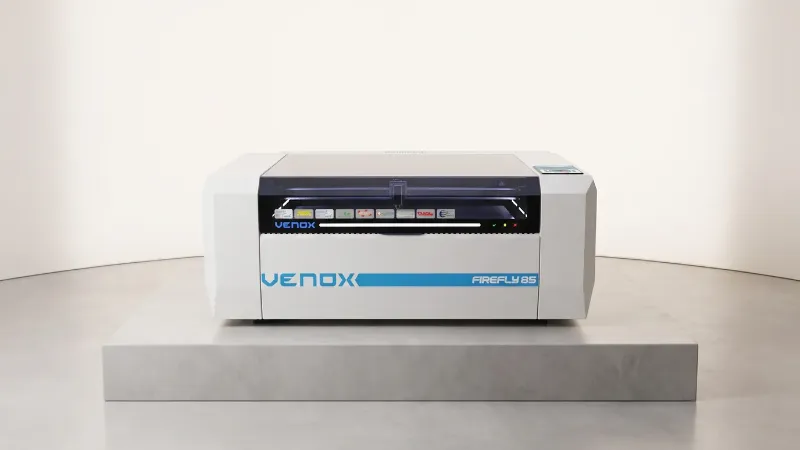
Venox offers Laser Cutting Systems designed for different manufacturing requirements. A suitable system can be determined by jointly evaluating the type of material to be cut, thickness, production capacity, component geometry, and automation requirements.
For more precise, faster, and more controlled cutting solutions in your metalworking processes, you can discuss your production requirements with the Venox team. For system selection, application evaluation, or quotation requests, you can contact us through the Contact Us page.
A properly configured industrial laser cutting system can combine high precision, repeatable quality, low material waste, and production speed within the same process. Therefore, laser cutting is one of the essential technologies in modern metalworking and precision manufacturing processes.
Frequently Asked Questions
What is industrial laser cutting?
Industrial laser cutting is a manufacturing method that uses a concentrated laser beam to precisely cut metals and other suitable materials into specified geometries.
Which metals can be laser cut?
Laser cutting can be applied to stainless steel, carbon steel, aluminum, brass, copper, galvanized sheet metal, and various suitable metal alloys.
Why is laser cutting precise?
The CNC-controlled laser beam follows the specified geometric path with high accuracy. A narrow cutting kerf and digital control enable the production of precision components.
Is industrial laser cutting suitable for mass production?
Yes. Laser cutting systems integrated with automatic loading, unloading, and production software can be used in high-volume mass production.
Does Venox offer industrial laser cutting systems?
To explore Venox laser cutting solutions, visit the Laser Cutting Systems page or contact the Venox team through the contact page to discuss a suitable system for your production requirements.
