
Which Laser Marking Technologies Does Venox Use? Comparison of Fiber, CO₂, and UV Systems
Laser marking technologies are widely used in industrial production to mark different materials permanently, precisely, and repeatably. However, not every material reacts to the same laser source in the same way. Therefore, selecting the correct technology for a laser marking system is critically important in terms of both marking quality and production efficiency.
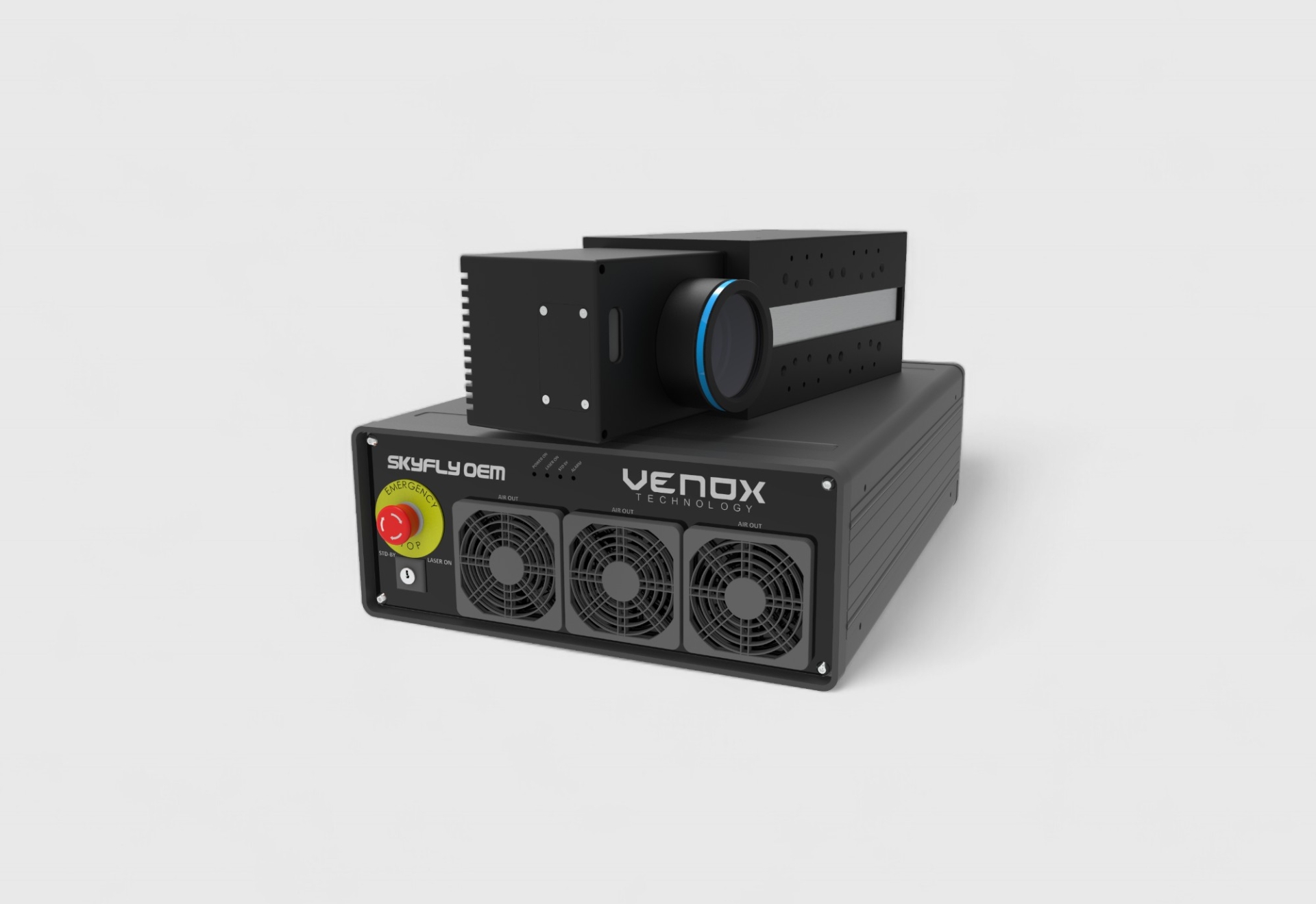
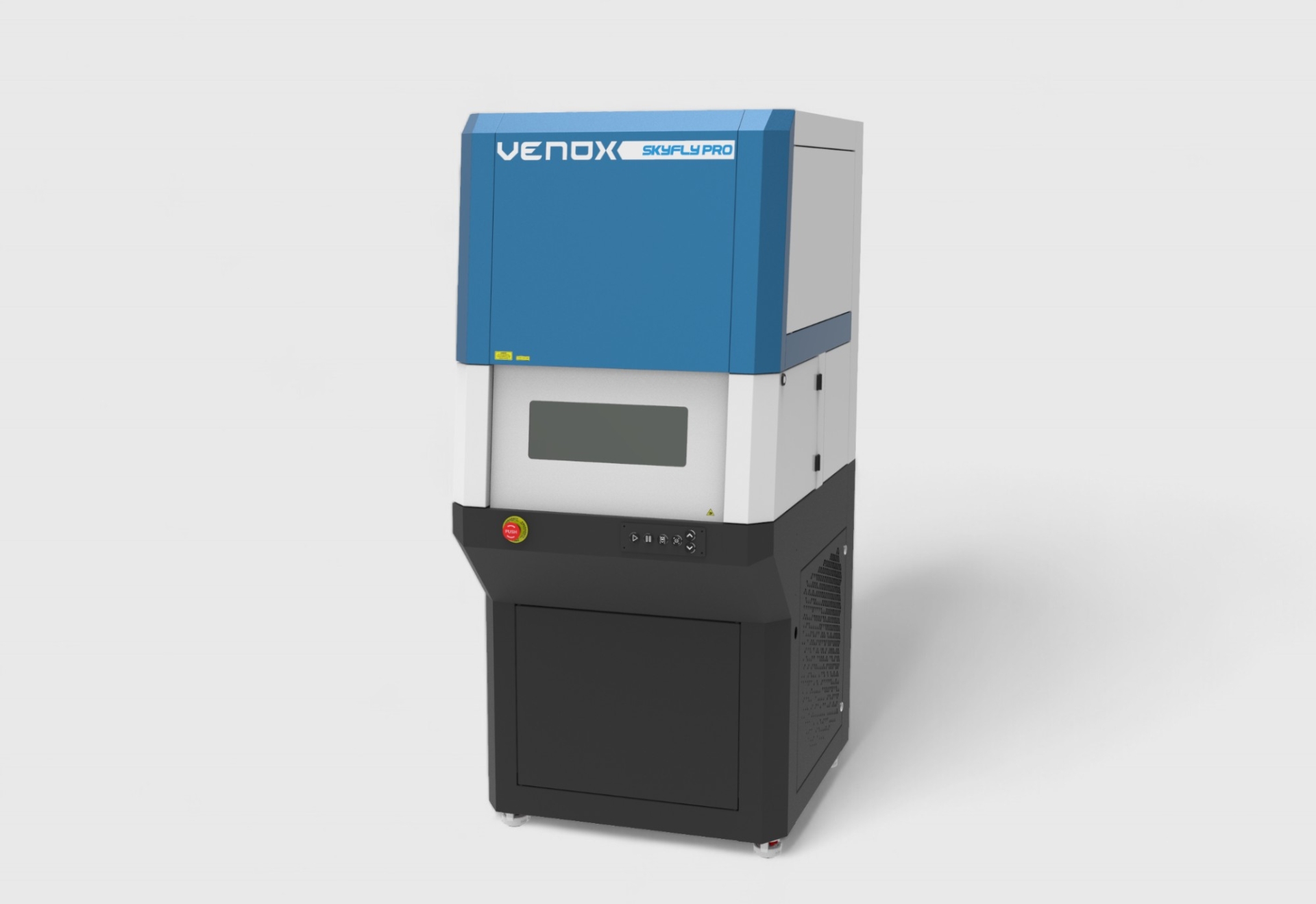
In Venox laser marking solutions, different laser technologies such as fiber, CO₂, and UV can be evaluated according to the requirements of the application. The technology to be used may vary depending on the structure of the material to be marked, product geometry, desired marking characteristics, cycle time, marking area, and integration requirements within the production line.
While fiber lasers stand out particularly in metal applications, CO₂ lasers can be used more commonly on wood, leather, paper, cardboard, and certain plastics. UV lasers, on the other hand, can offer advantages for sensitive plastics, electronic components, and surfaces where low heat impact is important.
Therefore, there is no single answer to the question “which laser technology is better?” The correct approach is to determine the technology that is most suitable for the material and the production process.
What Are the Main Differences Between Fiber, CO₂, and UV Laser Technologies?
Fiber Laser Marking Technology
Fiber laser marking systems are among the most widely used laser technologies in industry, particularly for marking metal surfaces. Stainless steel, carbon steel, aluminum, anodized aluminum, brass, copper, titanium, and various metal alloys can be evaluated for fiber laser applications.
Fiber laser systems are frequently used in the automotive, machinery, defense, electronics, home appliance, and metalworking industries due to their fast marking capability, high beam quality, and suitability for mass production.
Logos, serial numbers, part codes, QR codes, DataMatrix codes, technical information, or different variable data can be applied to products. Depending on the parameters used, surface marking, contrast generation, or deeper engraving processes can be performed.
In fiber laser systems, the marking result is not determined by Watt value alone. Frequency, pulse duration, scanning speed, the lens used, focal point, and material surface also directly affect the final result.
For businesses that primarily process metals, fiber laser is often a strong option. However, different laser technologies may be more suitable for highly sensitive plastics or organic materials.
CO₂ Laser Marking Technology
CO₂ laser systems operate at a different wavelength compared to fiber lasers and are therefore particularly preferred for non-metal materials. Wood, leather, paper, cardboard, rubber, textile-based surfaces, and certain types of plastics can be among the application areas of CO₂ laser technology.
CO₂ laser marking systems can be used to process logos, text, patterns, production dates, batch numbers, or product information. Depending on the application, color change, engraving, or a controlled surface effect can be created.
CO₂ laser solutions can be evaluated particularly in production areas involving packaging, furniture, leather products, textile accessories, promotional products, and organic materials.
However, in plastic applications, the chemical structure of the material must always be taken into consideration. Two products belonging to the same plastic family may react differently to the laser beam because of pigments or additives.
For this reason, in Venox CO₂ laser solutions, it is also important to verify system selection through sample tests carried out on the actual product.
UV Laser Marking Technology
UV laser marking systems can be used in applications requiring high precision thanks to their shorter operating wavelength. Sensitive plastics, electronic components, medical products, glass, and certain special surfaces are among the areas where UV laser technology stands out.
One of the most important advantages of UV lasers is their ability to create controlled marking with a more limited thermal effect on certain materials. This feature can offer an advantage in applications where reducing the risk of surface melting, burning, or deformation is important.
Small characters, microcodes, DataMatrix codes, and high-resolution graphics can be applied using UV lasers. Examples of this technology include marking small components in the electronics industry, creating traceability codes on medical products, or producing high-contrast markings on sensitive plastic surfaces.
However, UV lasers are not necessary for every application. Fiber lasers may be more efficient on metal surfaces, while CO₂ lasers may be more suitable for materials such as wood or leather.
Why Is Wavelength Important?
One of the main differences between fiber, CO₂, and UV lasers is their operating wavelength. The wavelength of the laser beam is one of the important factors that determines how strongly a material absorbs the beam and what type of effect is created on the surface.
A material may strongly absorb a specific wavelength while responding much less to a different laser source. This can directly affect marking contrast, processing time, and surface quality.
Therefore, comparing systems based only on laser power is not accurate. Fiber, CO₂, and UV lasers with the same Watt rating can produce completely different results on different materials.
When evaluating Venox's laser marking systems, laser technology, the optical properties of the material, and the desired marking result should be considered together.
Differences in Marking Quality and Precision
Marking quality can be evaluated according to various criteria such as line sharpness, contrast, code readability, surface deformation, and repeatability. Each laser technology may provide different advantages in terms of these criteria.
Fiber lasers may stand out for their ability to create fast and strong markings on metal. CO₂ lasers can produce pronounced engraving and patterns on organic surfaces. UV lasers, on the other hand, can offer advantages in processing small details and sensitive surfaces.
Particularly in QR code or DataMatrix applications, it is not sufficient for the code to simply be visible. The code cells must be clear and reliably readable by a camera or reader.
Therefore, correctly setting the marking parameters is just as important as selecting the right technology.
How Is the Right Technology Selected in Venox Laser Systems?
Laser Selection According to Material Type
The first step in determining the correct laser technology is to accurately identify the material to be marked. General categories such as metal, plastic, wood, leather, or glass provide a starting point but are often not sufficient on their own.
For example, stainless steel and anodized aluminum can be marked using the same fiber laser system, but the parameters used may differ. In plastic materials, pigment, additives, or surface coatings can completely change the result.
Therefore, performing a sample test on the actual product is one of the most reliable methods for selecting the correct laser technology.
For systems that can be used in metal marking applications, you can review the fiber laser marking machines page.
Selection According to Production Speed and Cycle Time
Laser technology should not be selected based solely on marking quality. Particularly in mass production, cycle time is also a critical criterion.
If marking a product takes 5 seconds instead of 2 seconds, this difference may not seem significant in low-volume production. However, in a business producing thousands of products per day, it can directly affect total production capacity.
Marking time is influenced by many factors such as laser technology, laser power, the density of the content to be marked, code size, filling strategy, and product positioning time.
For this reason, when selecting a system in Venox laser solutions, not only the visual result of the sample but also the actual production cycle time should be evaluated.
System Design According to Product Geometry
Even if the correct laser technology has been selected, improper positioning of the product in the machine can reduce marking quality. Therefore, product geometry is an important part of system design.
While standard fixtures may be sufficient for flat surfaces, a rotary axis can be used for cylindrical products. For products with different heights, a motorized Z axis or automatic focusing solutions may be preferred.
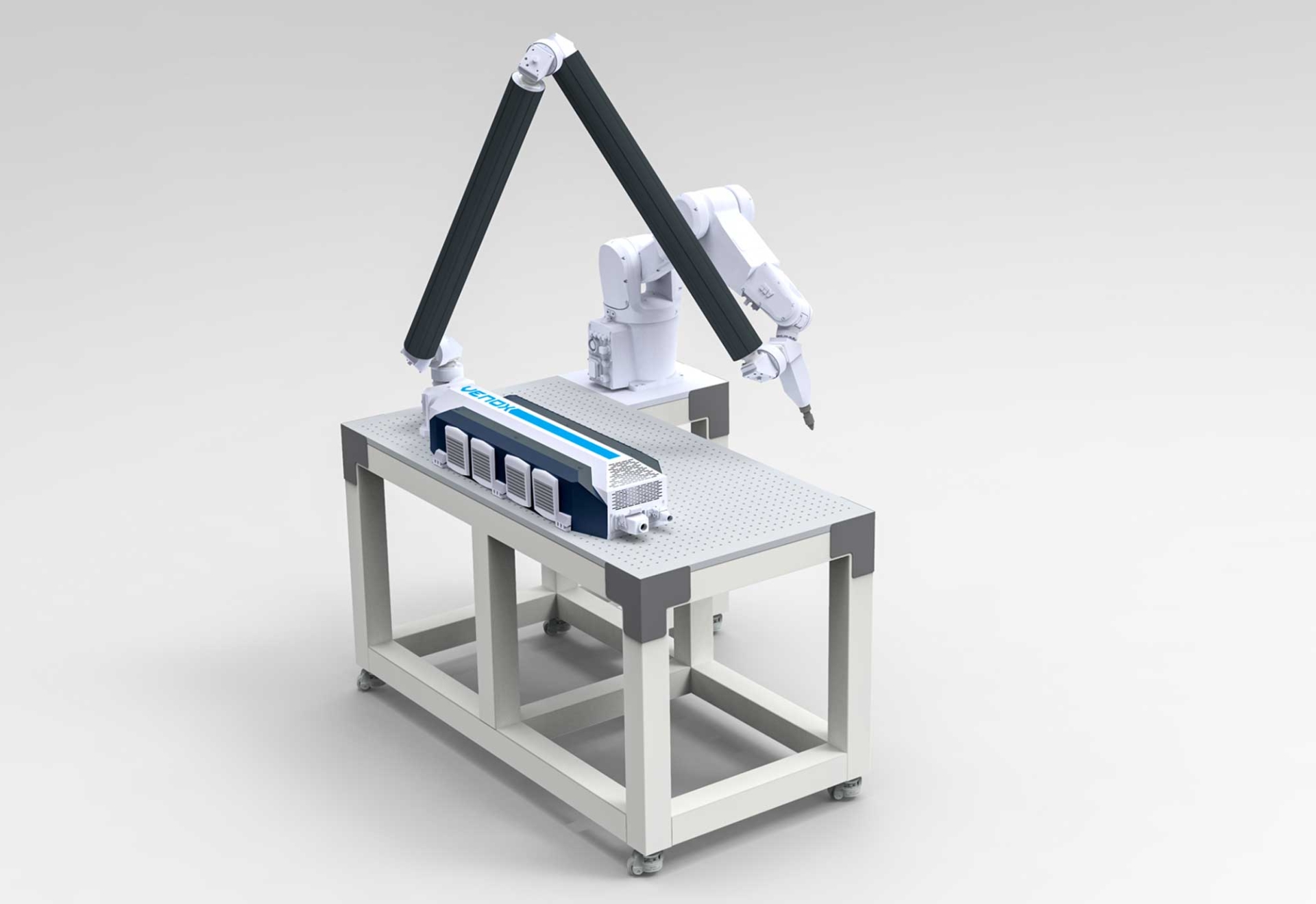
If different areas of large parts need to be marked, special mechanical solutions such as X-Y motion systems or a moving laser head can be used.
Therefore, laser technology and mechanical system design should be considered together.
Automation and Production Line Integration
Fiber, CO₂, and UV laser systems can all be integrated into production lines with an appropriate project design. However, the integration method may vary depending on production speed, product flow, and the marking technology to be used.
When the product reaches the marking station, it can be detected by a sensor, the PLC system can send the necessary information to the laser software, and the marking process can start automatically.
Data such as serial numbers, QR codes, or DataMatrix codes to be applied to the product can be obtained from ERP, MES, or different databases. Once marking is completed, the system can send a process-complete signal to the production line.
In this way, the laser marking system becomes not only a standalone machine but also a component of production automation.
Camera and Code Verification Requirements
In production processes where product traceability is important, the code may need to be verified after marking. Camera systems can be integrated into the laser marking station for this purpose.
The camera can read the QR code or DataMatrix code on the product and check whether the code contains the correct data and whether it is readable.
This verification can be particularly important in high-volume production, automotive, electronics, medical, and similar industries where traceability is required.
The laser technology used must also be capable of creating sufficient contrast and code quality for camera verification.
Technology Comparison Through Sample Testing
One of the most reliable methods for deciding between fiber, CO₂, and UV lasers is to perform comparative testing on the actual product.
During testing, the evaluation should not focus only on which system is capable of marking the product; criteria such as contrast, cycle time, surface deformation, level of detail, code readability, and marking durability should also be considered.
This comparison is particularly important for materials such as plastics, where laser behavior can vary significantly. While one plastic component may produce a sufficient result with a fiber laser, a similar product with a different formulation may require a UV laser.
In Venox applications, sample testing can be considered one of the fundamental stages in determining the correct laser technology and system configuration.
How Should the Final Decision Between Fiber, CO₂, and UV Be Made?
Fiber, CO₂, and UV laser systems should not be considered direct alternatives to one another. Each technology offers different advantages for specific material and application groups.
Fiber lasers can be considered for metal-dominant marking processes, CO₂ lasers for wood, leather, and many organic surfaces, and UV lasers for sensitive plastics and applications requiring high resolution.
However, the final decision should be made by evaluating material type, marking quality, production speed, code readability, system cost, automation requirements, and long-term operating conditions together.
Among Venox's laser marking machines for different technologies, the appropriate system can be determined according to the actual technical requirements of the application.
For a technical evaluation regarding laser technology selection, sample testing, production line integration, or a project-specific laser marking system, you can contact Venox.
